

The White Variegated Monstera Bible: A Journey from Beginner to Collector

Introduction
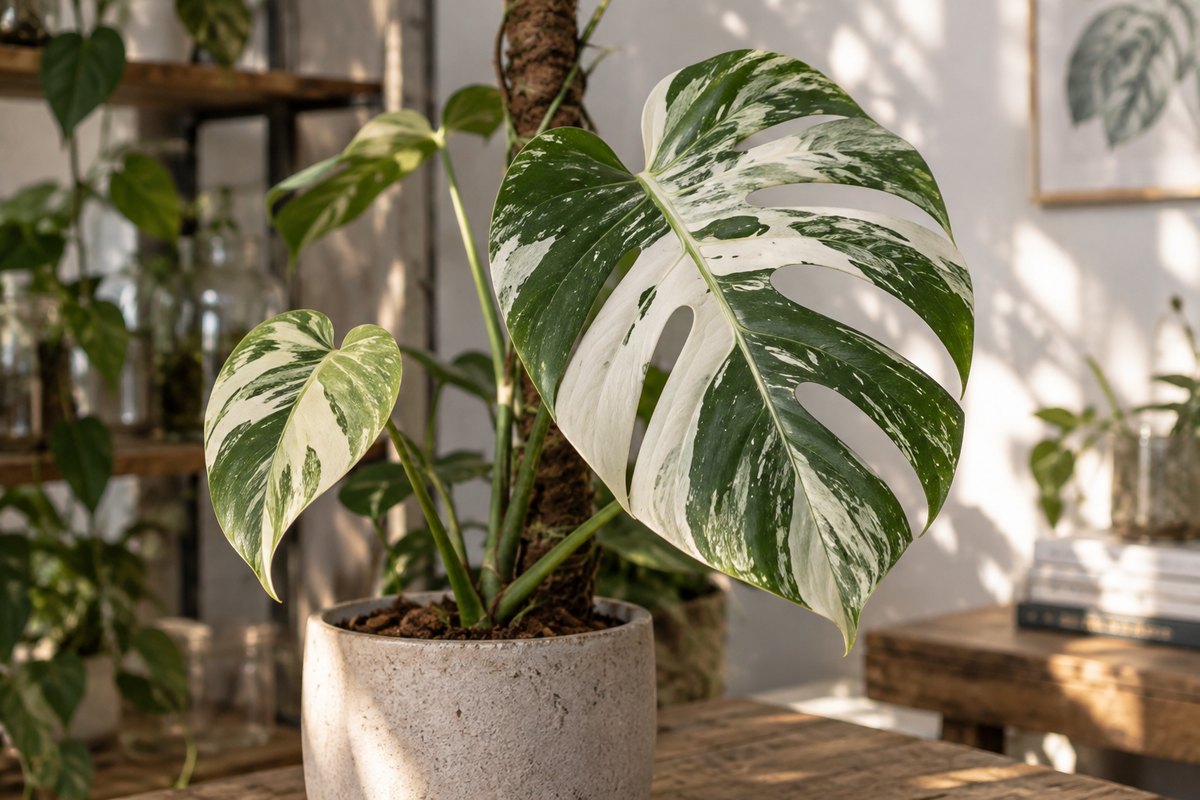
There’s an albo monstera in the archive that I raised from a tiny seedling with just two leaves. I remember the day its first mature fenestrated leaf emerged—I was crouching beside the pot, tidying the growing medium, and looked up to find that ivory-white split leaf catching the afternoon light. The white portions looked like frozen moonlight; the green was as deep as the heart of a tropical rainforest. In that moment, I understood why so many people queue for hours, place bids, and stay up all night watching auction pages.
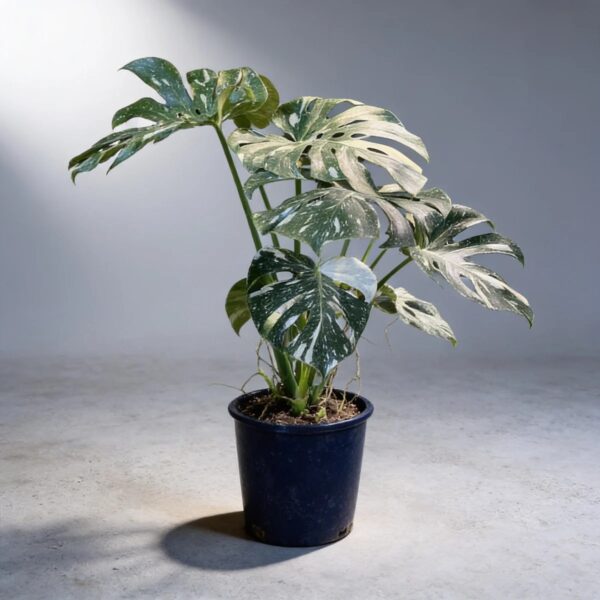
Monstera borsigiana albo variegata—the white variegated monstera—has become one of the most legendary houseplants of the past five years. This article isn’t a cold, clinical manual. It’s a conversation between plant lovers, sharing everything I’ve learned from growing dozens of these beauties over the years.
Origins: From Dutch Greenhouse to Global Obsession
The white variegated monstera isn’t a product of genetic engineering—it’s a gift from nature’s whimsy. The earliest variegated monsteras reportedly appeared in commercial greenhouses in the Netherlands, where standard Monstera deliciosa or M. borsigiana plants spontaneously developed white markings through somatic mutation. Growers discovered this mutation could be preserved through cuttings, and deliberate propagation began.
The distinction between M. borsigiana and M. deliciosa remains debated among botanists, but the horticultural trade generally classifies plants with shorter internodes, relatively smaller leaves, and more vining growth habit as borsigiana. Taxonomic arguments aside, the beauty of the albo monstera is beyond question—the dramatic contrast between deep green and pure white, combined with the iconic split leaves and fenestrations, makes it a commanding focal point in any space.
Light: Gentle Brightness Is the Key
This is the question I hear most often: “Why are my albo’s leaves browning?” Eight times out of ten, the answer is light.
White variegated monsteras need bright, indirect light. Note: bright, not intense. The white portions lack chlorophyll and are extremely sensitive to direct sunlight—half an hour of Hong Kong summer morning sun streaming through glass can leave permanent brown scorch marks.
My recommendation: an east-facing or north-facing window is ideal. If you only have south or west exposure, keep the plant at least one metre from the window, or use a sheer curtain to filter the light. A simple test: if you can comfortably read a paperback at the plant’s position without squinting, the light level is probably just right.
Watering: The Golden Rule of “Better Dry Than Wet”
In their native habitat—Central American rainforest floors—monsteras grow in conditions that are humid but drain rapidly. Leaf litter and organic matter ensure roots never sit in water. This is the starting point for understanding albo watering.
My approach is simple: stick your finger about two knuckles deep into the soil. Water thoroughly only when it feels dry. In summer, that might mean once a week; in winter, perhaps every two to three weeks. Remember: slightly dry won’t kill it, but soggy soil will rot the roots. Variegated monsteras often have more delicate root systems than their green counterparts, making them even less tolerant of waterlogged conditions.
If leaves start drooping slightly and the soil surface looks dry, that’s the plant telling you: “I’m thirsty.” Don’t wait until leaves curl or develop brown patches.
Humidity: Hong Kong Is Actually Perfect
This might come as a relief—Hong Kong’s average relative humidity sits between 70-80%, which is practically paradise for albo monsteras. The ideal range is above 60%; below 50%, you may notice leaf tips drying out.
If you live in a heavily air-conditioned space, consider placing a small water dish nearby or using a humidifier. But honestly, I never run special humidity measures for albos in the archive, and they thrive in Hong Kong’s natural climate.
Growing Medium and Pot: Drainage Is Everything
My standard albo mix runs approximately: 40% quality peat moss + 30% perlite + 20% orchid bark + 10% charcoal. This blend ensures excellent drainage and root aeration. You can add a small amount of sphagnum moss for water retention, but never let the mix become too dense.
For pots, terracotta trumps plastic—the breathability of clay helps roots respire and reduces rot risk. Drainage holes in the bottom are absolutely non-negotiable.
Fertiliser: Less Is More
Because variegated plants grow more slowly, they actually need less fertiliser than their all-green relatives. During the growing season (roughly March through October), I apply a balanced liquid fertiliser at half strength (NPK 20-20-20 or similar) every two weeks. During autumn and winter, I stop completely and let the plant rest.
Over-fertilising causes salt buildup and root damage, which often shows up as leaf margin browning—many people mistake this for sunburn when it’s actually fertiliser burn.
Propagation: The Art of Apical Cuttings
For albo propagation in the archive, I rely almost exclusively on apical cuttings. Cut about one centimetre below a node, ensuring the cutting has one or two aerial root nodes. Let the cut dry for about thirty minutes, then insert into lightly moistened sphagnum moss. Place in bright indirect light, keeping the moss damp but never waterlogged.
New roots typically emerge within three to six weeks. At that point, you can transfer to soil and resume normal care. Late spring to early summer is the ideal window—plants are at their most vigorous, giving the highest success rate.
Why I Don’t Recommend Mid-stem Cuttings
Variegation stability is always a gamble with albos. Mid-stem cuttings (nodes without the growing tip) can root, but whether the new growth emerges variegated—and how heavily—is completely unpredictable. Apical cuttings at least carry the current variegation state forward from the mother plant.
The Two Biggest Headaches: Browning and Reversion
Leaf Browning
Some browning on white portions is almost unavoidable. White tissue contains no chlorophyll and is highly sensitive to environmental stress—too much light, too little humidity, or hard water. My practical advice: accept minor edge browning as normal, and focus on preventing large-scale damage. Using filtered or rainwater for watering significantly reduces marginal browning.
Reversion
This is every albo owner’s worst nightmare—a new leaf emerges completely green. Reversion typically occurs when variegated cells at the growing tip get “overtaken” by all-green cells. If you spot reversion, cut immediately above the reverted node to force new growth from a stem section that still carries variegation. This is the only effective remedy.
From Seedling to Specimen: Patience as Practice
A seedling typically takes six months to a year to produce its first fenestrated leaf. Growing from a small plant to an impressive specimen can take three to five years. This process cannot be rushed.
I often tell visitors at the archive: perhaps the greatest reward of growing an albo monstera isn’t the beautiful plant at the end, but the observation and patience you develop along the way. You’ll start noticing light angles, humidity shifts, the rhythm of wet and dry soil—these subtle changes are the plant’s way of conversing with you.
Conclusion
The white variegated monstera isn’t the easiest plant to grow, but it’s unquestionably one of the most rewarding. When that long-awaited half-moon leaf finally unfurls in the morning light, all the waiting and worry simply melt away.
If you’re searching for your own albo monstera, Plantjai’s Causeway Bay store offers a range of sizes from small seedlings to mature specimens. Every plant is carefully selected to ensure stable variegation on the stem nodes. Or browse plantjai.com first to explore our online collection and find the albo that was meant for you.
May your next new leaf unfurl with the most beautiful white variegation, greeting you quietly in the morning light.
IN STORE NOW
Plants for this guide
Related plants in stock now — live prices, delivery or Causeway Bay pickup.
Monstera obliqua Peru
Original price was: HK$480.00.HK$280.00Current price is: HK$280.00.
In stock · store pickup
View plantMonstera 'Thai Constellation'
Monstera 'Thai Constellation'
from HK$280.00
In stock · store pickup
View plant
FREE PLANT ADVICE
Send us a photo before you change anything
WhatsApp a photo of the plant and your window light. Our Causeway Bay team will suggest care steps or plants that suit your space.
STORE · CAUSEWAY BAY
4/F, 39 Yiu Wa Street, Causeway Bay
Daily 12:30–8:00pm · ~3 min walk from Times Square
Map & directions