
How to Care for Philodendron Painted Lady in Hong Kong | Plantjai

Hong Kong care guide for Philodendron Painted Lady.
Bright yellow-green leaves splashed with deep green speckles, with alluring orange-red new growth — a richly layered, painting-like colour palette makes this one of the most artistic Philodendron cultivars.
Origin & characteristics
'Painted Lady' is a horticultural cultivar of the red-stemmed Philodendron (Philodendron erubescens), with the plain species distributed across higher-elevation tropical rainforest in Costa Rica, Panama, and Colombia in Central and South America. As a classic selectively bred cultivar within the genus Philodendron, 'Painted Lady' dates back to the mid-20th century, developed by horticultural specialists through hybridisation and selection.
Its greatest feature lies in its distinctive colour transformation: new leaves emerge in orange-red to bronze-red, gradually turning a vivid yellow-green base colour as they mature, covered in irregular deep green spots and streaks that create a striking contrast. Leaves are oval to egg-shaped with a pointed tip, and mature leaves can reach 20-30 cm in length. The stem is red or red-green, also highly ornamental.
'Painted Lady' has an upright to semi-climbing growth habit, and mature plants can reach 1-2 metres tall. Providing a support pole encourages upward growth, developing larger leaves and a sturdier stem.
⚠️ Toxicity warning: 'Painted Lady' contains calcium oxalate crystals and is toxic. Ingestion may cause burning and swelling of the mouth, tongue, and throat, drooling, difficulty swallowing, and gastrointestinal discomfort. It must be placed out of reach of children and pets. Wearing gloves when pruning or repotting is recommended to avoid sap contact with skin, and hands should be thoroughly washed after contact. If ingested, rinse the mouth immediately and seek medical attention.
Light
- Ideal light: bright indirect light. An east- or north-facing windowsill is most ideal, and it can accept gentle morning sun
- Acceptable range: can maintain growth in medium light conditions, though leaf colour will become somewhat duller
- Avoid: intense midday direct sun, especially the summer sun, which easily scorches the delicate leaves, causing brown scorched edges or spots
- Signs of insufficient light: new leaf colour leans greener, yellow-green contrast weakens, internodes stretch and become sparse, leaves become smaller
- Indoor placement suggestions: 1.5-2 metres from a south-facing window, near an east-facing window, or use a sheer curtain to filter light. In an office setting, pair with an LED grow light. Rotate the pot regularly for even light exposure
Watering
- Frequency: water once the top 3 cm of soil dries out in spring/summer, roughly every 7-10 days; wait until roughly half the soil depth dries out in autumn/winter, roughly every 10-14 days
- Method: pour slowly around the rim until water drains from the base, wait 10 minutes, then empty tray runoff
- Water quality: room-temperature tap water left standing is fine. If leaf tips persistently show crisping, switch to filtered water or rainwater
- Signs of overwatering: leaves yellowing (especially older lower leaves), a soft, blackened stem base, persistently damp soil with an odour, roots turning brown and rotten
- Signs of underwatering: drooping, limp leaves, browning curled leaf edges, stalled growth
- Notes:
- Avoiding prolonged standing water at the base is key to preventing root rot
- Water temperature should be close to room temperature in winter — overly cold water shocks the roots
- In high-humidity conditions, the watering interval can be slightly extended
- Using a pot with drainage holes is essential
Soil & pot
- Soil recipe: needs a loose, breathable, well-draining medium rich in organic matter. Recommended recipe: quality peat soil or coco coir 50% + perlite 25% + bark chips 15% + a small amount of compost 10%
- pH: slightly acidic to neutral (5.5-6.5)
- Pot choice: terracotta or clay pots offer the best breathability, helping prevent root problems; plastic pots retain moisture better and need watering frequency adjusted accordingly. Regardless of material, drainage holes at the base are essential
- Repotting timing: repot once every 1-2 years, ideally in spring. Repot when roots emerge from drainage holes, circle the pot's edge, or when growth clearly slows
- Repotting technique: the new pot should be 5-8 cm larger in diameter — an oversized pot easily leads to standing water. Use the opportunity to check root health, trimming off any rotten or discoloured roots. Avoid fertilising for the first week after repotting to let the plant adjust to its new environment
Temperature & humidity
- Ideal temperature: 18-27°C is the best growing range, with the most vigorous growth in this range
- Minimum tolerance: can briefly tolerate 12°C, but long-term below 15°C will stall growth, and leaves may show cold-damage spots
- High temperature note: sustained temperatures above 30°C require improved ventilation, appropriate shading, and increased air humidity
- Ideal humidity: 60-80% relative humidity is most ideal. Higher humidity helps leaves maintain their vivid colour and healthy condition
- Managing low humidity:
- Use a humidifier to maintain stable humidity (most recommended)
- Place on a tray lined with damp pebbles (pot base not touching the water surface)
- Group with other plants to create a humid microclimate
- Mist the leaves regularly (ensure good ventilation)
- Hong Kong climate adaptability: Hong Kong's high-humidity spring and summer are very suitable for growth; pay special attention to increasing humidity during the drier autumn/winter, avoiding direct AC or heater airflow
Common problems
Q: Why aren't new leaves orange-red, coming in green instead?
A: New leaf colour is most affected by light intensity. Ample bright indirect light helps new leaves display their best orange-red tone. If light is insufficient, new leaves will lean towards green. New leaf colour may also be paler in winter or during weaker growth periods.
Q: The yellow-green colour on the leaves is getting paler, turning back to deep green?
A: This is a classic sign of insufficient light. 'Painted Lady' needs ample light to maintain its vivid yellow-green speckling. Move the plant to a brighter position, and new leaves will gradually regain their vivid colour.
Q: Brown spots or scorched edges appearing on leaves?
A: Possible causes: 1) sun too strong — move to a shadier position; 2) air too dry — increase humidity; 3) improper watering — check soil moisture and adjust watering frequency; 4) fertiliser too concentrated — halve the concentration going forward.
Q: Stem going soft, rotting from the base?
A: This is a sign of root rot from overwatering. Stop watering immediately, remove the plant from its pot, and check the roots. Trim off all rotten, brown roots, and repot in fresh, dry soil, placing it somewhere well-ventilated. In severe cases, you may need to propagate via cuttings to save the plant.
Q: Growth is slow, with no new leaves for a long time?
A: Possible causes include low temperature (common in winter), insufficient light, lack of nutrients, or roots having filled the pot. Check each factor and improve the environment; begin fertilising in spring (a balanced liquid fertiliser diluted to half strength, every 2-4 weeks, is recommended).
Q: How can it be propagated?
A: Tip cuttings are the most common method. Cut the tip with 2-3 leaves about 1 cm above a node, insert into water or slightly moist perlite, and place somewhere warm and bright — roots develop in roughly 2-4 weeks. Single-node cuttings are also an option, laying a stem section with an aerial root horizontally on the surface of moist substrate.
How to explain to customers
"The best thing about Painted Lady is that its new leaves come in orange-red, then gradually turn into a yellow-green base with deep green speckles — like a painting, hence the name Painted Lady. It has an upright growth habit and will naturally grow upward — give it a pole to climb and the leaves will get much bigger. It's not difficult to care for — bright indirect light, letting the soil dry out before watering, and a diluted liquid fertiliser every two weeks in spring/summer. Remember, all Philodendron species are toxic, so keep it somewhere children and pets can't reach."
Fun facts
- The name "Painted Lady" perfectly describes the effect of deep green spots randomly scattered across the yellow-green leaf base — it really does look like an artist splashed ink across the leaf
- 'Painted Lady' is one of many horticultural cultivars in the Philodendron erubescens series, which also includes beloved collector cultivars like 'Strawberry Shake' and 'Pink Princess'. They all inherit the red stem characteristic of the plain species
- Under sufficient light, 'Painted Lady's' yellow-green leaves can appear almost fluorescently bright, making it one of the most visually striking cultivars among all Philodendron species — a reason for its huge popularity on Instagram and in plant-collecting circles
- Experienced growers have found that when climbing (e.g. given a moss pole), 'Painted Lady's' leaves not only get bigger, but the yellow-green contrast also becomes more vivid, possibly related to roots absorbing more water and nutrients while climbing
Keywords
Painted Lady Philodendron, Philodendron erubescens Painted Lady, Painted Lady Philodendron, red-stemmed Philodendron, speckled leaf, yellow-green leaf, orange-red new growth, upright Philodendron, climbing plant, indoor foliage plant, tropical plant, Philodendron cultivar, calcium oxalate toxic, horticultural cultivar, moss pole, Plantjai, medium-sized potted plant, foliage plant
參考資料(想知來源可展開)
References
- Royal Botanic Gardens, Kew — Plants of the World Online: genus Philodendron, https://powo.science.kew.org/
- ASPCA — Toxic and Non-Toxic Plant List, https://www.aspca.org/pet-care/animal-poison-control/toxic-and-non-toxic-plants
⚠️ Contains calcium oxalate crystals; toxic to humans and pets if ingested. Keep out of reach of children and pets.
Plantjai · Causeway Bay collector indoor plants · WhatsApp +852 66807550
For Hong Kong homes and offices. Stock and pricing follow the product page.
IN STORE NOW
Plants for this guide
Related plants in stock now — live prices, delivery or Causeway Bay pickup.
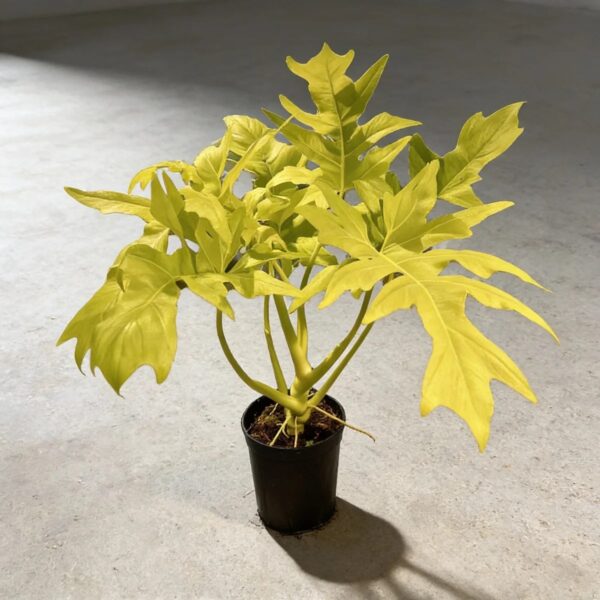
Philodendron 'Florida Ghost'
Philodendron 'Florida Ghost'
from HK$118.00
In stock · store pickup
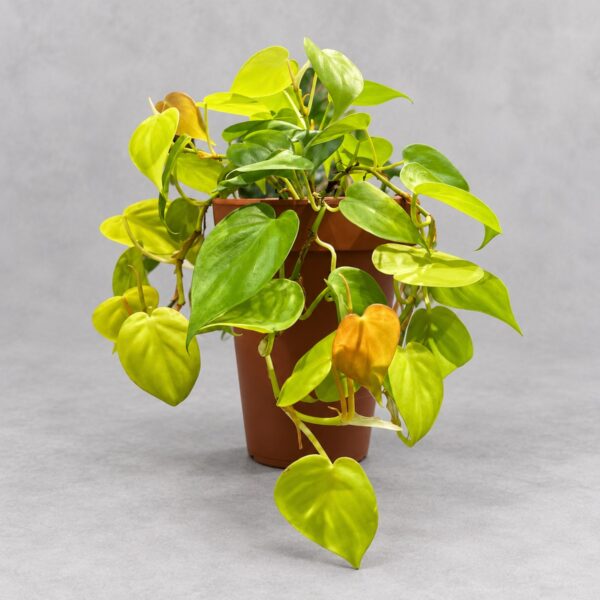
View plantPhilodendron hederaceum 'Lemon Lime'
Philodendron hederaceum 'Lemon Lime'
HK$198.00
In stock · store pickup
View plantPhilodendron warscewiczii 'Aurea Flavum'
Philodendron warscewiczii 'Aurea Flavum'
HK$298.00
In stock · store pickup
View plant
FREE PLANT ADVICE
Send us a photo before you change anything
WhatsApp a photo of the plant and your window light. Our Causeway Bay team will suggest care steps or plants that suit your space.
STORE · CAUSEWAY BAY
4/F, 39 Yiu Wa Street, Causeway Bay
Daily 12:30–8:00pm · ~3 min walk from Times Square
Map & directionsPlant Care