How to Care for Philodendron Florida in Hong Kong | Plantjai

Plantjai 植仔 · Care Encyclopedia
Philodendron Florida
Philodendron 'Florida' 佛羅里達蔓綠絨
Hong Kong care guide — useful before you buy and after it arrives.
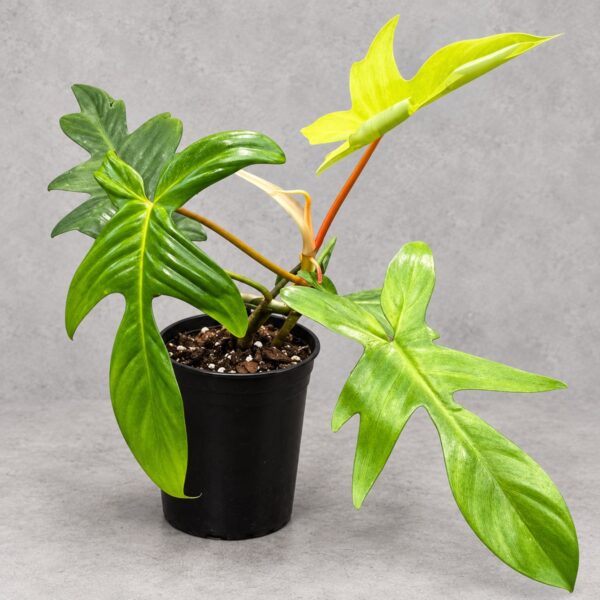
Shop this plantThe classic ostrich-foot split leaves paired with a fuzzy red stem — leaves get bigger and better as it climbs. As the "founding ancestor" of the Florida series, this is the best-value entry-level climbing Philodendro…
Origin & characteristics
Background: Philodendron 'Florida' is a horticultural hybrid, bred by crossing Philodendron pedatum (ostrich-foot Philodendron) with Philodendron squamiferum (red-bristle Philodendron). The name "Florida" reportedly comes from its origin of cultivation in the US state of Florida, and it's the "ancestor" of all Florida series cultivars (Beauty, Ghost, and others).
Growth characteristics:
- A climbing Philodendron, requiring a sphagnum pole or climbing frame for support
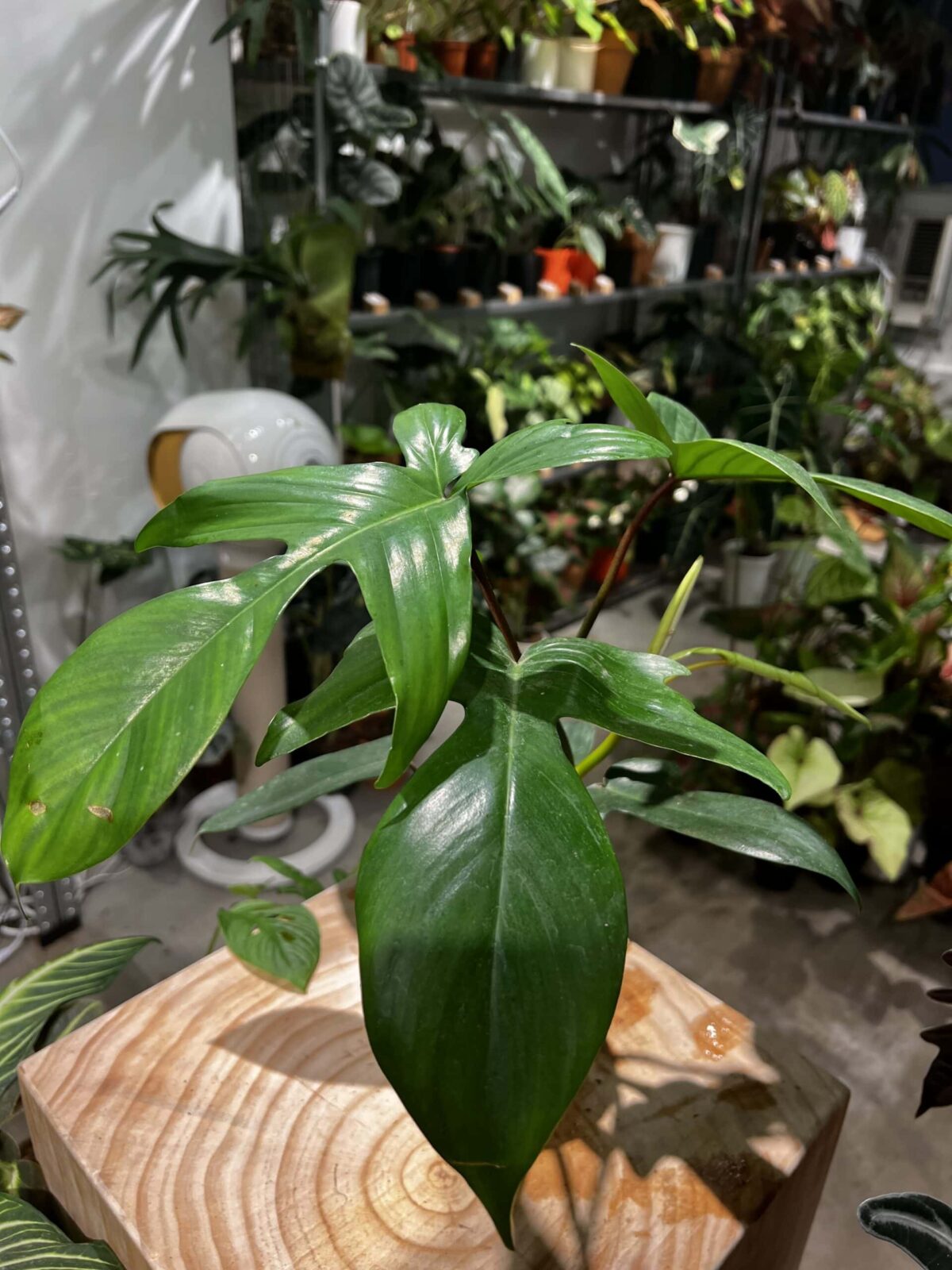
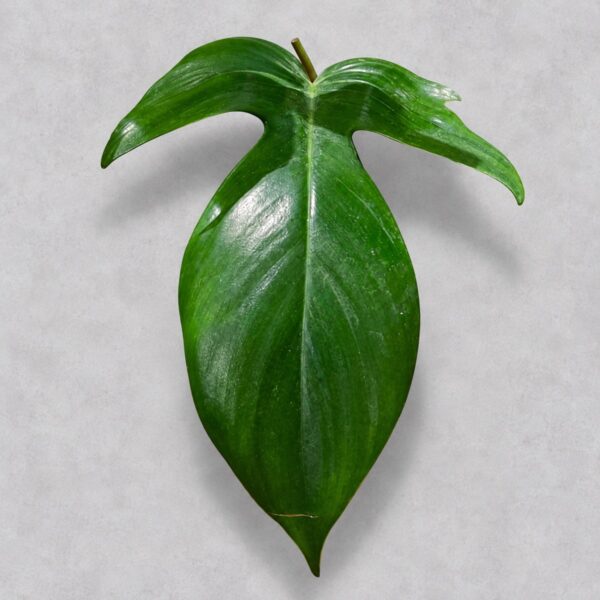
- Leaves have a distinctive ostrich-foot split shape; juvenile leaves are rounder, developing deeper, more pronounced splits as they mature
- Deep green leaf colour with a glossy sheen and clearly sunken veins
- The stem carries red bristles, a hallmark feature for identifying the Florida series (inherited from the red-bristle Philodendron parent)
- Leaves can reach 30-45 cm once climbing, with impressive presence
- Moderate growth rate — faster than Beauty and Ghost
- Highly adaptable and relatively easy to care for, a great entry point into advanced Philodendron collecting
Light
| Item | Recommendation |
|---|---|
| Ideal light | Bright indirect light (1,000-2,000 lux) |
| Placement | An east- or north-facing windowsill; a south-facing window can be filtered with a sheer curtain |
| Avoid | Harsh direct summer midday sun |
| Signs of insufficient light | Leaves become thinner, splits less pronounced, internodes stretch |
| Tip | Once climbing, the upper leaves get larger — ensure enough light reaches the top of the plant |
Watering
| Item | Recommendation |
|---|---|
| Frequency | Water once the top 2-3 cm of soil dries out, roughly every 7-10 days |
| Method | Water slowly around the rim until it drains from the base |
| Water quality | Room-temperature tap water left standing, filtered water, or rainwater |
| Seasonal adjustment | Slightly more frequent in spring/summer growing season; reduce in autumn/winter |
| Standing water warning | Empty tray runoff promptly to avoid root rot |
| Humidity preference | 50-70% is sufficient — more adaptable than other Florida series cultivars |
Soil & pot
Soil recipe:
- A loose, breathable medium:
- Quality indoor plant soil 40% + perlite 30% + bark 20% + charcoal 10%
- Or use a ready-made aroid-specific soil mix
Pot choice:
- Terracotta or plastic pots both work; terracotta offers better breathability
- Drainage holes are essential
- Choose a pot with enough depth to accommodate a sphagnum pole
Sphagnum pole:
- Setting up a sphagnum pole is strongly recommended — it's key to unlocking Florida's full potential
- Without a pole, leaves stay small and never reach their best form
- Keep the pole moist so aerial roots can attach
- The taller the pole, the more large leaves will develop
Repotting timing:
- Roughly once every 1-2 years
- Spring (March-May) is the best repotting time
Temperature & humidity
| Item | Ideal range | Notes |
|---|---|---|
| Temperature | 18-28°C | Not below 15°C at minimum |
| Humidity | 50-70% | Highly adaptable, typical household humidity is generally fine |
| Winter care | Keep away from AC vents and drafty windows | Reduce watering in winter |
| Humidification methods | Humidity tray, grouping with other plants | Generally doesn't require special humidification |
Common problems
Q1: Leaves aren't big enough, and splits aren't pronounced?
The main reason is a lack of climbing support. Florida absolutely needs a sphagnum pole — leaves only get bigger and splits more pronounced once it starts climbing. If you don't have a pole yet, add one right away.
Q2: Is the red fuzz on the stem mould?
No! The red bristles on the stem are a normal feature of the Florida series, a sign of health — nothing to worry about.
Q3: What's the difference from Florida Beauty / Ghost?
Florida is the base cultivar with plain green, unvariegated leaves; Beauty is a variegated form (green-and-white patterning); Ghost is a form where new leaves emerge white. All three have similar care requirements, but Florida is the easiest to care for, fastest growing, and most affordably priced.
Q4: What should I do about aerial roots growing out?
Aerial roots are a sign of health! If you already have a sphagnum pole, you can guide the aerial roots into it. Without a pole, the aerial roots will simply grow in the air without affecting the plant's health.
Q5: Why are the leaves drooping?
This may be overwatering (a sign of root rot) or insufficient light. Check soil moisture and ensure good drainage. If there's a root issue, address it as soon as possible.
How to explain to customers
"Florida is the foundation of the whole Florida series — if you like climbing Philodendron species, this is the best-value entry point. Its leaves split like an ostrich foot, and the higher it climbs, the bigger and more impressive the leaves get. Most importantly, give it a sphagnum pole to climb — without one, the leaves stay small. It's much easier to care for than Beauty or Ghost, and grows faster too — if you want to try a climbing Philodendron, this is definitely the one to recommend. The fuzzy red stem is one of its signature features, not mould!"
Fun facts
- Combining the best genes of both parents: Florida combines the elegant leaf shape of pedatum with the robust constitution of squamiferum — a horticultural masterpiece of "taking the best of both worlds"
- The purpose of the red bristles: in its native environment, the red bristles on the stem help collect moisture from the air while also helping the plant grip tree bark as it climbs — a clever evolutionary adaptation from the tropical rainforest
- A leaf transformation story: Florida's juvenile and mature leaves look quite different — juvenile leaves are rounder, and as the plant climbs and matures, leaves become increasingly split and larger, so growing Florida is like watching it go through its own "coming of age" transformation
- The origin of the whole series: every Florida series cultivar (Beauty, Ghost, Mint, and others) originates from mutations or selective breeding of this base Florida cultivar, making it the "family founder" of this Philodendron lineage
- Underrated collector value: although Florida is affordably priced, a well-grown, tall-climbing mature specimen has just as much visual impact as pricier cultivars
Keywords
Philodendron, Philodendron Florida, climbing Philodendron, sphagnum pole, ostrich-foot leaf, red bristle stem, foliage plant, tropical plant, indoor plant, Plantjai, entry-level Philodendron, horticultural hybrid, Florida series, good value
參考資料(想知來源可展開)
References
- Royal Botanic Gardens, Kew — Plants of the World Online: genus Philodendron, https://powo.science.kew.org/
- ASPCA — Toxic and Non-Toxic Plant List, https://www.aspca.org/pet-care/animal-poison-control/toxic-and-non-toxic-plants
⚠️ Contains calcium oxalate crystals; ingestion may cause mouth irritation, swelling, or discomfort. Keep out of reach of children and pets.
Plantjai · Causeway Bay collector indoor plants · WhatsApp +852 66807550
Plantjai shop · In stock online
Philodendron 'Florida'
Philodendron 'Florida'
HK$168.00
Hong Kong delivery · Causeway Bay pickup
For Hong Kong homes and offices. Stock and pricing follow the product page.
IN STORE NOW
Plants for this guide
Related plants in stock now — live prices, delivery or Causeway Bay pickup.
Philodendron 'Florida Ghost'
Philodendron 'Florida Ghost'
from HK$118.00
In stock · store pickup
View plantPhilodendron hederaceum 'Lemon Lime'
Philodendron hederaceum 'Lemon Lime'
HK$198.00
In stock · store pickup
View plant
FREE PLANT ADVICE
Send us a photo before you change anything
WhatsApp a photo of the plant and your window light. Our Causeway Bay team will suggest care steps or plants that suit your space.
STORE · CAUSEWAY BAY
4/F, 39 Yiu Wa Street, Causeway Bay
Daily 12:30–8:00pm · ~3 min walk from Times Square
Map & directionsPlant Care