How to Care for Hoya Undulata in Hong Kong | Plantjai

Plantjai 植仔 · Care Encyclopedia
Hoya Undulata
Hong Kong care guide — useful before you buy and after it arrives.
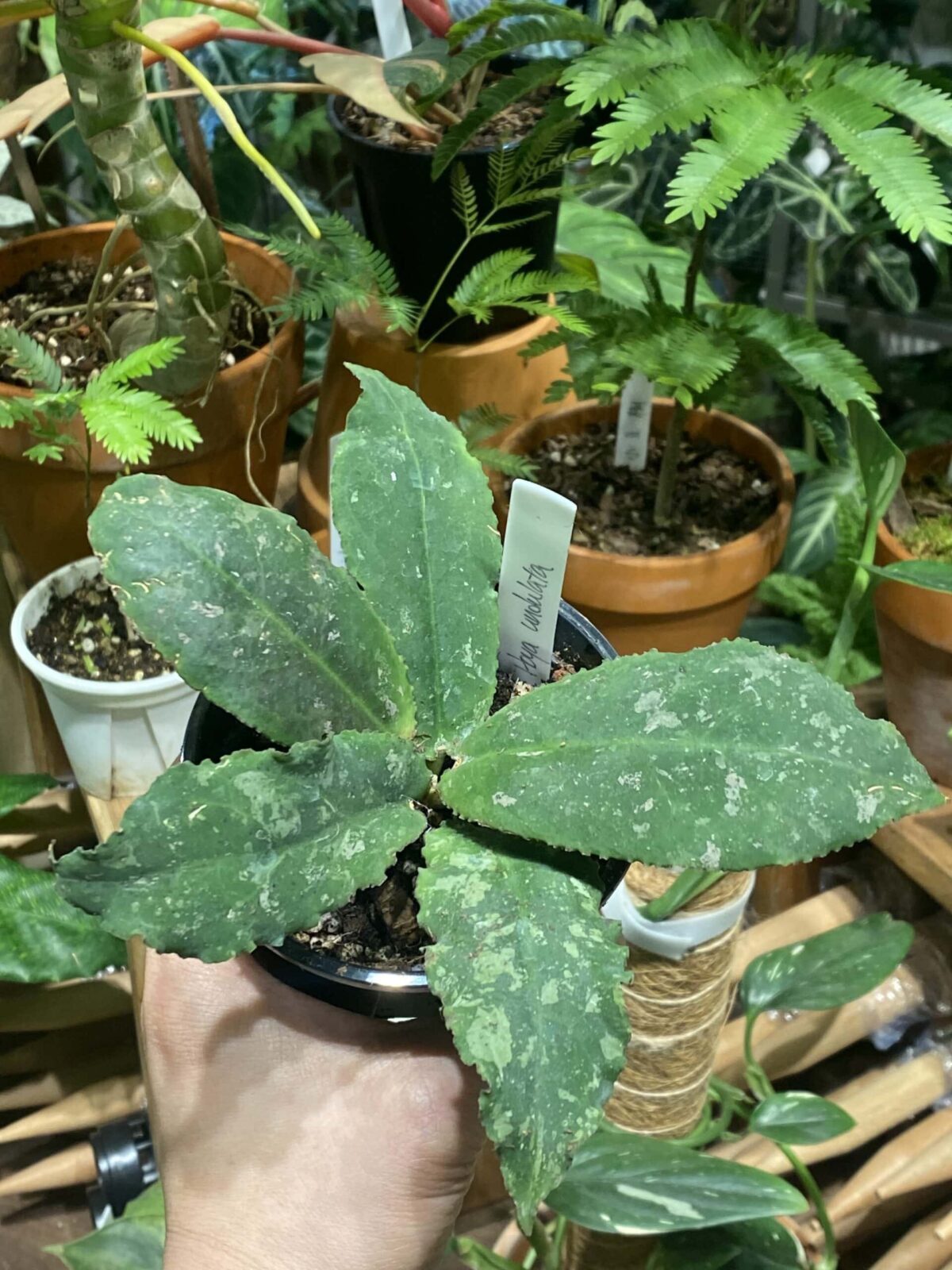
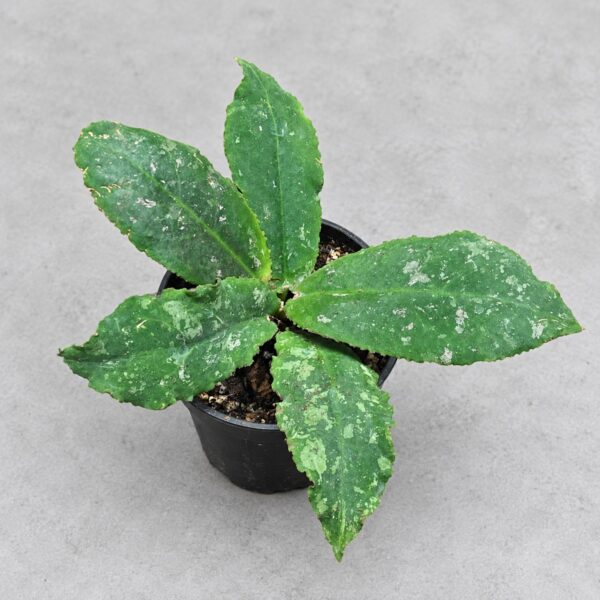
Shop this plantRigid, wavy-edged leaves paired with red sun-stress colouring, blooming white wax flowers with purple spots — the "ultimate challenge" for Hoya collectors, and a badge of honour if you can grow it well!
Brand: Plantjai
Botanical name: Hoya undulata
Classification: family Apocynaceae, genus Hoya
Toxicity: non-toxic to pets (ASPCA-certified)
Origin & characteristics
Hoya undulata was formally described in 2015 and is endemic to Borneo's Kalimantan region, growing only in lowland heath forest at roughly 350 metres elevation. The species name "undulata" comes from the wavy (undulate) characteristic of its leaf margins.
Most eye-catching features:
- Wavy, rigid leaves: the leaf margins are distinctly wavy, with a texture as stiff as cardboard and an uneven, textured surface — highly architectural in appearance
- Red sun-stress colouring: under strong light, the leaves develop a deep red to wine-red "sun-stress" effect, which is where much of its collector value lies
- Distinctive flowers: white bell-shaped flowers with purple spots, with the corolla lobes bearing two hook-shaped appendages — a feature currently found only in Hoya undulata and Hoya griffithii
- Extremely difficult to grow: widely regarded as one of the most challenging Hoya species to keep alive, with extremely strict environmental requirements, often called the "capstone challenge"
This species is advanced-level and highly unsuitable for beginners. Even experienced growers may need multiple attempts before succeeding.
Light
- Ideal position: primarily bright indirect light, with tolerance for 1-2 hours of gentle morning sun
- Artificial lighting: if using a grow light, use lower intensity — overly strong LED light can cause excessive reddening or even damage
- Avoid: direct midday and afternoon sun, as the rigid leaves of Hoya undulata scorch easily
- Red sun-stress colour: to achieve the ideal red colouring, gradually increase light intensity, but closely monitor the leaf response and reduce light immediately if scorched edges appear
- Important: light intensity requires repeated fine-tuning — either too strong or too weak will weaken the plant
Watering
- Principle: "water only once nearly completely dry" — wait until the substrate is almost fully dry before watering
- Frequency: water at most once a week during the growing season, absolutely no more; can be extended to every 10-14 days during dormancy (autumn/winter)
- Method:
- Bottom-watering is recommended, letting the substrate absorb water on its own to avoid standing water at the leaf centre
- When watering, ensure the substrate is thoroughly soaked, but excess water must be fully drained
- Use room-temperature water, avoiding cold water that shocks the roots
- Warnings:
- This species is extremely prone to root rot — overwatering is the leading cause of death
- Control watering even more strictly in high-humidity environments
- A clear net pot is recommended for growing, making it easier to observe the substrate's moisture level
Checking method: insert a finger 2-3 cm into the substrate, and only water once it feels completely dry. Better dry than wet.
Soil & pot
- Substrate recipe: needs an extremely chunky, breathable epiphytic mix. Recommended recipe:
- 40% large-grade orchid bark
- 25% coarse perlite
- 15% charcoal
- 10% tree fern fibre
- 10% sphagnum moss (for moisture retention)
- Simple version: an orchid mix with an additional 30% perlite
- Pot choice:
- A net pot or dedicated orchid pot is strongly recommended, for better ventilation and root observation
- Must have drainage holes; terracotta is also acceptable but shouldn't be too large
- A smaller pot is better — a snug root system helps control watering risk
- pH: slightly acidic (roughly 5.5-6.5)
Temperature & humidity
| Item | Ideal range | Minimum |
|---|---|---|
| Daytime temperature | 24-29°C | Never below 20°C |
| Nighttime temperature | 21-27°C | Never below 18°C |
| Humidity | 70-85% | Never below 60% |
- Temperature: Hoya undulata is a tropical species requiring consistently warm conditions — too large a day-night temperature swing causes stalled growth. Experienced growers recommend using a heat mat year-round to maintain root zone temperature
- Humidity: requires a high-humidity environment, but this must be paired with excellent air circulation, or fungal problems easily develop
- Ventilation: in a high-humidity environment without good ventilation, leaves are extremely prone to fungal infection — this is one of the main causes of failure
- Note: it absolutely cannot tolerate temperatures below 15°C — even one cold night could be fatal
Common problems
| Issue | Likely cause | What to do |
|---|---|---|
| Leaf drop | Overwatering, substrate too wet, or temperature too low | Check roots immediately; if already rotted, take cuttings to propagate; improve ventilation and temperature |
| Soft, wrinkled leaves | Underwatering or rotted roots | Check substrate moisture; water if too dry; if substrate is moist, it's root rot |
| Excessive red colouring | Light too strong | Reduce light intensity or shorten exposure time |
| Stalled growth | Temperature too low or insufficient humidity | Check whether temperature is consistently below 24°C, increase humidity |
| Bud drop | Environmental changes too drastic, moving the plant, or temperature swings | Never move the plant during flowering |
| Fungal infection | Excessive humidity combined with poor ventilation | Isolate immediately, trim infected parts, improve ventilation, reduce humidity |
| White cottony pests | Scale insects | Wipe with alcohol or spray neem oil |
| Overall plant decline | Combined factors (too wet, too cold, improper light) | Once Hoya undulata declines, it's very difficult to recover — take healthy cuttings early as a backup |
How to explain to customers
"This Hoya undulata is the 'ultimate challenge' in the Hoya world, definitely not suitable for beginners! Its leaf edges are wavy, rigid, and full of character, and with enough sun exposure it turns a gorgeous red. But growing it takes real dedication — first, temperature needs to stay above 24°C consistently, day and night, even in winter with a heater or heat mat running; humidity needs to be high but ventilation must also be excellent, or it'll rot. Water only once it's nearly completely dry — better dry than wet. Use the chunkiest orchid mix available, and the pot needs to be small with plenty of holes. If this is your first Hoya, I'd suggest starting with another species; if you're an experienced collector looking for a challenge, this is your 'graduation project'!"
Fun facts
- The ultimate challenge: renowned American Hoya collector Doug Chamberlain reportedly killed two Hoya undulata plants in a row before succeeding on his third attempt, taking four years to finally see it bloom — and the flower lasted only three days: "four years of effort for three days of glory."
- A one-of-a-kind flower: the corolla lobes of Hoya undulata's flowers bear two hook-shaped appendages, a feature shared within the genus only with Hoya griffithii, marking an evolutionary kinship.
- A prehistoric feel: the combination of its rigid, wavy leaves and red sun-stress colouring gives it a "prehistoric plant" primal beauty, making it highly ornamental.
- A lowland native: despite its tough appearance, it actually comes from lowland tropical rainforest and needs consistent warmth and humidity — it has no cold tolerance whatsoever.
- High success rate when mounted: experience shows that mounting Hoya undulata on wood is easier than growing it in a pot, since the substrate dries faster, reducing the risk of root rot.
Keywords
Hoya undulata, wavy leaf, rigid leaf, red sun-stress, sun-stress, Borneo, Kalimantan, lowland heath forest, epiphyte, Apocynaceae, ultimate challenge, extremely difficult to grow, high temperature and humidity, ventilation, root rot, root rot prevention, chunky substrate, net pot, heat mat, white flower with purple spots, non-toxic to pets, Plantjai, advanced species, collector's species, mounting, fungal infection prevention
參考資料(想知來源可展開)
References
- Rodda, M., et al. (2015). "Hoya undulata, a new species from Borneo." Blumea.
- Royal Botanic Gardens, Kew — Plants of the World Online: Hoya undulata, https://powo.science.kew.org/
- ASPCA — Toxic and Non-Toxic Plant List, https://www.aspca.org/pet-care/animal-poison-control/toxic-and-non-toxic-plants
⚠️ Non-toxic to cats and dogs.
Plantjai · Causeway Bay collector indoor plants · WhatsApp +852 66807550
For Hong Kong homes and offices. Stock and pricing follow the product page.
IN STORE NOW
Plants for this guide
Related plants in stock now — live prices, delivery or Causeway Bay pickup.
FREE PLANT ADVICE
Send us a photo before you change anything
WhatsApp a photo of the plant and your window light. Our Causeway Bay team will suggest care steps or plants that suit your space.
STORE · CAUSEWAY BAY
4/F, 39 Yiu Wa Street, Causeway Bay
Daily 12:30–8:00pm · ~3 min walk from Times Square
Map & directionsPlant Care