
How to Care for Hoya Polyneura in Hong Kong | Plantjai

Plantjai 植仔 · Care Encyclopedia
Hoya Polyneura
Hong Kong care guide — useful before you buy and after it arrives.
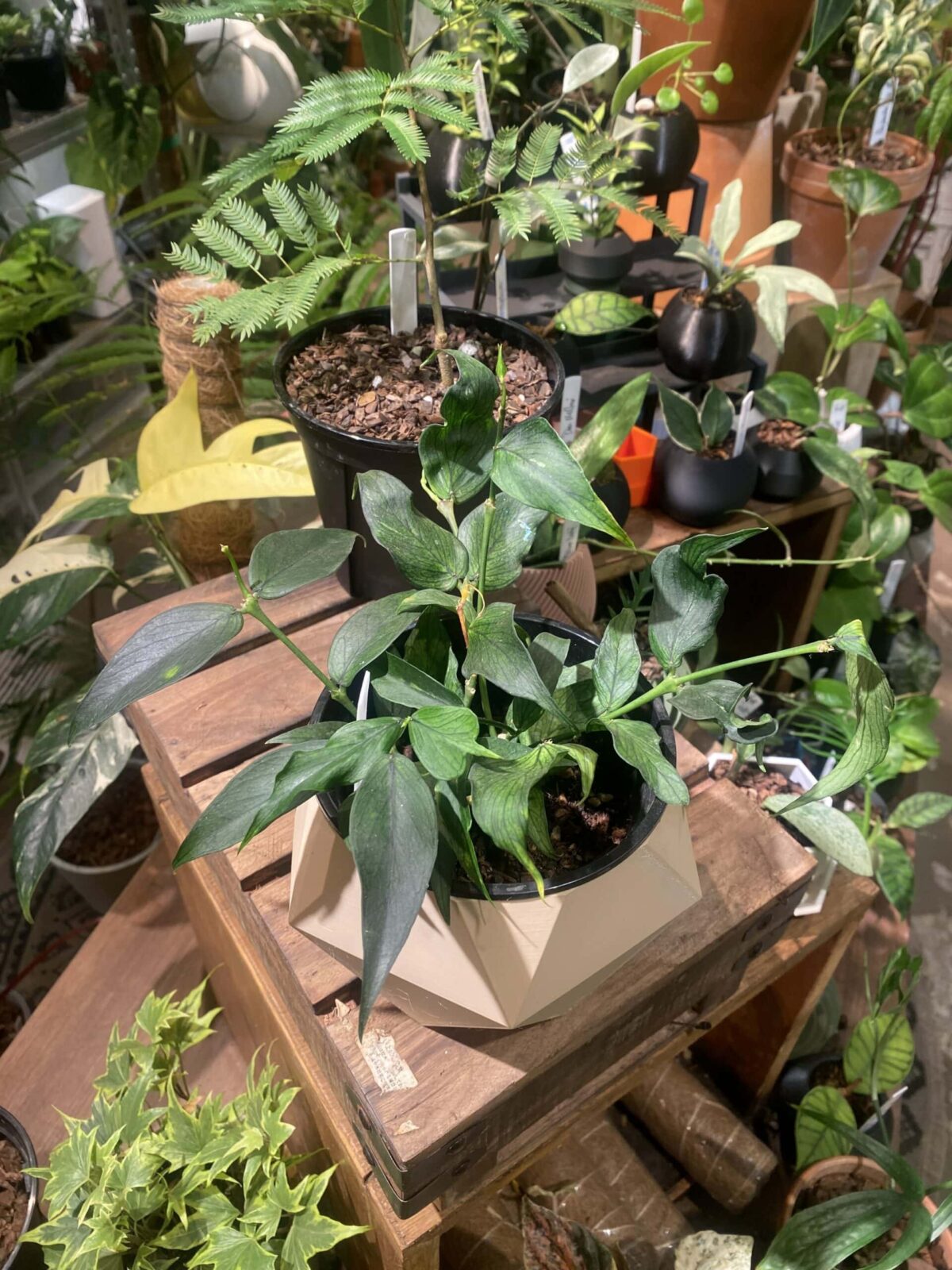
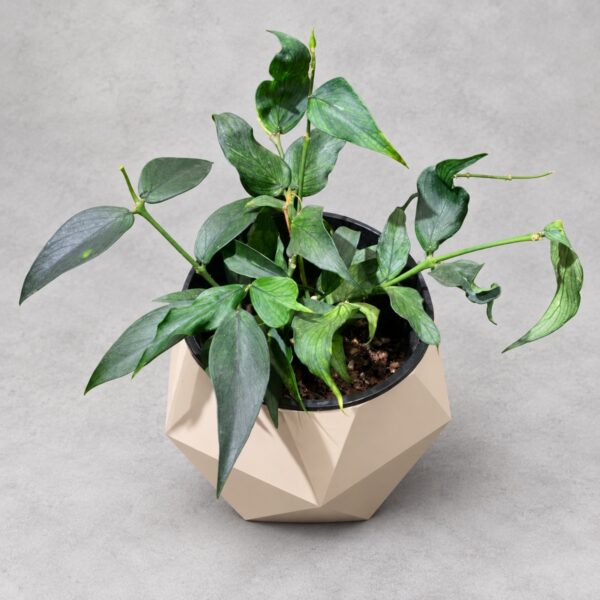
Shop this plantVeins as intricate as fish bones weave across deep green leaves, with silvery-white patterning that looks like nature's own nervous system diagram — widely regarded as the most architecturally beautiful foliage specie…
Origin & characteristics
The fishtail Hoya is native to tropical montane forest in India's Western Ghats, growing in areas of higher elevation with stable humidity, naturally epiphytic on tree trunks and moss-covered rocks. Its leaves are long and paddle-shaped, thick and leathery, with a deep green base covered in radiating silvery-white veins that fan out from the midrib like fish bones — or a network of nerves — earning it the English name "Nerve-leaf Hoya." It's a small vining plant with moderate to slightly slow growth, delicate and elegant vines, reaching 60–90 cm at maturity. When flowering, it produces a peduncle from the leaf axils bearing small star-shaped flowers, white with a wine-red or deep red centre, and a subtle sweet fragrance.
Botanical note: Hoya polyneura Hook.f., formally described in 1847 — the botanical name is confirmed. "Polyneura" derives from the Greek "poly-" (many) and "neuron" (nerve/vein), describing its distinctively veined leaves.
Light
- Ideal light: bright indirect light, 6–8 hours daily. An east-facing window (60–120 cm from the window) or a west-/south-facing window filtered by a sheer curtain works best.
- Light reference: aim for 200–500 foot-candles (roughly 2,150–5,400 lux) at leaf level — measurable with free phone apps like Photone.
- Signs of insufficient light: elongated internodes between new leaves (legginess), reduced vein contrast, paler leaf colour, no flowering.
- Signs of excessive light: silvery-grey mottling on leaves, brittle edges, scorched patches.
- Tip: rotate the pot a quarter turn every 3–4 weeks for even growth. It can be moved closer to a window in winter, but avoid letting leaves touch cold glass.
Watering
- Watering principle: alternate wet and dry, erring on the side of dry. Insert a finger 1.5–2 inches (roughly 4–5 cm) into the soil, and water only once it feels dry; or use a soil moisture meter, watering once the reading drops to 1–2 (out of 10).
- Seasonal frequency (for reference only, adjust to actual conditions):
- Spring/summer (18–29°C): roughly every 7–10 days
- Autumn (15–21°C): roughly every 12–16 days
- Winter (13–18°C): roughly every 18–24 days
- Watering method: use room-temperature water (avoid ice-cold water), water slowly and evenly over the entire pot until it drains from the base, discarding the saucer's runoff within 15 minutes. Never let water sit at the base for long periods.
- Observation cues: new leaves curling slightly downward signals early thirst; plump, glossy leaves indicate adequate hydration. Yellow, soft leaves with moist soil usually indicate overwatering.
Soil & pot
- Soil recipe: must be extremely fast-draining and breathable, mimicking its epiphytic environment. Recommended recipe (by volume):
- 40% medium-grade orchid bark (pine or fir bark, 6–12mm particles) — structural support and aeration
- 30% peat moss or coco coir — slight moisture retention and pH buffering
- 20% coarse perlite (3–5mm) — prevents compaction
- 10% horticultural charcoal (chunks) — filtration and antibacterial properties
- Pot choice: plastic or glazed ceramic pots retain moisture better; terracotta is breathable but dries quickly, suitable only for high-humidity environments (>60%) or those who often forget to water. Drainage holes at the base are essential, with the pot diameter only 2.5–5cm larger than the root ball.
- Repotting: every 2–3 years, done in spring. The fishtail Hoya likes being slightly pot-bound, and repotting too frequently damages its delicate root hairs.
- Checking roots: healthy roots are plump, silvery-white to light brown, and springy; brown, mushy, or hollow roots should be trimmed away.
Temperature & humidity
- Ideal temperature: 21–28°C during the day, with nights 4–5°C cooler being acceptable.
- Acceptable range: normal growth continues within 15–29°C.
- Danger zones: sustained temperatures below 10°C (50°F) for over 48 hours cause cold damage and leaf drop; above 32°C with humidity below 40% causes scorched leaf edges.
- Humidity: 60–80% is ideal. Below 50%, leaves easily dry out and curl.
- Ways to raise humidity: use an ultrasonic humidifier (avoid spraying directly onto leaves), group plants together, or place the pot on a pebble tray.
- Notes: avoid placing near AC vents, heaters, or frequently opened doors. Don't mist the leaf surface directly, as this increases fungal infection risk.
Common problems
| Issue | Likely cause | What to do |
|---|---|---|
| Yellowing leaves | Overwatering / poor drainage / root rot | Check roots, trim rot, repot in a fast-draining mix, reduce watering frequency |
| Wrinkled, soft leaves | Underwatering or dead roots | Water an appropriate amount, check root health |
| Reduced vein contrast | Insufficient light | Move to a brighter spot, or add a grow light |
| Elongated internodes between new leaves | Legginess (severe light deficiency) | Gradually increase light, avoid sudden exposure to strong light |
| Won't flower | Immature plant / insufficient light / no winter rest period | Ensure at least 12 hours of continuous darkness daily for 6–8 weeks, with light intensity >300 fc |
| Brown spots on leaves | Fungal infection (usually from prolonged leaf-surface moisture) | Improve ventilation, avoid wetting the leaf surface, use a copper fungicide if necessary |
| Silvery-grey mottling on leaves | Sunburn from excessive light | Move away from strong light, filter with a sheer curtain |
Pet safety: Hoyas are non-toxic to cats and dogs. However, the sap of all Hoya species may cause mild digestive irritation in pets, so it's best to discourage pets from chewing on the leaves.
How to explain to customers
"The fishtail Hoya is one of the most beautiful foliage species in the Hoya world — the veining on its leaves looks like fish bones, or even a nerve diagram, with silvery-white patterning standing out beautifully against the deep green base, giving it a real sense of depth. Three things to remember when caring for it: first, it needs enough light but never direct sun — an east-facing window is most comfortable; second, water using the 'alternate wet and dry' method — poke a finger two inches into the soil and only water once it's dry, since root rot is its biggest enemy; third, keep humidity high, ideally 60-80%, and use a humidifier if your home is dry. It grows slowly, so there's no need to rush — with good care, it can be with you for decades, and it flowers too!"
Fun facts
- The fishtail Hoya's silvery-white veining is actually a variation of what's called "palmate venation," branching symmetrically from the midrib outward — this perfectly symmetrical patterning has made it a favourite among plant photographers.
- Its native habitat, the Western Ghats, is one of the world's 36 biodiversity hotspots, home to over 5,000 flowering plant species, many of which are endemic to the region.
- Flowering in the fishtail Hoya requires two conditions: "maturity" and a "dark period" — the plant typically needs to be 2–3 years old, plus more than 12 hours of continuous darkness daily starting in autumn (achieved naturally as days shorten), sustained for 6–8 weeks, before buds will form.
- After a Hoya flowers, never cut off the peduncle (flower spur), since old peduncles can rebloom year after year — cutting it off means starting from scratch.
- The fishtail Hoya is considered moderately difficult for beginners, with the main challenges being humidity and drainage — once it settles into your home environment, it becomes quite stable.
Keywords
Hoya polyneura, fishtail Hoya, Fishtail Hoya, Nerve-leaf Hoya, bright indirect light, alternating wet and dry, well-draining soil, high humidity, 60-80% humidity, epiphyte, foliage Hoya, silvery-white veining, non-toxic to pets, Plantjai
參考資料(想知來源可展開)
References
- Royal Botanic Gardens, Kew — Plants of the World Online: Hoya polyneura, https://powo.science.kew.org/
- ASPCA — Toxic and Non-Toxic Plant List, https://www.aspca.org/pet-care/animal-poison-control/toxic-and-non-toxic-plants
⚠️ Non-toxic to cats and dogs; sap may cause mild digestive irritation if ingested in quantity.
Plantjai · Causeway Bay collector indoor plants · WhatsApp +852 66807550
For Hong Kong homes and offices. Stock and pricing follow the product page.
IN STORE NOW
Plants for this guide
Related plants in stock now — live prices, delivery or Causeway Bay pickup.
FREE PLANT ADVICE
Send us a photo before you change anything
WhatsApp a photo of the plant and your window light. Our Causeway Bay team will suggest care steps or plants that suit your space.
STORE · CAUSEWAY BAY
4/F, 39 Yiu Wa Street, Causeway Bay
Daily 12:30–8:00pm · ~3 min walk from Times Square
Map & directionsPlant Care