
How to Care for Hoya Polyneura Broget in Hong Kong | Plantjai

Hong Kong care guide for Hoya Polyneura Broget.
"Leaves like a mermaid's tail, silver spots scattered like a starry galaxy — the fully silver-flecked fishtail Hoya is a dreamy rarity in the Hoya world, an instant centrepiece on any bookshelf."
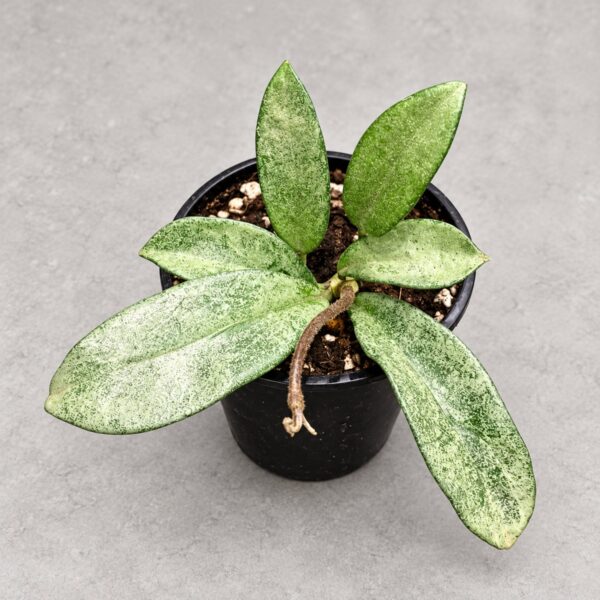
Botanical note: "Broget" is Danish for a cultivar with silver spots scattered across the leaf surface, also often referred to as the Silver form. Some literature treats it as a horticultural selection of Hoya polyneura rather than an independent subspecies.
Origin & characteristics
Hoya polyneura is native to the eastern Himalayas (northern India, Nepal, Bhutan), growing in forest canopies at 300–1,500 metres elevation as an epiphytic vine. Its leaves are narrow and forked like a fishtail, earning it the lovely nickname "Fishtail Hoya."
'Broget' / 'Silver' characteristics:
- Silvery-white spots are evenly scattered across the entire leaf surface, as if dusted with silver powder — highly ornamental
- The patterning is stable and less prone to fading than other variegated cultivars
- Distinctly recessed venation, with a uniquely forked, fishtail-like shape
- Non-toxic to pets, safe for households with cats and dogs
- When flowering, it produces umbel-shaped flower clusters with small, delicately fragrant blooms (more noticeable at night)
Light
- Ideal environment: bright indirect light (roughly 500–800 fc), east- or west-facing windowsills are most ideal
- Acceptable: 1–2 metres from a south-facing window, or filtered through a thin sheer curtain to soften strong light
- Avoid: harsh midday summer direct sun, which fades and can scorch the silver spots
- Note: insufficient light causes thinner new leaves, fewer forks, and dull silver spots
💡 Plantjai tip: gently rotate the pot a quarter turn weekly for even light exposure and a well-balanced shape.
Watering
- Principle: water once the top 2–3 cm of soil dries out — better dry than wet
- Frequency reference:
- Spring/summer (growing season): roughly every 5–7 days
- Autumn/winter (semi-dormant): roughly every 10–14 days
- Method: water slowly around the rim until it drains from the base, emptying the saucer after 15 minutes
- Water quality: room-temperature tap water is fine; if the chlorine smell is strong, let it sit for 24 hours before use
- Warning signs: soft, wrinkled leaves = underwatering; yellow, soft leaves = overwatering causing root rot
⚠️ Excess moisture is the fishtail Hoya's number one killer! Prolonged standing water at the roots easily causes root rot.
Soil & pot
Recommended soil mix (drainage and aeration are king):
- 30% orchid bark / pine bark (coarse grade, maintains air pockets)
- 25% perlite / lava rock
- 25% coco coir (retains moisture while staying breathable)
- 10% coconut husk charcoal (absorbs moisture, inhibits bacteria)
- 10% worm castings / slow-release base fertiliser
Pot choice:
- First choice: a terracotta or breathable plastic pot with drainage holes, letting the roots breathe freely
- Second choice: a cement pot (ensure drainage holes stay unobstructed)
- Avoid: glass or ceramic pots without drainage holes
- Repotting: every 2–3 years, choosing a pot just one size larger than the current one
Temperature & humidity
| Item | Ideal range | Minimum tolerance |
|---|---|---|
| Daytime temperature | 20–26°C | 16°C |
| Nighttime temperature | 16–20°C | 12°C |
| Air humidity | 60–75% | 45% |
- Typical Hong Kong indoor conditions suit it well; avoid direct AC airflow in summer air-conditioned rooms
- When humidity drops below 50% in winter, place a water dish near the pot or occasionally mist (in the morning, avoiding overnight moisture on leaves)
- Average heat tolerance — improve ventilation when summer temperatures exceed 32°C
Common problems
Q1: Silver spots fading or disappearing?
A: Usually due to insufficient light. Move to a brighter spot, avoiding sudden intense exposure — silver spots will gradually return on new leaves.
Q2: Soft, wrinkled leaves?
A: A sign of underwatering. Check whether the soil is fully dry, and water thoroughly if confirmed dry. If the soil is moist but leaves remain wrinkled, this may indicate root rot — check root health.
Q3: Small new leaves, less distinct forking?
A: Insufficient light or inadequate nutrients. Adjust light first, then apply diluted balanced liquid fertiliser (NPK 20-20-20, half strength) monthly during the growing season.
Q4: Yellowing, dropping leaves?
A: Possible causes: (1) overwatering causing root rot, (2) temperature too low, (3) nutrient deficiency. Investigate each in turn, checking soil moisture and root condition.
Q5: Stalled growth?
A: Hoya polyneura has a dormant period, which is normal. Reduce watering to half the usual amount until new growth points reappear, then resume normal care.
How to explain to customers
"This is the fully silver-flecked fishtail Hoya — what's great about it is how the leaves look like a mermaid's tail, with silver stars scattered across the surface, truly stunning at home. It likes a bright but not sun-exposed spot, like beside a windowsill. For watering, remember 'better dry than wet' — touch the soil surface, and once it's dry, water thoroughly. It's non-toxic to cats and dogs, so pet-owning households can bring it home with confidence. The silver spots become more vivid with adequate light, so remember to keep it somewhere bright!"
Fun facts
🐟 A mermaid's leaf: Hoya polyneura's venation structure is one of the most distinctive in the Hoya genus, with each leaf symmetrically forking into two narrow, elongated leaflets, perfectly forming a fishtail shape.
🇩🇰 The mystery of the Danish name: "Broget" is Danish, meaning "mottled spots" — early European horticultural traders named it this, later simplified to the Silver form for convenience.
🏔️ A high-mountain origin: native to the Himalayan region, making it actually fairly cold-hardy (relative to other tropical Hoyas), able to briefly tolerate 12°C.
🌸 Night-blooming fragrance: although the flowers are small, they release a subtle honeyed scent at night, attracting nocturnal insects for pollination.
Keywords
Hoya, fishtail Hoya, silver-flecked Hoya, Hoya polyneura, Broget, Silver, variegated plant, foliage plant, epiphyte, indoor plant, non-toxic plant, pet-friendly, Hong Kong indoor growing, shade-tolerant plant, air purifying, vining plant, Plantjai
參考資料(想知來源可展開)
References
- Royal Botanic Gardens, Kew — Plants of the World Online: Hoya polyneura, https://powo.science.kew.org/
- ASPCA — Toxic and Non-Toxic Plant List, https://www.aspca.org/pet-care/animal-poison-control/toxic-and-non-toxic-plants
⚠️ Non-toxic to cats and dogs; sap may cause mild skin irritation in sensitive individuals.
Plantjai · Causeway Bay collector indoor plants · WhatsApp +852 66807550
For Hong Kong homes and offices. Stock and pricing follow the product page.
IN STORE NOW
Plants for this guide
Related plants in stock now — live prices, delivery or Causeway Bay pickup.
FREE PLANT ADVICE
Send us a photo before you change anything
WhatsApp a photo of the plant and your window light. Our Causeway Bay team will suggest care steps or plants that suit your space.
STORE · CAUSEWAY BAY
4/F, 39 Yiu Wa Street, Causeway Bay
Daily 12:30–8:00pm · ~3 min walk from Times Square
Map & directionsPlant Care