How to Care for Hoya Carnosa Holliana in Hong Kong | Plantjai

Hong Kong care guide for Hoya Carnosa Holliana.
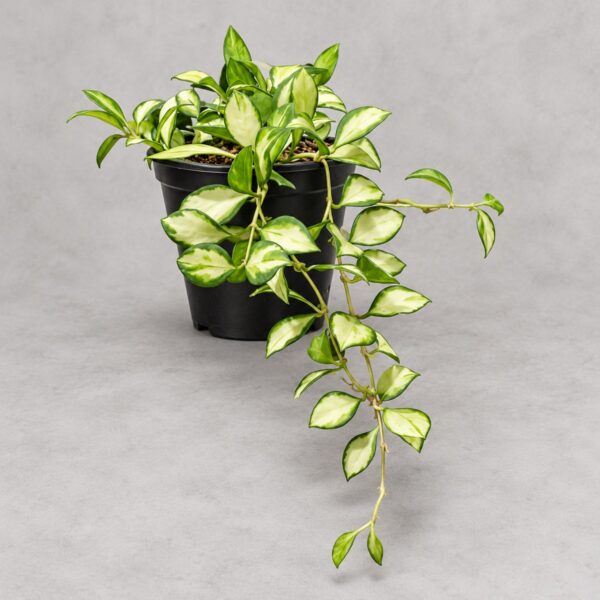
A miniature take on the classic variegated Hoya — tiny ruffled leaves with a dreamy white-and-pink blush that look precious on any windowsill, perfect for gifting or treating yourself.
Brand: Plantjai
Botanical name: Hoya carnosa 'Holliana'
Classification: Apocynaceae, subfamily Asclepiadoideae, genus Hoya
Origin & characteristics
Origin and naming
'Holliana' was bred by American horticulturist Chuck Ebersole and formally described by C.M. Burton in 2002, named after Chuck's daughter, Holliana. It was introduced to the market by renowned Florida grower Jodie Shumaker of Secret Garden Rare Plants. The parent species, Hoya carnosa, is native to Southeast Asia, including southern China, Taiwan, Laos, and Japan (the Ryukyu Islands).
Plant characteristics
- Leaves: small, rippled leaves with wavy, ruffled edges resembling a frilled hem, variegated white to pale pink — essentially a miniature version of Hoya carnosa 'Variegata'
- Stems: vining growth with short internodes, giving it a compact form
- Flowers: star-shaped, waxy, pale pink, sweetly fragrant, reblooming from the same peduncle
- Growth rate: slow to moderate
- Maximum length: roughly 1–1.5 metres
Who it suits
Great for plant lovers who appreciate delicate, small-scale specimens, especially suited to windowsills, desks, or small spaces. Because it grows slowly, it's relatively easy to care for and suitable even for beginners.
Light
Ideal light
- Bright indirect light is the priority, east- or west-facing windows are ideal
- 6–8 hours of bright indirect light daily brings out the most vivid variegation
- Tolerates a little gentle morning direct sun (1–2 hours)
Notes
- ❌ Avoid harsh midday direct sun — the white variegated portions scorch and brown especially easily
- ❌ Prolonged low light causes variegation to revert to green and growth to stall
- 💡 Rotate the pot every few weeks for even light exposure, avoiding lopsided growth
Watering
Watering principle
- Water when just dry: let the soil dry out 2–3 cm below the surface before watering
- Summer (active growth): roughly every 7–10 days
- Winter (semi-dormant): roughly every 14–21 days, depending on ambient humidity
Watering technique
- Water thoroughly until it drains from the base, emptying excess within 30 minutes
- Test soil moisture with a finger, or judge by lifting the pot (lighter means time to water)
- ❌ Never let the saucer hold standing water long-term — it easily causes root rot
- ❌ Don't blindly follow a fixed schedule — always check actual soil moisture
Leaf signals
- Wrinkled leaves = too dry, water soon
- Yellow, soft, dropping leaves = overwatered, possible root rot
Soil & pot
Soil recipe
'Holliana' is epiphytic and needs a fast-draining, breathable mix:
- Suggested recipe: 40% quality peat-free potting soil + 30% perlite + 20% coco coir + 10% tree fern fibre/bark
- pH: slightly acidic to neutral (6.0–7.0)
- ❌ Avoid pure peat or heavy garden soil, which rots roots easily
Pot choice
- Terracotta pots work best, offering good breathability
- Plastic pots are fine too, as long as they have drainage holes
- Choose a slightly smaller pot — being a bit root-bound actually encourages flowering
- When repotting, size up by just 2–3 cm in diameter
When to repot
- Every 2–3 years, best done in spring (March–May)
- Repot when roots visibly emerge from the drainage holes, or soil dries unusually fast
Temperature & humidity
Temperature
- Ideal temperature: 18–27°C (typical Hong Kong indoor conditions suit it well)
- Minimum tolerance: around 10°C; growth stalls below 15°C
- Keep away from AC vents and cold windowsill drafts in winter
Humidity
- Ideal humidity: 40–60%
- Typical Hong Kong indoor humidity (50–70%) is generally suitable
- Occasional misting or a humidity tray helps during dry AC use or winter
- More tolerant of lower humidity than many other tropical plants
Common problems
| Issue | Likely cause | What to do |
|---|---|---|
| Yellow, soft leaves | Overwatering / root rot | Stop watering, check roots, repot and trim rot if needed |
| Wrinkled, dried leaves | Too dry / underwatered | Water thoroughly right away — leaves usually plump back up within 1–2 days |
| Variegation reverting to green | Insufficient light | Move closer to a window, increase bright indirect light |
| Stalled growth | Insufficient light / too cold / pot-bound | Check conditions, consider repotting |
| Leaf drop | Temperature too low / improper watering | Move to a warmer spot, adjust watering frequency |
| No flowers | Immature plant / insufficient light | Provide more light, keep the environment stable, and be patient |
| White cottony spots on leaves | Mealybugs | Dab with an alcohol-soaked cotton swab, or spray neem oil |
⚠️ Important reminders
- Never cut off the peduncle (flower spur) after blooming — it reblooms year after year from the same spot
- Don't move the pot once buds appear, or you risk bud drop
How to explain to customers
"Holliana is a miniature take on the classic variegated Hoya — tiny ruffled leaves with white and soft pink variegation, really lovely on a windowsill or desk. It grows slowly, so it won't outgrow its space quickly, great if you're tight on room. Remember not to water too often — let the soil dry out fully first, since it handles drought well. When it flowers, you get a delicate honey fragrance, and keep that flower stalk after blooming — it reblooms from the same spot every year. It's non-toxic to cats and dogs, so you can grow it worry-free."
Fun facts
- Named after a daughter: breeder Chuck Ebersole named 'Holliana' after his own daughter, Holliana — many Hoya cultivars in fact carry the names of loved ones.
- "Divan" was its old name: when first described in 2002, it had a synonym, "Divan," though this name has fallen out of use in favour of "Holliana."
- Leaves reminiscent of holly: with their small, ruffled, wavy edges, some growers think the leaves resemble holly leaves, which may be echoed in the cultivar's name.
- Variegation turns pink in bright light: under ample bright light, the white variegated portions take on a soft pink blush, adding to the dreamy effect.
- Hoyas are air-purifying overachievers: a 2009 University of Georgia study found Hoya carnosa to be an excellent indoor air purifier, capable of absorbing volatile organic compounds (VOCs).
Keywords
Hoya carnosa Holliana, Holliana, miniature Hoya, variegated Hoya, white variegation, ruffled leaves, rippled leaves, slow-growing cultivar, climbing plant, epiphyte, wax flowers, star-shaped flowers, honey fragrance, indoor plant, windowsill plant, non-toxic to pets, Plantjai, well-draining soil, bright indirect light, water when just dry, keep the flower stalk, tropical plant, foliage plant, flowering plant
參考資料(想知來源可展開)
References
- Royal Botanic Gardens, Kew — Plants of the World Online: Hoya carnosa, https://powo.science.kew.org/
- ASPCA — Toxic and Non-Toxic Plant List, https://www.aspca.org/pet-care/animal-poison-control/toxic-and-non-toxic-plants
- Wolverton, B.C. et al. — Foliage Plants for Removing Indoor Air Pollutants, University of Georgia, 2009
⚠️ Safety note: Hoya carnosa 'Holliana' is non-toxic to cats and dogs (ASPCA verified), but the sap may cause mild skin irritation — wearing gloves when pruning is recommended. Large ingestions by pets may cause mild digestive upset.
Plantjai · Causeway Bay collector indoor plants · WhatsApp +852 66807550
For Hong Kong homes and offices. Stock and pricing follow the product page.
IN STORE NOW
Plants for this guide
Related plants in stock now — live prices, delivery or Causeway Bay pickup.
FREE PLANT ADVICE
Send us a photo before you change anything
WhatsApp a photo of the plant and your window light. Our Causeway Bay team will suggest care steps or plants that suit your space.
STORE · CAUSEWAY BAY
4/F, 39 Yiu Wa Street, Causeway Bay
Daily 12:30–8:00pm · ~3 min walk from Times Square
Map & directionsPlant Care