How to Care for Homalomela Wallisii Camouflage in Hong Kong | Plantjai

Hong Kong care guide for Homalomela Wallisii Camouflage.
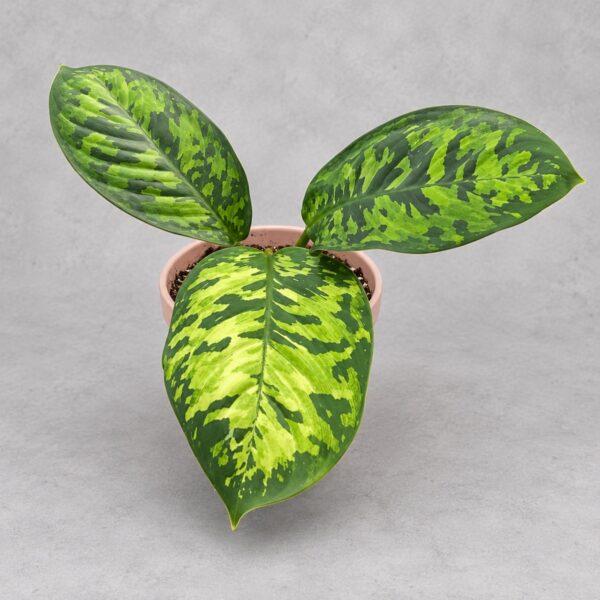
Leaves covered in interlocking patches of deep and pale green, like jungle camouflage rendered in living foliage — one of the few houseplants that comes with a built-in "stealth mode."
Brand: Plantjai
>
⚠️ Botanical note: commonly written as "Homalomela wallisii" in the trade, but the correct botanical name is Homalomena wallisii (genus Homalomena, family Araceae). Please defer to the latest botanical taxonomy if sources differ.
Origin & characteristics
This "camouflage" cultivar is native to the shaded, damp forest floor of tropical rainforest (primarily found in Colombia and Venezuela), and belongs to the arum family (Araceae), genus Homalomena, as a perennial evergreen herb. It grows in a clumping form, with leaves emerging directly from an underground rhizome rather than climbing. Plants reach about 20–30 cm tall, with broad ovate to elliptical leaves covered in a mottled pattern of olive and deep green, giving the foliage a low-key, velvety, luxurious texture — hence the "camouflage" name. Its strong shade tolerance and compact form make it especially well suited to tabletops or dimmer corners of a room.
⚠️ Toxicity note: the whole plant contains calcium oxalate crystals, toxic to humans and pets (cats, dogs); ingestion can cause oral pain, swelling, vomiting, or diarrhoea, and skin contact with the sap may also cause irritation. Wear gloves when pruning, and keep it out of reach of children and pets.
Light
- Ideal position: an east- or north-facing window with bright indirect light, receiving gentle morning light or filtered daylight
- Shade tolerance: more shade-tolerant than most patterned foliage plants, able to maintain healthy growth in softer indoor lighting — a genuine "saviour for dim corners"
- Warning signs of too much light: direct sun (especially afternoon west-facing exposure) will scorch the leaf surface, fading the pattern and crisping the edges; if you notice brown sunburn spots, move it away from strong light immediately
- Signs of decline in low light: prolonged exposure to overly dim conditions won't kill the plant, but growth slows, new leaves shrink, and pattern contrast fades
- Ideal light level: roughly 100–250 foot-candles of indirect light, equivalent to a position 1–2 metres from an east-facing window
Watering
- Basic principle: "water when dry, water thoroughly" — let the top 2.5–5 cm of soil (about a finger joint's depth) dry out before watering thoroughly until it drains from the base
- Reading the signs: this genus has a distinctive "tells you when it's thirsty" trait — slight leaf drooping signals it wants water, and it perks back up quickly after watering
- Seasonal adjustment:
- Spring/summer (active growth): water roughly every 7–10 days, keeping soil lightly moist
- Autumn/winter (slow growth): roughly every 14 days, letting the upper soil dry out before watering again
- Avoid overwatering: standing water is this plant's biggest enemy — always empty the saucer after watering; better to run slightly dry than to leave it consistently soggy
- Water temperature: use room-temperature water (around 20–25°C) — overly cold water can shock the roots
- Water quality: ordinary tap water settled overnight is fine; filtered water is even better
Soil & pot
- Soil recipes (aroid-specific):
- Recipe one (recommended): peat or coco coir 40% + orchid bark 25% + perlite 20% + coco husk chips 10% + bamboo charcoal 5%
- Recipe two (simple): general potting soil 50% + perlite 25% + orchid bark 25%
- Recipe three (advanced): all-purpose potting mix 1 part + orchid bark 1 part + perlite 1 part + bamboo charcoal 0.5 part + worm castings 0.5 part
- Medium characteristics: needs to balance both "moisture retention" and "aeration" — too dry causes sparse, yellowing leaves; too wet causes root rot
- Pot selection: a terracotta or plastic pot with drainage holes works well; because the root system spreads horizontally, a wide, shallow pot suits it better than a tall, deep one
- Repotting timing: roughly every 12–18 months in spring, sizing up just one pot each time — repotting is also a good opportunity for division propagation
- Drainage layer: add a layer of small clay pebbles or gravel at the bottom of the pot when repotting to prevent the drainage holes from clogging
Temperature & humidity
| Item | Ideal range | Tolerance limits |
|---|---|---|
| Growing temperature | 18–27°C | Minimum 15°C, maximum 32°C |
| Humidity | 50% or above | Ideal 60–80% |
- As a rainforest-floor native, this plant prefers warm, humid conditions and is very sensitive to cold drafts
- Never place it near an AC vent or door/window draft — cold air causes yellowing and water-soaked spotting on the leaves
- Growth stalls below 15°C, and prolonged exposure below 10°C may cause root rot
- Hong Kong summers are generally fine; watch humidity carefully in winter when heating dries the air
- Ways to raise humidity:
- A humidifier (most recommended)
- Grouping several plants together to create a shared "plant microclimate"
- Placing it in a naturally humid space, like a bathroom (if there's enough light)
- A pebble tray under the pot (make sure the water level doesn't touch the pot base)
Common problems
| Symptom | Likely cause | Solution |
|---|---|---|
| Drooping, wilting leaves | Thirst | Water thoroughly right away — it usually perks back up within half a day to a day |
| Persistent drooping even after watering | Root rot (overwatering) | Remove from the pot to check the roots, trim away rotten sections, repot in fresh soil |
| Browning, dry leaf edges | Humidity too low | Increase ambient humidity with a humidifier or pebble tray |
| Smaller, duller new leaves | Insufficient light or lack of nutrients | Move to a brighter spot, begin feeding at the start of the growing season |
| Yellow spotting or water-soaked patches on leaves | Cold drafts or temperatures too low | Move away from AC vents or doors/windows, keep conditions stable |
| Fading or blurring pattern | Excess light or fertiliser too strong | Move away from strong light, dilute fertiliser to half strength |
| White powdery residue on leaves | Mealybug infestation | Wipe with an alcohol-soaked cotton swab, use insecticidal soap if severe |
| Fine webbing on leaf undersides | Spider mites | Increase humidity, rinse leaf undersides with water, use a dedicated miticide if severe |
| Yellowing lower leaves | Normal ageing | Trim off with clean scissors from the base of the leaf stalk |
How to explain to customers
"This camouflage Homalomena is an arum family plant native to the floor of Southeast Asian and South American rainforests, so it really loves warm, humid conditions with soft, indirect light. It'll do fine near an east-facing window or in a bright indoor corner — it's genuinely hard to kill. For watering, remember 'water when dry' — check with a finger about one knuckle deep, and water thoroughly once it's dry. It's a bit of a drama queen in a charming way — when it's thirsty, the leaves droop noticeably, then perk right back up once watered. In summer, keep it away from AC vents, and in winter with the heater running, add some humidity, or the leaf edges can dry out easily. It's toxic, so wear gloves when pruning and keep it away from cats, dogs, and kids."
Fun facts
- A rainforest-floor dweller: Homalomena grows on the deepest floor of the tropical rainforest, never seeing direct sunlight year-round, which has given it exceptional shade tolerance — one of the few plants that stays genuinely happy in a dim indoor corner.
- A name with history: the genus name "Homalomena" comes from the Greek "homalos" (flat) and "mene" (moon), describing the flat, moonlit sheen of its leaves; the species name "wallisii" honours the 19th-century German plant collector Gustav Wallis.
- Every camouflage pattern is unique: each leaf's mottled pattern is distinct, much like a human fingerprint — meaning every camouflage Homalomena is a genuinely one-of-a-kind piece.
- A NASA-recognised air purifier: studies have shown that Homalomena wallisii can effectively reduce indoor ammonia levels, making it especially useful for newly renovated homes or households with pets.
- Medicinal history: in traditional Southeast Asian medicine, Homalomena leaves have historically been used as a topical treatment for skin inflammation, and the rhizome was believed to help with rheumatism (⚠️ self-medicating is not recommended — the whole plant is toxic).
- A "quiet" plant that doesn't climb walls: unlike its arum-family relatives (such as pothos or philodendron), Homalomena doesn't produce climbing aerial roots — it simply grows in a tidy clump in the pot, making it ideal for anyone who prefers a neat, orderly plant.
Keywords
Camouflage Homalomena, Camouflage Homalomena, Homalomena, arum family, Homalomena wallisii, rainforest plant, shade-tolerant plant, clumping foliage, tabletop plant, air-purifying, low-maintenance, beginner-friendly, patterned foliage, toxic plant, indoor foliage
Plantjai · Causeway Bay collector indoor plants · WhatsApp +852 66807550
Plantjai shop · In stock online
Homalomela wallisii 'Camouflage'
Homalomela wallisii 'Camouflage'
HK$180.00
Hong Kong delivery · Causeway Bay pickup
For Hong Kong homes and offices. Stock and pricing follow the product page.
IN STORE NOW
Plants for this guide
Related plants in stock now — live prices, delivery or Causeway Bay pickup.
Homalomela wallisii 'Camouflage'
Homalomela wallisii 'Camouflage'
HK$180.00
In stock · store pickup
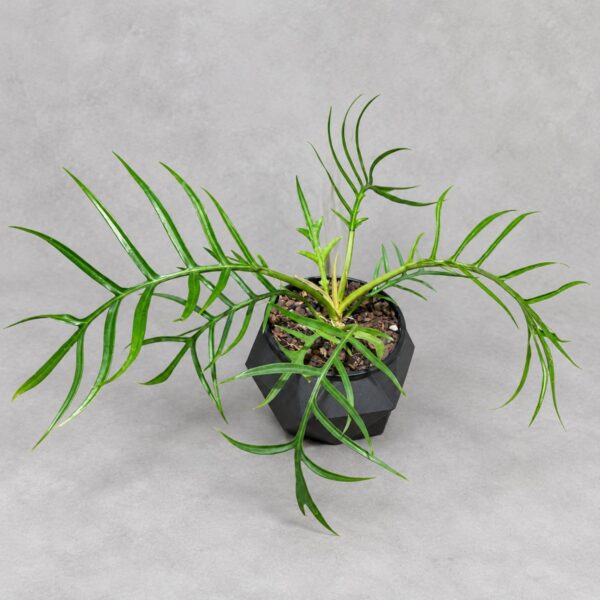
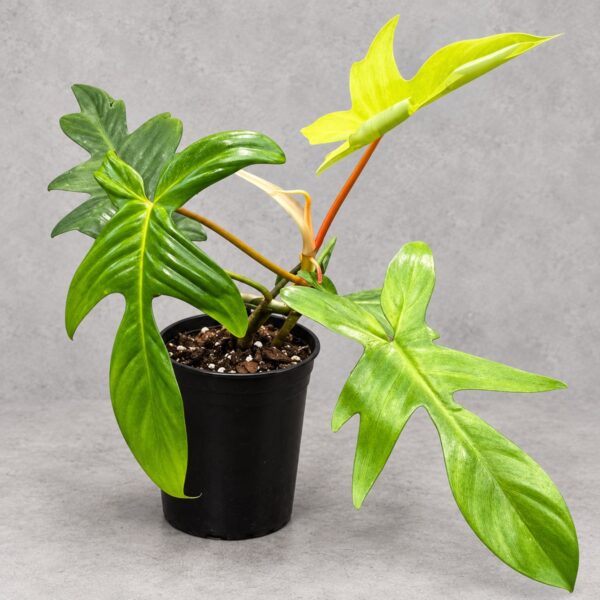
View plantPhilodendron 'Florida Ghost'
Philodendron 'Florida Ghost'
from HK$118.00
In stock · store pickup
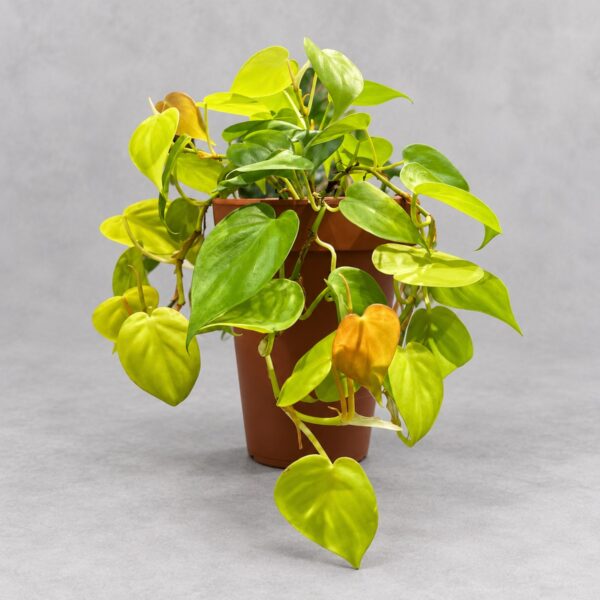
View plantPhilodendron hederaceum 'Lemon Lime'
Philodendron hederaceum 'Lemon Lime'
HK$198.00
In stock · store pickup
View plant
FREE PLANT ADVICE
Send us a photo before you change anything
WhatsApp a photo of the plant and your window light. Our Causeway Bay team will suggest care steps or plants that suit your space.
STORE · CAUSEWAY BAY
4/F, 39 Yiu Wa Street, Causeway Bay
Daily 12:30–8:00pm · ~3 min walk from Times Square
Map & directionsPlant Care