
How to Care for Anthurium Red Crystallinum Hybrid in Hong Kong | Plantjai

Hong Kong care guide for Anthurium Red Crystallinum Hybrid.
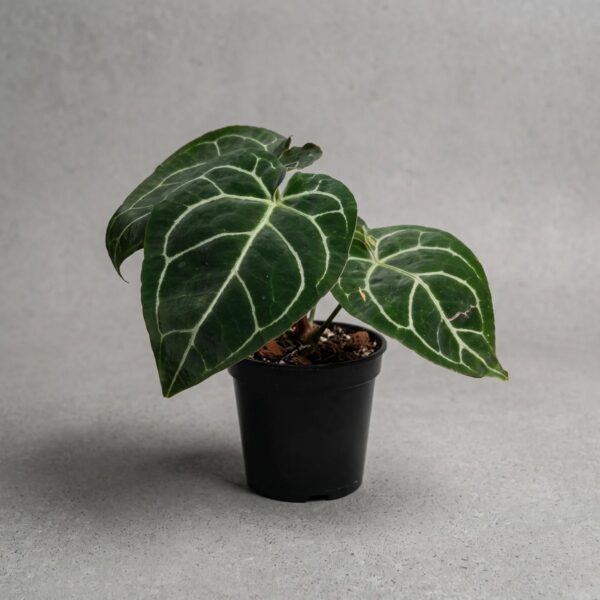
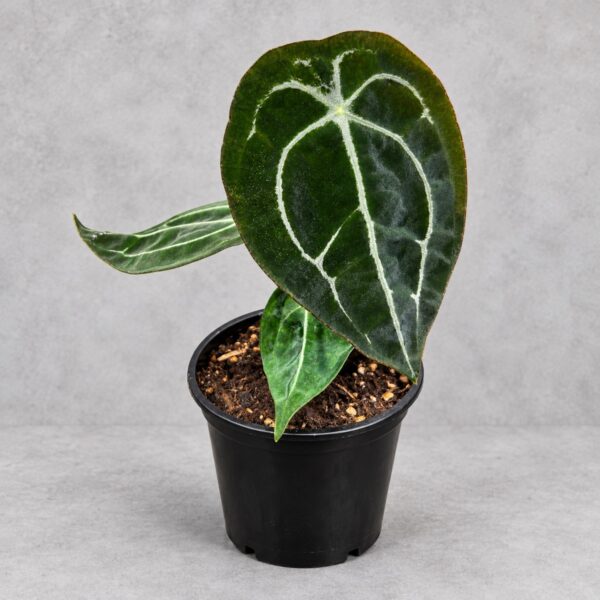
The lush genetics of Red Crystallinum carried into hybrid offspring — metallic red-shimmering veins on a velvet-textured leaf, a top-tier collector's piece in the foliage plant world.
Origin & characteristics
Red Crystallinum (Anthurium crystallinum 'Red') is a red-veined variant of the species originally distributed across Central and South American tropical rainforest, and RCx hybrids are a series of hybrids bred by using Red Crystallinum as a parent plant, within the genus Anthurium of the Araceae family. The leaves are heart-shaped or elongated egg-shaped, with a thick, velvety texture, coloured deep green to reddish-purple, and most distinctively, the veins display a shimmering metallic red or silver-white sheen that catches the light. Hybrid offspring typically combine the strengths of multiple parent plants, potentially featuring larger leaves, more vivid vein colour, or stronger adaptability. This is a medium-to-large foliage plant, with mature leaves reaching 30–50 cm in length.
⚠️ Toxicity note: Anthuriums contain calcium oxalate crystals, which irritate the mouth and digestive tract if ingested, causing swelling and pain. Keep away from children and pets when displaying, and wash hands thoroughly after contact with sap, avoiding rubbing your eyes.
Light
- Bright, diffused light: an east- or north-facing window is ideal, tolerating gentle morning sun
- Avoid direct light: strong light scorches the velvety leaf surface, leaving permanent brown spots
- Supplemental lighting: for indoor growing, pair with a grow light for 8–12 hours daily
- Light indicator: if new leaves are small and vein colour fades, that indicates insufficient light
Watering
- Water once the topsoil is slightly dry: water once the top 1–2 cm has dried
- Spring/summer growing season: roughly every 5–7 days, keeping the soil lightly moist
- Reduce in autumn/winter: roughly every 7–10 days, further reducing below 18°C
- Water quality requirements: filtered water, rainwater, or tap water left to stand overnight is best, to avoid fluoride damaging the velvety leaves
- Watering method: water thoroughly along the pot's edge, avoiding splashing water directly on the leaves
Soil & pot
- Soil: a well-draining, aerated aroid-specific recipe — peat : perlite : coco coir : bark = 4:2:2:2
- pH value: slightly acidic (pH 5.5–6.5)
- Pot: a well-aerated ceramic or air-pruning pot, with drainage holes at the base essential
- Repotting: repot once a year or two in spring, not burying the roots too deep
- Root characteristics: Anthurium roots need good aeration — soil that's too wet easily leads to root rot
Temperature & humidity
- Ideal temperature: 22–28°C, this tropical plant prefers a warm environment
- Minimum temperature: not below 15°C, or growth will stall
- Ideal humidity: 70–85%, with high humidity producing the best leaf growth
- Humidification methods:
- Humidifier (most recommended)
- Pebble tray (making sure the pot's base doesn't touch the water directly)
- Grouping with other plants
- Daily misting into the surrounding air
- Ventilation: high humidity must be paired with good ventilation, or disease becomes likely
Common problems
| Issue | Likely cause | What to do |
|---|---|---|
| Fading vein colour | Insufficient light or humidity too low | Increase diffused light, raise environmental humidity |
| Browning leaf tips | Humidity too low or water too hard | Switch to filtered water, increase humidity |
| Small, malformed new leaves | Insufficient humidity or nutrient deficiency | Check humidity, feed lightly during the growing season |
| Yellow spots on leaves | Sunburn or overwatering | Adjust placement, control watering amount |
| Root rot | Soil too wet or poor drainage | Repot and trim roots immediately, switch to more aerated soil |
| Spider mite infestation | Air too dry | Increase humidity, clean leaf undersides with soapy water |
How to explain to customers
"Red Crystallinum hybrids are top-tier goods in the foliage plant world — the leaf has a genuinely velvety texture, and the veins shimmer with light, instantly elevating your home! It comes from tropical rainforest, so it needs warmth and high humidity — ideally with a humidifier nearby. Watering-wise, don't let it get too wet — wait until the topsoil is slightly dry before watering. Most importantly, don't put it in direct sun — diffused light suits it best. Although it's toxic and can't be eaten, it's perfectly safe to display and admire at home — just teach children and pets not to touch it."
Fun facts
The genus name Anthurium comes from the ancient Greek "anthos" (flower) and "oura" (tail), describing its distinctive spadix inflorescence shape. Red Crystallinum's velvety leaf surface actually evolved as an adaptation to the rainforest understorey environment — the fine fuzz lets water droplets slide off quickly, preventing fungal growth, while also scattering light to allow photosynthesis even in dim conditions. In the international horticultural market, a single leaf of a premium Red Crystallinum hybrid can sell for hundreds or even thousands of US dollars, making it a genuine "plant luxury item." The breeding process for hybrids is extremely lengthy — from pollination to seed maturity can take over a year, so every Red Crystallinum hybrid represents a horticulturist's significant investment of time and care.
Keywords
Red Crystallinum hybrid, RCx Anthurium Red Crystallinum, Araceae, Anthurium genus, foliage Anthurium, velvet leaf, red venation, metallic sheen, tropical rainforest plant, high humidity, diffused light, plant luxury item, toxic plant, collector plant, aroid-specific soil
In-depth care guide
Introduction
Red Crystallinum Hybrids (commonly abbreviated "RCx" in the trade) represent a growing family of Anthurium cultivars bred using Red Crystallinum — a striking, red-veined form of Anthurium crystallinum — as one parent. Because breeders have crossed Red Crystallinum with a range of other Anthurium species over the years (commonly A. magnificum, A. dressleri, and various clarinervium-group species), "RCx hybrids" isn't a single fixed cultivar but rather a whole spectrum of related plants, each showing some combination of the parent's signature deep, velvety leaf and metallic red venation, blended with traits from the other parent involved.
What unites this group of hybrids is the visual drama of their leaves: a rich, velvety surface in deep green to reddish-purple tones, contrasted against veins that genuinely shimmer with a reddish or silvery metallic quality under good light. This shimmer effect, combined with the relative rarity and breeding complexity involved in producing these hybrids, has made RCx-type Anthuriums some of the most prized and expensive plants in the current collector market.
Light requirements
RCx hybrids need bright, indirect light to develop their best colour and vein contrast. An east- or north-facing window offering gentle morning sun works well; if using a south-facing window, always filter the light with a sheer curtain. Direct sun will scorch the velvety leaf surface within hours, leaving permanent brown or bleached patches. Conversely, if light is too weak, new leaves come in smaller and the prized red-metallic vein colour fades to a duller tone — light quality genuinely determines how spectacular this plant looks. For homes with limited natural light, a full-spectrum LED grow light run 8–12 hours daily makes a worthwhile supplement.
Watering technique
Water once the top 1–2 cm of soil has dried, roughly every 5–7 days during the spring/summer growing season, stretching to every 7–10 days in autumn/winter, and further reducing frequency if indoor temperatures drop below 18°C. Always water along the pot's edge rather than from overhead, avoiding water splashing directly onto the velvety leaves, which can leave permanent water spots and encourage fungal issues. Use filtered water, rainwater, or tap water left to stand overnight, since fluoride and chlorine in fresh tap water are particularly damaging to this plant's delicate leaf surface over time.
Soil and potting
A well-draining, aerated aroid-specific mix works best: peat, perlite, coco coir, and bark in a 4:2:2:2 ratio, giving a slightly acidic pH of 5.5–6.5. Choose a well-aerated ceramic pot or air-pruning pot with generous drainage holes — Anthurium roots need excellent airflow, and soil that stays too wet quickly leads to root rot. Repot once every one to two years in spring, taking care not to bury the crown too deeply.
Temperature and humidity
RCx hybrids, as tropical plants, prefer a warm environment of 22–28°C, and shouldn't be exposed to temperatures below 15°C for any length of time, or growth will stall. Humidity requirements are on the higher side — 70–85% is ideal, since high humidity is essential for producing the plant's best leaf growth and colour development. A humidifier is the most reliable way to achieve this consistently; a pebble tray, grouping with other tropical plants, and daily misting into the surrounding air (not directly onto the leaves) can all serve as supplementary methods. High humidity must always be paired with good ventilation, since stuffy, humid conditions without airflow significantly increase the risk of fungal and bacterial disease on the velvety leaf surface.
Feeding
During the growing season, a light, diluted balanced liquid fertiliser applied every three to four weeks supports healthy leaf development without risking fertiliser burn. Always water first before feeding to avoid concentrated fertiliser contacting dry roots. Reduce or stop feeding through the cooler winter months.
Common problems
Fading vein colour: the single most common concern with this plant — check light levels first, then humidity, since both directly affect how vividly the metallic red venation develops on new leaves.
Browning leaf tips: almost always traced back to humidity too low or water too hard — switch to filtered water and raise ambient humidity.
Small, malformed new leaves: usually a humidity or nutrition issue during the critical unfurling period — check both before assuming a more serious problem.
Yellow spots on leaves: check for sunburn first if the plant has recently moved to a brighter spot, then check for overwatering if the soil has stayed consistently wet.
Root rot: if roots appear black and mushy when checked, repot immediately into fresh, more aerated soil and trim away all affected roots.
Spider mites: particularly likely in dry conditions — raise humidity and wipe leaf undersides with soapy water at the first sign of infestation.
Toxicity information
Like all Anthurium hybrids, RCx Red Crystallinum hybrids contain calcium oxalate crystals throughout the plant, irritating the mouth and digestive tract if ingested and causing swelling and pain. Keep the plant well out of reach of children and pets, and wash your hands thoroughly after handling the plant or coming into contact with its sap, taking care not to touch your eyes.
參考資料(想知來源可展開)
References
- International Aroid Society. Anthurium species and cultivar database. https://www.aroid.org
- Exotica Esoterica. Velvet leaf anthuriums in cultivation, by Jay Vannini. https://www.exoticaesoterica.com/magazine/the-ultimate-guide-to-velvet-leaf-anthuriums
- Tropical Plant Kit. Anthurium Red Crystallinum Care Guide. https://tropicalplantkit.com/anthurium-red-crystallinum-care-guide-easy-tips-pricing-range/
- Royal Horticultural Society (RHS). How to grow anthuriums. https://www.rhs.org.uk/plants/anthuriums/how-to-grow-anthuriums
- Aroid Wiki. Anthurium Red Crystallinum | How To Best Care Guide. https://aroidwiki.com/anthurium-red-crystallinum/
For Hong Kong homes and offices. Stock and pricing follow the product page.
IN STORE NOW
Plants for this guide
Related plants in stock now — live prices, delivery or Causeway Bay pickup.
Anthurium crystallinum
Anthurium crystallinum
Original price was: HK$780.00.HK$380.00Current price is: HK$380.00.
In stock · store pickup
View plant
FREE PLANT ADVICE
Send us a photo before you change anything
WhatsApp a photo of the plant and your window light. Our Causeway Bay team will suggest care steps or plants that suit your space.
STORE · CAUSEWAY BAY
4/F, 39 Yiu Wa Street, Causeway Bay
Daily 12:30–8:00pm · ~3 min walk from Times Square
Map & directionsPlant Care