How to Care for Amydrium Cebu Blue in Hong Kong | Plantjai

Hong Kong care guide for Amydrium Cebu Blue.
Dreamy metallic-blue leaves with instant Instagram appeal — a beginner-friendly climber that's become a genuine social media star.
Origin & characteristics
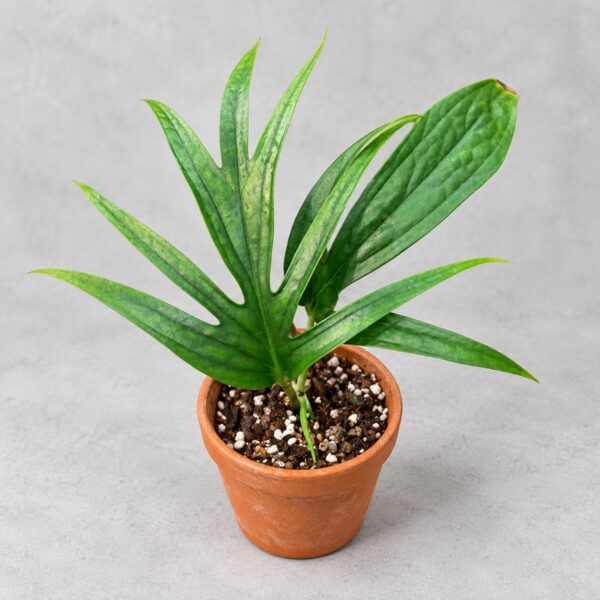
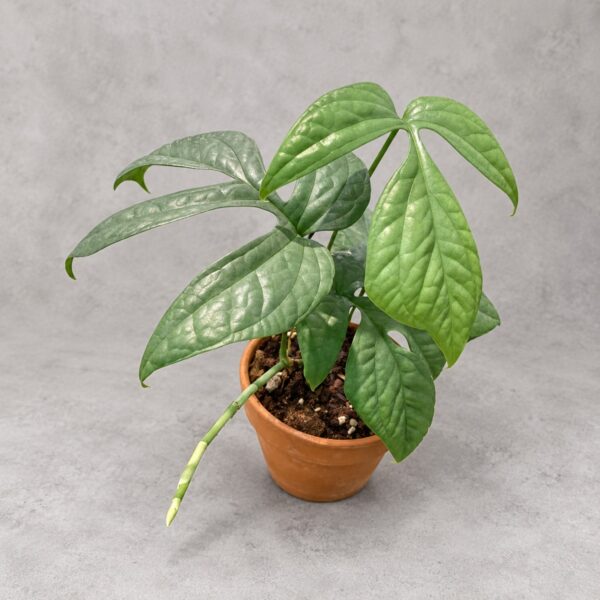
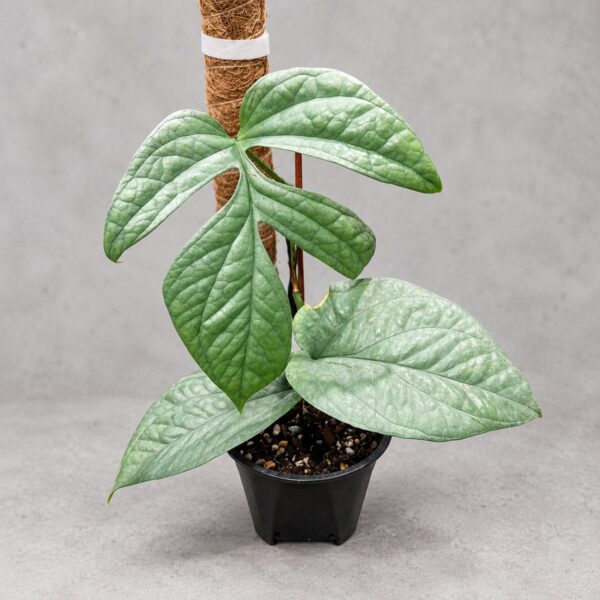
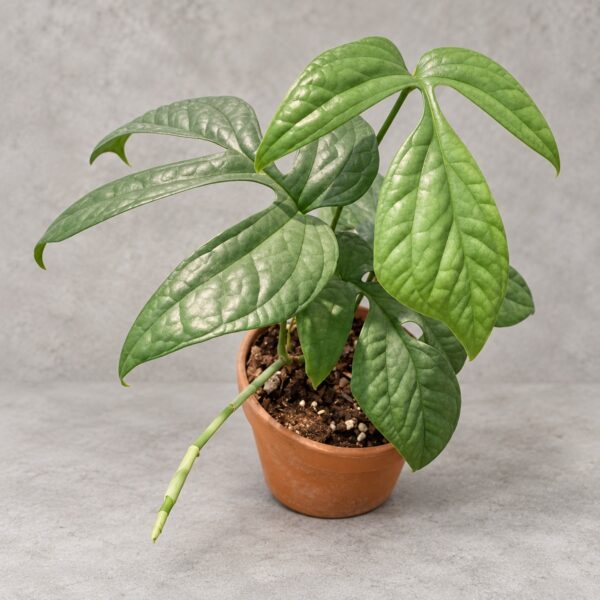
Native to the rainforests of Cebu Island in the Philippines, Cebu Blue is a perennial climbing member of the Araceae family. Young leaves are narrow and lance-shaped; as the plant matures, leaves gradually split and develop a distinctive spiderweb-like vein pattern, taking on a rare metallic blue-green sheen that flashes bright blue under the right light — genuinely eye-catching. It's an epiphytic climber that, in the wild, attaches to tree trunks via aerial roots; indoors, it can be trained up a moss pole or trellis.
Light
- Ideal light: bright, indirect light to partial sun; east- or north-facing windowsills suit it best.
- How it responds: enough light produces bluer, brighter leaves with sharper venation; too little light causes the colour to fade toward green, with elongated, sparse growth between leaves.
- Avoid: strong direct midday sun in summer, which will scorch the leaves with brown patches.
- Supplemental lighting: a grow light for 8–12 hours daily works well if natural light is limited.
Watering
- Frequency: every 5–7 days in spring/summer, every 7–10 days in autumn/winter.
- Principle: water once the top 2–3 cm of soil has dried — better slightly dry than too wet.
- Water quality: room-temperature settled tap water, filtered water, or rainwater are all fine; avoid using water straight from the tap when it's ice cold.
- Seasonal adjustment: reduce watering during the rainy season; cut back further in cold winter weather.
- Note: standing water in the pot invites root rot — always make sure the saucer is empty after watering.
Soil & pot
- Soil recipe: use a well-draining, slightly acidic aroid mix, such as:
- Sphagnum moss + perlite + bark, in a 5:3:2 ratio
- Or peat + perlite + coco coir, in a 4:3:3 ratio
- pH: 5.5–6.5 is ideal.
- Pot choice: either ceramic or plastic works, as long as there are drainage holes; a moss pole or trellis is recommended to support its climbing habit.
- Repotting: once roots fill the pot or emerge from the drainage holes — typically once a year in spring.
Temperature & humidity
- Ideal temperature: 20–30°C, the range where growth is most vigorous.
- Minimum tolerance: briefly down to 15°C; sustained temperatures below this stall growth.
- Humidity: 60–80% is ideal; below 50%, leaf tips dry out.
- Raising humidity: place near a humidifier, group with other plants, or set the pot on a tray of moist pebbles.
- Ventilation: high humidity needs good airflow too, or fungal problems can develop.
Common problems
| Issue | Likely cause | What to do |
|---|---|---|
| Leaves fading to plain green | Insufficient light | Gradually move to a brighter spot |
| Yellowing leaf tips | Air too dry or inconsistent watering | Check humidity and watering routine |
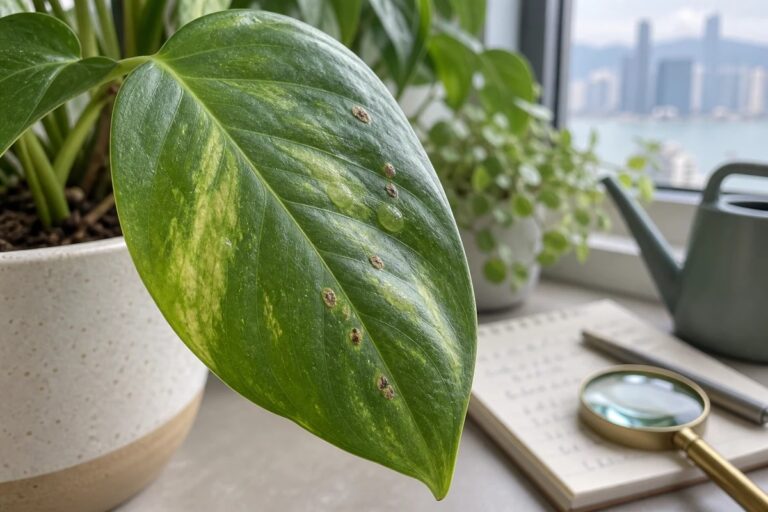
| Brown spots on leaves | Overwatering leading to root rot, or fungal infection | Check root health |
| Stalled growth | Normal in winter cold, or the pot may be root-bound | Check whether repotting is needed |
| Pests | Occasional spider mites or scale insects | Check leaf undersides regularly; treat with neem oil or soapy water |
How to explain to customers
"Cebu Blue has become a real social media favourite recently — that metallic blue sheen on the leaves photographs beautifully in sunlight! It likes things on the humid and bright side, so keep it near a window and water it about once a week, and it'll happily climb away for you."
Fun facts
Cebu Blue's blue sheen comes from a special structure in the leaf's epidermal cells that reflects blue light wavelengths — similar to the optical effect seen in some tropical butterfly wings — rather than from any actual blue pigment.
Keywords
Cebu Blue, Amydrium medium, spiderweb vine, Araceae, climbing plant, metallic blue leaf, fenestration, moss pole, high humidity, indirect light, Philodendron relative, houseplant, social media plant
參考資料(想知來源可展開)
References
- Plants of the World Online (Kew) — Amydrium medium. https://powo.science.kew.org
- RHS — General houseplant care. https://www.rhs.org.uk/plants
- Missouri Botanical Garden — Plant Finder. https://www.missouribotanicalgarden.org/PlantFinder/PlantFinderDetails.aspx?taxonid=285730
⚠️ Pet / toxicity note: Like other Araceae members, contains calcium oxalate crystals; can cause oral irritation if ingested. Keep away from pets and small children, and wash hands after handling.
In-depth care guide
Introduction
Cebu Blue (Amydrium medium 'Cebu Blue') is a popular cultivar in the genus Amydrium within the Araceae family, native to Cebu Island in the Philippines and other parts of tropical Southeast Asia, including Thailand, the Malay Peninsula, Sumatra, and Borneo. It's a hemi-epiphytic vine that, in its native environment, climbs up tree trunks, gradually transitioning from a juvenile terrestrial form into a mature climbing form.
Although it's often marketed in the trade as "Cebu Blue Pothos," it's strictly speaking not a pothos (Epipremnum aureum) at all — it belongs to the genus Amydrium, which is actually more closely related to Monstera. The most captivating thing about this plant is its dramatic colour transformation: new leaves emerge pale green with a soft metallic sheen, gradually deepening into silvery blue as they mature, catching the light with an almost silk-like lustre that's genuinely dreamlike to watch develop.
According to Folia Collective, when given something to climb, Amydrium undergoes a dramatic transformation as the plant matures — small, elongated juvenile leaves gradually give way to large, deeply lobed, fenestrated (perforated) mature leaves. Brian's Botanicals notes that in the wild, mature Amydrium medium leaves can reach 2 feet wide by 3 feet long — a genuinely spectacular sight.
Light requirements
Cebu Blue needs bright, indirect light to grow well and to develop its best colour. In its native habitat, it starts life in the shadier forest understorey and gradually encounters more light as it climbs upward, so it's adapted to bright but filtered conditions rather than harsh direct sun.
The ideal spot is an east- or west-facing window with a sheer curtain to soften direct light. Folia Collective points out that if light is too weak, growth slows, leaves become smaller, and the plant may drop leaves to balance the amount of foliage against the available light. But if direct sunlight is too intense, particularly at midday, it will scorch the relatively thin leaf tissue.
PLNTS.com recommends rotating the pot regularly to ensure even light exposure on all sides, preventing the plant from leaning too heavily toward the light source. If you want to see the mature form with large, fenestrated leaves, providing both ample bright, indirect light and a climbing support is essential.
Temperature and humidity
Cebu Blue's ideal growing temperature is between 18–28°C, similar to most tropical foliage plants. It isn't cold-hardy and should avoid prolonged exposure below 15°C, and especially direct cold draughts. Sudden temperature swings stress the plant and can cause yellowing or leaf drop.
For humidity, the ideal range is 60–80%. Grow Tropicals notes that it can tolerate average indoor humidity of around 50%, but the higher the humidity, the more robust the growth and leaf development. Low humidity often shows up as browning leaf edges or tips. Ways to raise humidity include using a humidifier, grouping plants together, or using a pebble tray.
It's worth noting that while Cebu Blue enjoys high humidity, good air circulation matters just as much. A stuffy, poorly ventilated environment easily encourages fungal growth and bacterial leaf spot, so maintaining airflow alongside humidity is key to success.
Watering technique
Cebu Blue's watering principle is to keep the soil consistently lightly moist, but never waterlogged. Folia Collective suggests watering once the top third of the soil has dried. You can test this by inserting a finger into the soil, or use a moisture meter for a more precise reading.
PLNTS.com also recommends waiting until the top inch of soil has dried before watering, and ensuring the pot has good drainage holes. Water thoroughly, letting it drain fully from the base, then empty any standing water from the saucer. Summer's active growing season may call for more frequent watering, while winter's slower growth calls for less.
A useful practical cue: when the leaves start to droop slightly, that's usually a sign the plant needs water. But avoid waiting until the plant is fully wilted before watering, since prolonged extreme dryness can cause irreversible damage to some roots and leaves. On the other hand, soil that stays wet for too long leads to root rot — the number one killer of most foliage plants.
Soil recipe
Cebu Blue needs a loose, well-draining medium that still holds a moderate amount of moisture. As a hemi-epiphytic plant, its roots need plenty of airflow.
PLNTS.com recommends a mix of coco coir, perlite, and orchid bark. A general-purpose recipe would be:
- 3 parts quality soil-free potting mix or coco coir
- 1 part perlite (for aeration and drainage)
- 1 part orchid bark or coarse coconut husk (for structure)
Folia Collective recommends using a coarser-grained potting mix designed specifically for Araceae plants. The key is keeping the soil "loose" enough that roots have plenty of air, without letting the medium become dense and waterlogged.
For pots, choose a standard container with drainage holes. There's no need for an oversized pot, since excess soil volume takes longer to dry out and increases the risk of root rot. Repot every 1–2 years, or once the plant is clearly root-bound.
Feeding
Cebu Blue benefits from regular feeding during the growing season (spring and summer). PLNTS.com recommends a balanced liquid fertiliser every 4–6 weeks, diluted to half the recommended package strength. An organic liquid fertiliser is also a good choice, providing gentle, sustained nourishment.
Folia Collective recommends light but consistent feeding during active growth, supporting leaf development without causing weak, leggy growth. Stop feeding entirely once autumn arrives, letting the plant rest through winter. Overfeeding can cause leaf distortion, overly fast but weak growth, and salt buildup in the soil.
Make sure the soil is already moist before feeding, to avoid feeding directly onto dry soil, which risks burning the roots. Every few months, flush the soil thoroughly with plain water to help wash out any accumulated fertiliser salts.
Support and training
Cebu Blue is a climbing plant that, in the wild, grows up tree trunks. If you want to see its most spectacular mature form — large, fenestrated leaves — you'll need to give it vertical support to climb.
The most common supports are a moss pole or a textured board (such as cork bark). Once the plant's aerial roots grip the support, new leaves will start to grow larger and more deeply divided. Without support, the plant will stay in a trailing or vining form, and leaves will remain smaller and less mature-looking.
Regularly tie the vine gently to its support to guide upward growth. Once it reaches the top of the pole, you can either let it trail down or extend the support. PLNTS.com also recommends regular pruning to remove yellowed leaves and encourage fresh new growth.
Propagation
The most common and effective way to propagate Cebu Blue is via stem cuttings.
Stem cutting propagation (water or soil)
- Choose a stem section with 2–3 healthy leaves and at least one node.
- Using sterilised, sharp scissors, cut about half an inch below the node.
- Water propagation: place the cutting in a clear container of room-temperature water, ensuring the node stays submerged. Change the water every 5–7 days, and keep it in bright, indirect light. After roughly 3–5 weeks, once roots are 2–3 inches long, transplant into soil.
- Soil propagation: insert the cutting directly into moist, loose potting soil, keeping it lightly moist in a high-humidity environment (a clear plastic bag can help). Roots typically form within 4–7 weeks.
PLNTS.com notes that during propagation, maintaining indirect light, warm temperatures, and high humidity will keep the new plant thriving.
Repotting timing
Cebu Blue typically needs repotting every 1–2 years, ideally in spring when the plant enters active growth. Signs it's time to repot include roots emerging heavily from the drainage holes, noticeably slowed growth, or soil that no longer drains well.
Choose a pot just 1–2 sizes larger than the current one — don't jump too large at once. Use fresh, loose potting soil, gently break up the old root ball, and check for and trim any unhealthy roots. If the plant has grown fairly tall, this is also a good time to add or replace its climbing support.
Common problems and solutions
Yellowing leaves
Usually caused by overwatering, poor drainage, or exposure to cold draughts. Check soil moisture and root health — if too wet, reduce watering frequency and ensure good drainage.
Brown leaf tips or edges
Low humidity is the most common cause. Use a humidifier, pebble tray, or grouped plants to raise ambient humidity. Hard water (containing fluoride or chlorine) can also cause browning — switching to rainwater or filtered water often helps.
Stalled growth, elongated stems
A sign of insufficient light. The plant channels its energy into stretching toward a light source rather than developing leaves. Move it to a brighter location.
Leaves staying small, no fenestration
Usually the result of insufficient light or a lack of climbing support. Once the plant has both adequate light and something to climb, leaves will gradually grow larger and develop fenestrations.
Pests
Common pests include spider mites (especially active in dry conditions), whiteflies, and aphids. Check both sides of leaves regularly; maintaining adequate humidity helps prevent spider mites. If pests appear, treat with insecticidal soap or neem oil.
Toxicity note
Like all Araceae family members, Cebu Blue is toxic to pets and children. Ingestion may cause oral irritation and digestive upset. Keep the plant out of reach of pets and small children, and wash your hands after handling it.
References
- Folia Collective. (2023). "Plant Know-How: Amydrium medium 'Silver'." https://foliacollective.com/blogs/plant-care/plant-know-how-amydrium-medium-silver/
- PLNTS.com. (2026). "How to Care for Amydrium: Expert Tips for Thriving Plants." https://plnts.com/en/care/houseplants-family/amydrium
- Grow Tropicals. (2025). "Amydrium medium 'Silver'." https://growtropicals.com/products/amydrium-medium-silver
- Brian's Botanicals. (2020). "Amydrium medium." https://www.briansbotanicals.net/2020/11/22/amydrium-medium/
- Foliage Factory. (2026). "Amydrium Plants | Shingling Aroid Vines." https://foliage-factory.com/collections/amydrium
For Hong Kong homes and offices. Stock and pricing follow the product page.
IN STORE NOW
Plants for this guide
Related plants in stock now — live prices, delivery or Causeway Bay pickup.
FREE PLANT ADVICE
Send us a photo before you change anything
WhatsApp a photo of the plant and your window light. Our Causeway Bay team will suggest care steps or plants that suit your space.
STORE · CAUSEWAY BAY
4/F, 39 Yiu Wa Street, Causeway Bay
Daily 12:30–8:00pm · ~3 min walk from Times Square
Map & directionsPlant Care