
How to Care for Alocasia Nebula in Hong Kong | Plantjai


Plantjai 植仔 · Care Encyclopedia
Alocasia Nebula
Hong Kong care guide — useful before you buy and after it arrives.
Shop this plantSilvery-blue leaves that shimmer like a distant galaxy — a genuine grail plant for jewel Alocasia collectors.
Origin & characteristics
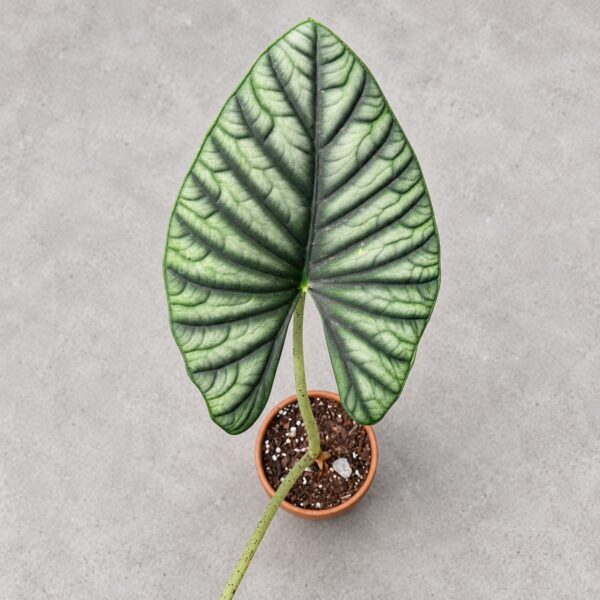
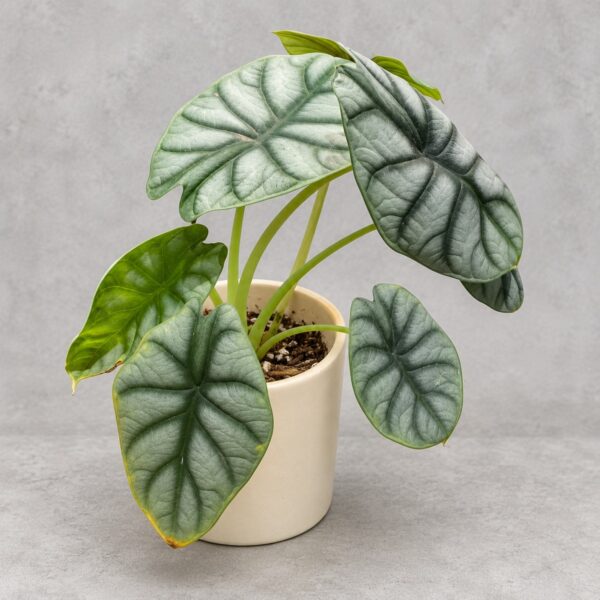
Alocasia nebula was formally described in 2000 by botanist Alistair Hay, believed to originate from the Semenggoh area of Sarawak, Borneo. It has been observed in the wild only rarely, making it something of a botanical enigma — nearly everything in circulation today comes from cultivated stock rather than wild collection. Mature plants stay compact, around 30–60 cm. Leaves are oval and arrow-shaped, with a striking silvery-blue metallic sheen over dark, raised veining, giving the impression of a hazy nebula drifting across the leaf surface — exactly where the name comes from. It has previously circulated under the trade name Alocasia guttata var. imperialis, though it's now recognised as its own distinct species.
Light
- Bright, indirect light — 1–2 m from an east- or west-facing window is ideal.
- Avoid any direct sun; the silvery leaf surface scorches very easily.
- Insufficient light dulls the silvery-blue colouring and slows growth.
- In winter, when days are shorter, consider supplementing with a grow light for 8–10 hours daily.
Watering
- Water once the top inch of soil has dried; water thoroughly but never let the pot sit in standing water.
- The roots are extremely sensitive to cold, wet conditions — err on the dry side rather than risk rot.
- Reduce watering in winter, but don't let the soil dry out completely, which can trigger dormancy.
- Use room-temperature water to avoid shocking the roots.
- Empty the drip tray promptly — never let the pot sit in water.
Soil & pot
- Use a highly aerated aroid mix: orchid bark, perlite, and coco coir in roughly equal thirds.
- A small amount of coarse dolomite lime can be added, echoing this species' limestone-associated native habitat.
- Avoid oversized pots — the roots prefer being slightly snug.
- A pot with good drainage is essential; ceramic or terracotta both work well.
Temperature & humidity
- Ideal range 18–29°C; never let it drop below 15°C.
- This species is unusually sensitive to cold — a cold shock can trigger sudden, dramatic decline.
- Humidity of 60–75% is ideal; below 50%, leaf edges dry out quickly.
- A humidifier is strongly recommended in air-conditioned rooms, kept well away from direct AC airflow.
- Keep the environment stable — avoid moving the plant around or exposing it to large temperature swings.
Common problems
| Issue | Likely cause | What to do |
|---|---|---|
| Sudden, dramatic decline | Usually cold damage or root rot from overwatering | Check the root system immediately |
| Fading silvery colour | Insufficient light or low humidity | Improve both factors |
| Dry, crispy leaf edges | Humidity too low | Use a humidifier or group with other plants |
| Stalled growth | Too cold or too dry | Review the growing environment carefully |
| Spider mites | Hot, dry conditions | Check leaf undersides frequently |
How to explain to customers
"Nebula is a proper collector's plant — that silvery-blue, almost dreamlike leaf colour genuinely looks like a nebula in the night sky. It's a bit more sensitive than most, especially to cold and to sitting in wet soil, so keep it somewhere warm and stable and try not to move it around too much."
Fun facts
Alocasia nebula is considered "wild status unknown" in botanical terms — there have been no confirmed wild sightings since the 1990s, and virtually everything grown today descends from cultivated stock. Its name, from the Latin for "cloud" or "mist," perfectly captures the way its silvery-blue sheen seems to shift and change with the angle of light, like a nebula seen through a telescope.
Keywords
Nebula Alocasia, Alocasia nebula, imperialis, jewel Alocasia, silver-blue leaf, metallic sheen, collector plant, advanced houseplant, toxic to pets, Borneo
參考資料(想知來源可展開)
References
- Plants of the World Online (Kew) — Alocasia nebula. https://powo.science.kew.org
- RHS — Alocasia care. https://www.rhs.org.uk/plants/alocasia
- Curtis's Botanical Magazine — original species description, Hay, 2000.
⚠️ Pet / toxicity note: Contains calcium oxalate crystals throughout the plant; ingestion causes oral pain, drooling and vomiting. Keep away from pets and small children, and wash hands after handling.
In-depth care guide
Introduction
Alocasia nebula is a rare and treasured species in the Araceae family, formally described by botanist Alistair Hay in 2000 in Curtis's Botanical Magazine. Its species name, from the Latin nebula ("cloud" or "mist"), describes the hazy, mottled pattern across its silvery-grey leaf surface — evoking the look of a distant nebula seen through a telescope, mysterious and faintly luminous.
Native to the rainforests of Sarawak, Borneo, Alocasia nebula is one of the most coveted members of the "jewel Alocasia" group. Its leaves are round to heart-shaped, with a silver-grey to blue-grey metallic sheen scattered with dark veining and an uneven, slightly bumpy texture, giving the whole plant a quiet, understated elegance. Indoors, mature specimens typically stay around 40–50 cm tall, making it a genuinely lovely piece for a desk or shelf display.
1. Light requirements
Alocasia nebula needs bright, filtered light to maintain its distinctive metallic sheen. As an understorey rainforest native, it's adapted to soft, dappled light passing through a forest canopy.
Ideal placement
- East- or north-facing windows, catching gentle morning light
- 1.5–2 m from a south-facing window, or filtered through a sheer curtain
- Supplemental grow lighting works well in dim interiors
The metallic sheen is delicate
The silvery-grey metallic sheen on Alocasia nebula's leaves is genuinely unique, but this same waxy surface layer is also vulnerable to damage in strong light — direct sun tends to fade the metallic surface or cause visible scorch marks. Filtered light is therefore essential.
Reading the signals
| Sign | Cause | Fix |
|---|---|---|
| Silvery-grey fading, losing metallic sheen | Light too weak | Move closer to a light source |
| Yellow-brown scorch marks | Light too strong | Add a sheer curtain or move further away |
| Small new leaves, stretched petioles | Prolonged low light | Gradually increase light exposure |
2. Temperature requirements
Alocasia nebula is notably sensitive to temperature and needs a stable, warm environment.
Ideal ranges
- Growing season: 21–29°C
- Minimum tolerance: 15°C
- Ideal root-zone temperature: 21–28°C
Management tips
- Keep well away from AC vents, drafty doors/windows, and heaters
- Sustained temperatures below 18°C will stall growth
- Avoid placing near cold window glass at night in winter
- The root system is especially vulnerable to cold, and cold damage often leads directly to rot
Maintaining warmth above 21°C during active growth, and never letting temperatures fall much below 15°C, is a genuinely important part of keeping this species healthy long-term.
3. Humidity management
Alocasia nebula needs relatively high humidity, ideally 60% to 80%.
Signs of insufficient humidity
- Yellow, brown, or crispy leaf margins
- Malformed or torn new leaves as they unfurl
- Loss of metallic sheen, dull leaf surface
Ways to raise humidity
- Humidifier — an ultrasonic model placed near the plant
- Pebble tray — a tray of pebbles topped with water below the pot base
- Grouping plants together
- Glass cabinet growing — creates a genuinely stable, high-humidity environment, especially valuable for a species this sensitive
High humidity is essential for maintaining both the velvety texture and overall health of this species' foliage.
4. Watering technique
Watering Alocasia nebula requires particular care, since its rhizome is especially prone to rot from excess moisture.
Correct method
- Water once the top 30–50% of the soil has dried
- Water thoroughly until it runs from the drainage holes
- Empty the saucer within 15 minutes
- In winter, allow the soil to dry further before watering again
Water quality
- Best: rainwater, distilled water, filtered water
- Acceptable: tap water rested 24 hours
- Avoid: hard, high-mineral water, which can dull the silvery-grey leaf surface over time
The danger of overwatering
The rhizome of Alocasia nebula is highly sensitive to sitting in wet soil. Once rot sets in, the plant is very difficult to save — so when in doubt, always water less rather than more.
5. Soil recipe
Alocasia nebula needs an extremely well-draining, airy medium, since the rhizome needs abundant oxygen.
Recommended mix
- 30% orchid bark (1–2 cm chunks)
- 25% coarse perlite (3–5 mm)
- 25% coco coir or coconut husk fibre
- 10% horticultural charcoal
- 10% coarse sand or pumice
This mineral-heavy blend keeps the soil structure loose over time, resisting the compaction that comes with regular watering.
Pot choice
- A medium-depth pot with drainage holes suits this species well
- Terracotta or concrete pots offer the best breathability
- Avoid oversized pots, which take too long to dry
- The compact rhizome is easier to keep at the right moisture level in an appropriately sized pot
6. Feeding
Alocasia nebula is a light feeder, and fertilising needs a gentle touch.
Recommendations
- Use a balanced liquid fertiliser, diluted to half strength or less
- Growing season (spring/summer): every 2–4 weeks
- Autumn/winter: reduce or stop
- Water before feeding
- Flush the soil periodically with distilled water to prevent salt buildup
Signs of overfeeding
- Deeper leaf colour but loss of silvery-grey sheen
- Slow growth in new leaves
- White salt crust on the soil surface
7. Common pests and diseases
Spider mites
The most common pest in dry conditions. Look for fine webbing and tiny yellow speckling on leaf undersides.
Treatment: wipe leaves gently with a damp cloth, maintain humidity, and use insecticidal soap for heavier infestations.
Scale insects
Found on petioles and leaf undersides as brown or white bumps.
Treatment: remove individually with an alcohol-dipped cotton swab.
Root rot
Almost always caused by overwatering or poor drainage.
Treatment: unpot, trim rotten roots, and repot into fresh, free-draining mix, then tighten up watering discipline.
8. Propagation
Corm propagation and division are the most reliable methods for Alocasia nebula.
Corm propagation
- Collect small corms near the base during repotting
- Let them dry 1–2 days to callous
- Plant in free-draining mix or sphagnum moss, kept lightly moist
- Maintain 25–28°C
- Small corms sometimes take a while to break dormancy, especially in cooler conditions — patience is important
Division
- Carry out at spring repotting
- Gently loosen roots and separate offsets with their own growth point
- Each division should retain several roots
- Pot into fresh soil, keeping warm and moist
Semi-hydroponics
Experienced growers can try semi-hydroponic culture using leca as the medium, but must ensure the corm base stays above the water line and avoid attempting this in cold weather.
9. Repotting guide
Timing
- Roots have filled the pot, or the organic media has broken down and compacted
- Roots emerging from drainage holes
- Soil drying unusually fast or unusually slowly
- Best in spring
Repotting notes
- Handle the rhizome with particular care during repotting — root damage will stall growth
- Choose a pot only slightly larger than the current one
- Plant in fresh, free-draining mix
- Keep warm and moist after repotting, avoiding direct light for a week or two
10. Frequently asked questions
Q: The silvery-grey leaf surface has gone dull — what happened?
A: First check your water quality — hard water dulls the leaf surface, so switch to filtered water or rainwater. Low humidity can also affect leaf quality. Gently wiping leaves with a soft, slightly damp cloth removes dust and mineral residue.
Q: Is winter leaf drop normal?
A: Alocasia nebula may enter dormancy in winter, and losing one or two leaves is a normal response. As long as the rhizome remains firm, it will regrow in spring. Reduce watering during dormancy and keep the soil just barely moist.
Q: Why do new leaves have holes?
A: Low humidity during unfurling can cause delicate new leaves to tear. Keep humidity above 70% while new growth is developing.
Q: Can it tolerate direct sun?
A: No — Alocasia nebula should never be exposed to direct sun, especially at midday. The waxy layer on its silvery-grey leaf surface will burn, leaving permanent yellow-brown scorch marks.
Q: Is it toxic?
A: Yes. It contains calcium oxalate crystals; ingestion causes oral pain, drooling and vomiting. Keep it away from pets and small children.
Q: Why is it growing so slowly?
A: Alocasia nebula is naturally a slow grower, especially indoors. As long as new leaves are healthy with normal colour and texture, slow growth is not a concern.
References
- Plants of the World Online (Kew) — Alocasia nebula. https://powo.science.kew.org
- RHS — Alocasia care. https://www.rhs.org.uk/plants/alocasia
- Curtis's Botanical Magazine — original species description, Hay, A. (2000).
- Wikipedia — Alocasia. https://en.wikipedia.org/wiki/Alocasia
Plantjai shop · In stock online
Alocasia nebula
Alocasia nebula
Original price was: HK$428.00.HK$180.00Current price is: HK$180.00.
Hong Kong delivery · Causeway Bay pickup
For Hong Kong homes and offices. Stock and pricing follow the product page.
IN STORE NOW
Plants for this guide
Related plants in stock now — live prices, delivery or Causeway Bay pickup.
FREE PLANT ADVICE
Send us a photo before you change anything
WhatsApp a photo of the plant and your window light. Our Causeway Bay team will suggest care steps or plants that suit your space.
STORE · CAUSEWAY BAY
4/F, 39 Yiu Wa Street, Causeway Bay
Daily 12:30–8:00pm · ~3 min walk from Times Square
Map & directionsPlant Care