How to Care for Syngonium Infrared in Hong Kong | Plantjai

Plantjai 植仔 · Care Encyclopedia
Syngonium Infrared
Syngonium podophyllum 'Infrared' 粉紅佳人合果芋
Hong Kong care guide — useful before you buy and after it arrives.
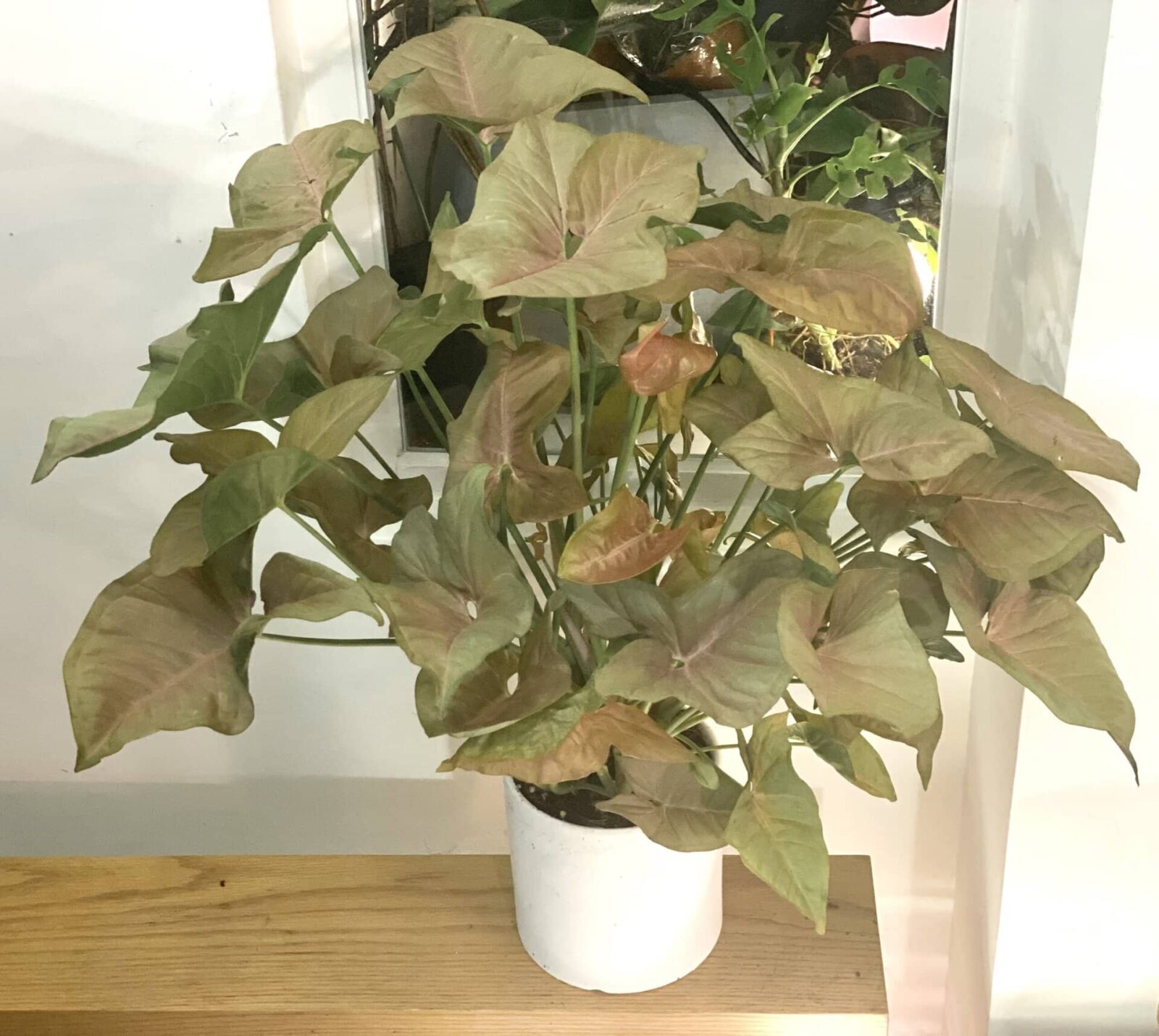
Shop this plantLeaves that glow with a ruby-pink radiance, standing out dramatically among green foliage — the dreamy pink plant every plant lover secretly hopes to own.
Botanical name pending confirmation — traded in horticultural circles as Syngonium podophyllum 'Infrared'; its precise distinction from other pink cultivars like 'Pink Splash' and 'Neon Robusta' remains to be clarified.
⚠️ Toxicity warning: an Araceae family plant, containing calcium oxalate crystals throughout; ingestion causes mouth pain, swelling, and drooling, and sap contact may irritate skin. Keep out of reach of children and pets, and wear gloves when pruning or repotting.
Origin & characteristics
'Infrared' is a pink-toned horticultural cultivar of Syngonium podophyllum in the family Araceae, genus Syngonium. The species is widely distributed from Central to South America, from Mexico down to Brazil, making it the most widely grown Syngonium species in the world.
The name "Infrared" references how the leaf colour goes beyond typical pink, taking on a deep, rich rose or ruby tone. This colouring comes from a significant accumulation of anthocyanins, becoming even deeper and more vivid under sufficient light. Leaves have the classic arrowhead shape with a thick, slightly leathery texture and clearly visible veining — green veins weave through the pink leaf surface for an elegant contrast. Growth is moderate with good adaptability. Although a variegated type, 'Infrared's pink colouring is relatively stable and won't easily revert entirely to green with environmental changes, which is part of what makes it so popular among the many pink Syngonium cultivars. The plant can climb or trail, and can also be pruned to maintain a clustered form.
Light
- Bright indirect light is best: an east- or north-facing windowsill, or 1-1.5 metres from a south-facing window
- The key to maintaining colour: ample indirect light is the primary requirement for maintaining deep pink colouring — insufficient light causes the leaves to gradually turn green
- A little morning sun: 1-2 hours of soft direct morning light helps the colour become more vivid, but avoid harsh midday sun
- Signs of insufficient light: new leaves turning green, colour fading, and elongated internodes — all signals it needs more light
- Grow light recommendation: a full-spectrum grow light for 8-10 hours daily is recommended indoors, especially during the shorter, dimmer autumn/winter days
Watering
- Check before you water: water once the top 2-3 cm of soil feels dry
- Water thoroughly, then drain: water until it drains from the base, and empty tray runoff after 15 minutes
- Water quality: filtered water, water left standing, or rainwater is recommended, avoiding excess minerals that could affect leaf colour
- Seasonal adjustment:
- Spring/summer growing season: keep the soil lightly moist, roughly every 7-10 days
- Autumn/winter: extend to every 10-14 days, letting the soil dry out more before watering
- Key point: pink leaves are somewhat sensitive to extreme conditions — a stable water supply helps maintain both colour and health
Soil & pot
- Soil recipe:
- Peat soil 35% + coco coir 25% + perlite 25% + bark chips 10% + charcoal 5%
- Prioritise drainage and breathability while remaining rich in organic matter
- pH: slightly acidic (pH 5.5-6.5)
- Pot choice:
- Plastic or terracotta pots both work, with drainage holes essential
- A white or pale grey pot sets off the pink leaves beautifully
- A small to medium pot (12-20 cm diameter) is sufficient
Temperature & humidity
| Factor | Ideal range | Notes |
|---|---|---|
| Temperature | 20-28°C | No lower than 15°C; sustained cold dulls the colour |
| Humidity | 55-80% | Slightly higher humidity helps keep leaves looking their best |
- Temperature and colour: the pink is most vivid in warm conditions (22-27°C); too cold and the colour fades along with slower growth
- Humidity management: above 60% humidity, leaves look fuller and glossier; below 50%, leaf tips are prone to drying out
- Air-conditioned rooms: summer AC use dries out the air — mist occasionally or use a pebble tray, and avoid placing it directly in the airflow
- Ventilation: maintain good air circulation to avoid disease from stagnant, humid air
Feeding
- Growing season (April-October): apply a diluted balanced liquid fertiliser (half strength) every 2-3 weeks, or a slow-release fertiliser once a month
- Off-season (November-March): an extremely diluted liquid fertiliser once a month, or stop feeding entirely
- Phosphorus-potassium boost: an appropriate amount of phosphorus-potassium fertiliser helps maintain vivid pink colouring — occasionally substitute a bloom-boosting fertiliser
- Note:
- Excess nitrogen fertiliser causes leaves to turn green
- Remember "weak fertiliser, frequently applied"
Pruning and propagation
- Regular pruning: remove old, yellowing leaves to keep the plant looking tidy and well-ventilated
- Shaping: appropriately pruning the growing tip encourages side-branching for a fuller, more compact form
- Propagation by cuttings:
- Take a stem section with 2-3 leaves, keeping 1-2 aerial root nodes
- Insert into moist sphagnum moss, keeping high humidity (a clear bag or plastic wrap helps)
- Roots typically form within 2-4 weeks, with a fairly high success rate
- Water propagation: stem sections with aerial roots can be rooted directly in water — the pink leaves look especially beautiful floating in clear water
Common problems
| Symptom | Likely cause | What to do |
|---|---|---|
| Pink fading or turning green | Insufficient light or excess nitrogen fertiliser | Increase indirect light, reduce nitrogen, switch to a fertiliser higher in phosphorus and potassium |
| Leaves turning yellow and mushy | Overwatering / root rot | Stop watering, check roots, trim rot and repot in fresh soil |
| Pale colour on new leaves | Insufficient light or temperature too low | Move closer to a light source, ensure a warm environment |
| Leaf tips drying and browning | Air too dry | Increase surrounding humidity, mist occasionally |
| Elongated stems, sparse leaves | Severely insufficient light | Move to a brighter spot or add a grow light |
| Spider mites/aphids | Dry air or poor airflow | Increase humidity, improve airflow, treat as needed |
How to explain to customers
"'Infrared' Syngonium is a genuinely dreamy plant — an entire leaf glowing pink, with a thick, glossy texture that's eye-catching from across the room! It's part of the Syngonium family, so it's reasonably easy to grow, but to keep that beautiful pink colour, remember to give it plenty of indirect light — insufficient light will cause it to turn green. Water using the 'check before you water' method, letting the topsoil dry out a little before watering. Slightly higher humidity helps it look even better — an occasional mist is fine. Most importantly, keep it away from children and pets, since it's toxic. This plant makes a lovely gift, or a beautiful addition to your own room — the pink colour is genuinely mood-lifting!"
Fun facts
- The meaning behind 'Infrared': infrared is an electromagnetic wave with a wavelength longer than visible red light — invisible to the human eye but detectable as heat. The name 'Infrared' suggests this cultivar's pink is so intense it goes "beyond" what's typically visible as pink, into another realm entirely.
- The dual role of anthocyanins: the anthocyanins in pink leaves provide colour but also offer antioxidant and UV-protective properties, acting as the plant's natural sunscreen. This is why more light actually produces more anthocyanin and deeper colour.
- The pink plant craze: in recent years, horticultural circles have seen a real boom in "pink plant fever," with cultivars like 'Infrared,' pink Caladium, and pink Anthurium all becoming highly sought-after. Pink-toned plants are especially popular on social media, becoming must-have photo subjects for countless plant lovers.
Keywords
Infrared Syngonium, Syngonium podophyllum, Infrared, Syngonium, Araceae, pink leaf, pink foliage, ruby colour, dreamy plant, indoor foliage plant, indirect light, easy-care plant, beginner-friendly, toxic plant, botanical name pending confirmation
參考資料(想知來源可展開)
References
- Missouri Botanical Garden — Plant Finder: Syngonium podophyllum, https://www.missouribotanicalgarden.org/PlantFinder/PlantFinderDetails.aspx
- ASPCA — Toxic and Non-Toxic Plant List, https://www.aspca.org/pet-care/animal-poison-control/toxic-and-non-toxic-plants
⚠️ Contains calcium oxalate crystals; toxic to humans and pets if ingested. Keep out of reach of children and pets.
Plantjai · Causeway Bay collector indoor plants · WhatsApp +852 66807550
Plantjai shop · In stock online
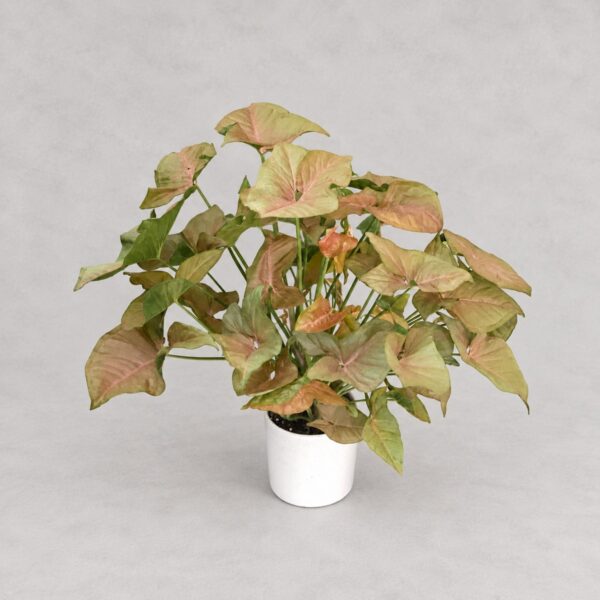
Syngonium podophyllum 'Infrared'
Syngonium podophyllum 'Infrared'
HK$138.00
Hong Kong delivery · Causeway Bay pickup
For Hong Kong homes and offices. Stock and pricing follow the product page.
IN STORE NOW
Plants for this guide
Related plants in stock now — live prices, delivery or Causeway Bay pickup.
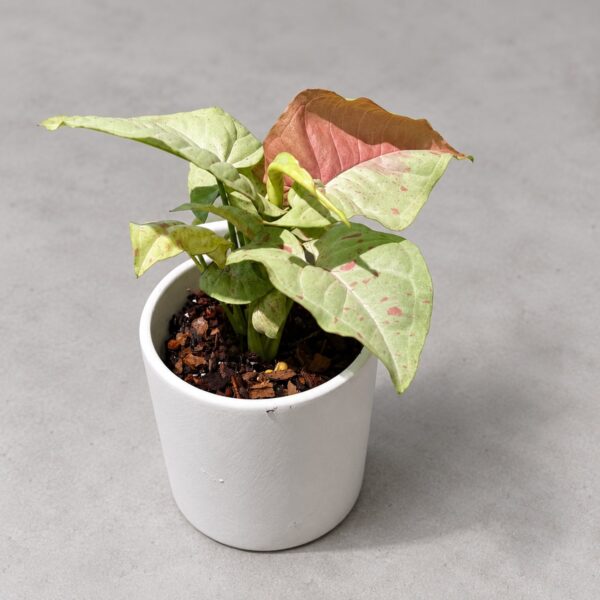
Syngonium podophyllum 'Milk Confetti'
Syngonium podophyllum 'Milk Confetti'
HK$168.00
In stock · store pickup
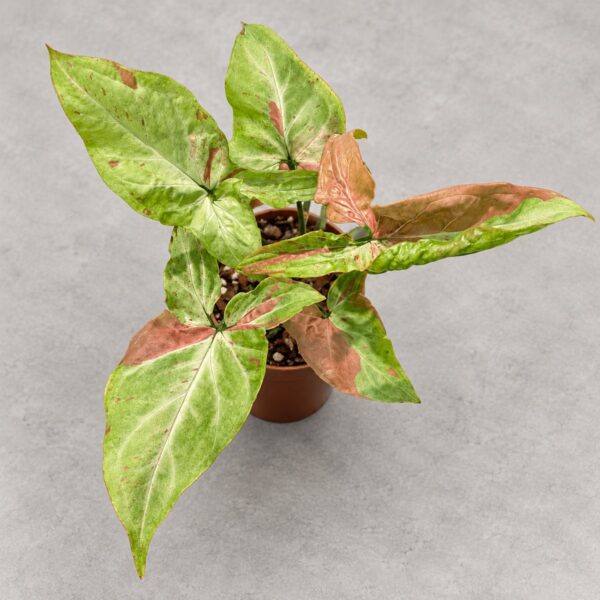
View plantSyngonium podophyllum 'Pink Salmon'
Syngonium podophyllum 'Pink Salmon'
HK$380.00
In stock · store pickup
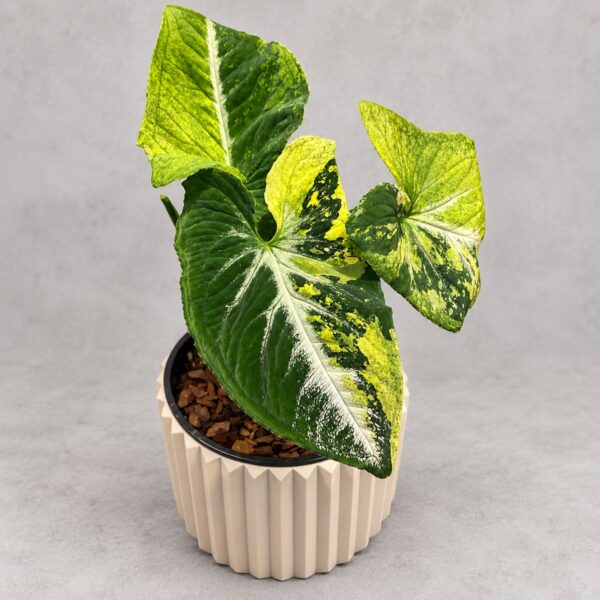
View plantSyngonium Wendlandii 'Scrambled Eggs'
Original price was: HK$1,280.00.HK$280.00Current price is: HK$280.00.
In stock · store pickup
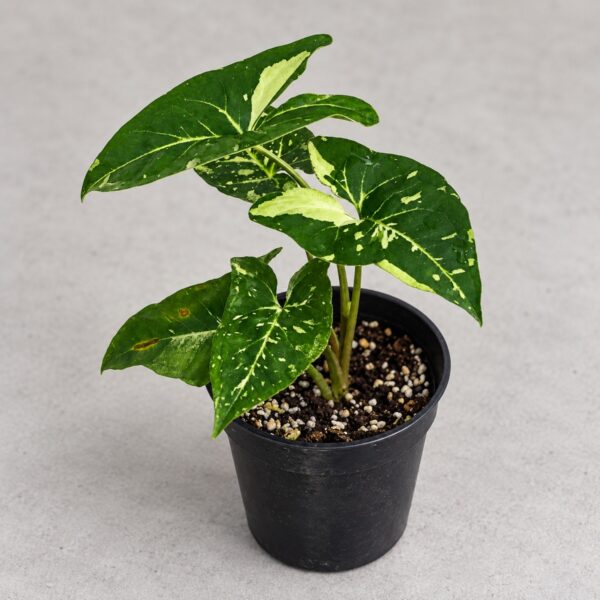
View plantSyngonium podophyllum 'Panda'
Syngonium podophyllum 'Panda'
Original price was: HK$880.00.HK$180.00Current price is: HK$180.00.
In stock · store pickup
View plant
FREE PLANT ADVICE
Send us a photo before you change anything
WhatsApp a photo of the plant and your window light. Our Causeway Bay team will suggest care steps or plants that suit your space.
STORE · CAUSEWAY BAY
4/F, 39 Yiu Wa Street, Causeway Bay
Daily 12:30–8:00pm · ~3 min walk from Times Square
Map & directionsPlant Care