How to Care for Anthurium Crystallinum Hybrid in Hong Kong | Plantjai

Hong Kong care guide for Anthurium Crystallinum Hybrid.
The best of both parents in one plant — brighter veining and tougher constitution in a true hybrid treasure.
Origin & characteristics
Hybrid Crystal Anthurium is an artificially bred cultivar with Anthurium crystallinum as one parent; the exact parent combination depends on the individual breeder, with common cross partners including A. magnificum and A. forgetii. The resulting hybrids typically combine the Crystal Anthurium's silvery, shimmering veins with the other parent's sturdier build or distinctive leaf shape, offering stronger growth and better adaptability — making them a great-value choice for beginner tropical plant enthusiasts. Every hybrid has its own slightly individual character, giving each one a unique collector's appeal.
Light
Bright, diffused light is best, with an ideal target of 6–8 hours of indirect light daily. An east-facing windowsill or a spot 1–2 metres back from a south-facing window both work well. Hybrids are generally a touch more shade-tolerant than pure A. crystallinum, but venation will still fade if light is too weak. If new leaves turn a deeper solid green with longer internode spacing, that's a sign light is insufficient — move it closer to a light source.
Watering
Water thoroughly once the top 2–3 cm of soil has dried, letting excess water drain from the base of the pot. Roughly once every 5–7 days in summer, extending to every 10–14 days in winter. Hybrid root systems tend to be sturdier and slightly more drought-tolerant, but still won't tolerate waterlogging. Use filtered water or tap water left to stand, to avoid fluoride build-up damaging the roots. In high-humidity conditions you can mist occasionally, but avoid spraying directly into the velvety leaf crown, which can cause crown rot.
Soil & pot
A well-draining, aerated mix is key: peat 25% + perlite 25% + pine bark 30% + charcoal 10% + sphagnum moss 10%. Hybrid root systems tend to grow faster, so choose a ceramic or breathable plastic pot one to two sizes up from the current one, and make sure drainage holes stay clear. Repot every 12–18 months, checking root health at the same time and trimming away any black, mushy roots.
Temperature & humidity
Ideal growing temperature is 20–28°C, with a tolerance range of roughly 15–32°C. Hybrids generally adapt better to Hong Kong indoor conditions than pure species, but should still avoid dropping below 15°C in winter. Maintain humidity at 60%–80% for best results — below 50%, scorched leaves become more likely. In summer, keep the plant away from direct AC airflow or use a humidifier as backup; in dry winter conditions, grouping several plants together helps raise local humidity.
Common problems
| Issue | Likely cause | What to do |
|---|---|---|
| Faint venation | Insufficient light, or simply individual cultivar character | Try moving it closer to a window — hybrid shimmer intensity varies between individuals |
| Drooping leaves | Underwatering or root rot | Check soil moisture; water immediately if too dry, or stop watering and improve ventilation if too wet |
| Slow growth | Normal winter dormancy | If no new leaves for an extended period, may need feeding or a larger pot |
| Brown spots on leaves | Poor ventilation after watering leading to fungal infection | Avoid watering in the evening and keep air circulating |
| Mealybugs | Common at leaf-back and petiole junctions | Remove individually with a cotton swab dipped in alcohol; apply neem oil for severe infestations |
How to explain to customers
"Hybrid Crystal Anthuriums are great value — they combine the good looks of two different Anthuriums without being as fussy to care for, so they're perfect for beginners. Every hybrid is a little different, and the leaf shape and veining on this one are really lovely — it'll add real character to your home."
Fun facts
Breeding tropical plant hybrids is a genuine art form — breeders spend years of repeated trial and error before a new cultivar's characteristics stabilise. Every hybrid plant is a truly one-of-a-kind result of that experimentation.
Keywords
Hybrid Crystal Anthurium, Anthurium crystallinum hybrid, Crystal Anthurium cross, tropical foliage plant, silver-veined Anthurium, Anthurium hybrid, indoor plant, foliage plant, Anthurium genus, beginner-friendly, toxic to pets
參考資料(想知來源可展開)
References
- Tropical Plant Kit — Anthurium Red Crystallinum Care Guide. https://tropicalplantkit.com/anthurium-red-crystallinum-care-guide-easy-tips-pricing-range/
- Epic Gardening — How to Plant, Grow, and Care For Anthurium Crystallinum. https://www.epicgardening.com/anthurium-crystallinum/
- Gardener's Supply Company — How to Grow & Care for Crystal Anthurium. https://www.gardeners.com/how-to-grow-care-for-crystal-anthurium
⚠️ Pet / toxicity note: Anthuriums contain calcium oxalate crystals, toxic to pets and children. Ingestion may cause oral pain, drooling, and vomiting. Keep out of reach of pets and small children. If accidental ingestion occurs, rinse the mouth immediately and seek medical attention.
In-depth care guide
Introduction
Hybrid Crystal Anthurium, Anthurium crystallinum x (exact botanical name unconfirmed), refers to a group of ornamental cultivars produced by crossing A. crystallinum with other Anthurium species. Because the breeding process often involves multiple parent species (such as A. magnificum or A. dressleri), and because many of these crosses arise from open pollination in greenhouse settings, the precise parentage is frequently difficult to confirm. Commercially available names like "Red Crystallinum" or "Crystal Hope x crystallinum" all fall under this broad category (Aroid Wiki, 2023; Carnivero, n.d.).
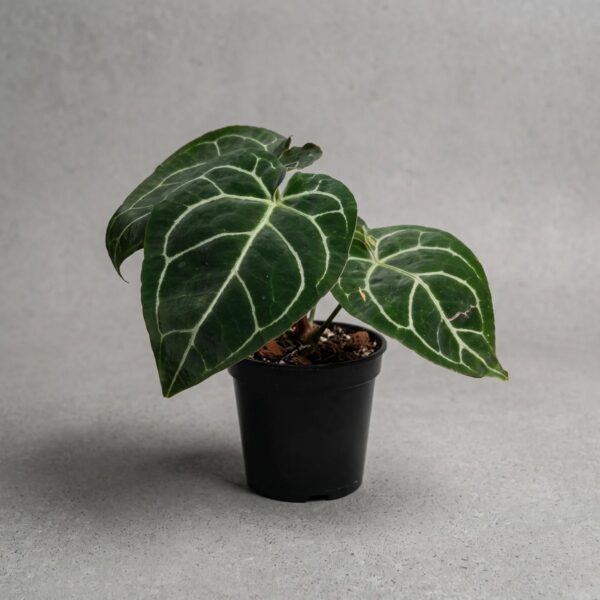
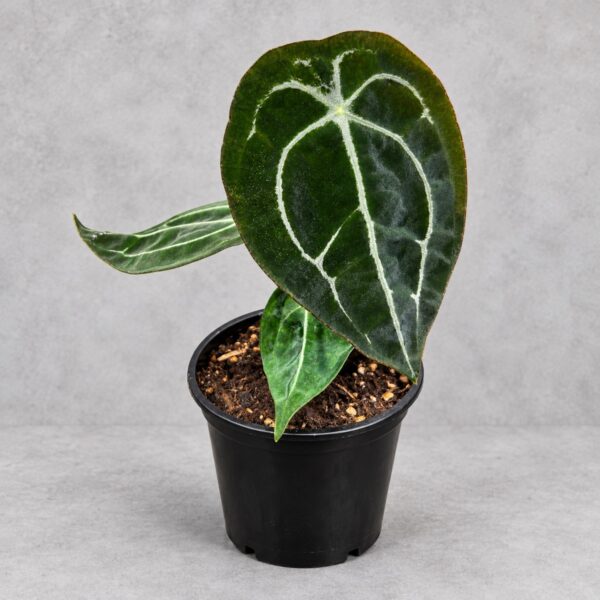
Anthurium crystallinum itself is native to the tropical rainforests of Central and South America, celebrated for its large, heart-shaped velvet leaves and striking silver-white venation. Hybrid offspring typically inherit the velvety texture and bold veining from the A. crystallinum parent, while showing greater variation in leaf colour, shape, and growth habit. "Red Crystallinum," for instance, is prized for new leaves that emerge deep red before gradually turning green (Tropical Plant Kit, 2025; Odd Leaf Houseplants, 2026).
It's worth noting that hybrid cultivars commonly display "hybrid vigor" — often growing more robustly than pure species, with better environmental adaptability. That makes Hybrid Crystal Anthurium a genuinely excellent choice for anyone wanting to start an Anthurium collection but worried that pure species might be too demanding to care for (Foliage Factory, 2026; Grow Tropicals, 2026).
Common hybrid types
Red Crystallinum: bred by Tim Anderson at Palm Hammock Orchid Estate, with A. crystallinum as the mother plant and possibly A. magnificum or A. dressleri as the father. It's characterised by new leaves emerging deep red to burgundy, gradually turning green at maturity while retaining red veining, with red petioles as well (Aroid Wiki, 2023; Carnivero, n.d.).
Crystal Hope x crystallinum: bred by Green Mirrors, using A. crystal hope as the mother plant and A. crystallinum as the father. The leaves similarly have a velvety texture and prominent veining, but tend to be even thicker (Green Mirrors, 2022).
Other hybrids: the market also features many unnamed or numbered hybrids with varying characteristics. Collectors typically distinguish them by new leaf colour, venation pattern, and leaf texture.
Care essentials
Light
Hybrid Crystal Anthurium needs bright but indirect light, with an ideal intensity of roughly 1,500–2,500 lux. Direct sun will scorch the velvety leaves, and any white or yellow variegated patches (if present) are especially vulnerable. An east- or north-facing windowsill is ideal; south- or west-facing windows should be filtered with a sheer curtain (Tropical Plant Kit, 2025; Epic Gardening, 2022; Odd Leaf Houseplants, 2026).
If you notice new leaves getting progressively smaller, or the veining growing dim, that may indicate insufficient light. Increasing light appropriately helps restore leaf texture and size.
Temperature
The ideal temperature range is 18–27°C (roughly 65–80°F), and it shouldn't be exposed to below 15°C for extended periods. Hybrid cultivars are generally more forgiving than pure species, tolerating slightly lower humidity (45–50%) and somewhat cooler conditions — but stability remains key. Avoid cold draughts, and keep the plant away from AC vents and heat sources (Green Mirrors, 2022; Tropical Plant Kit, 2025; Grow Tropicals, 2026).
Humidity
Although Hybrid Crystal Anthurium adapts better to lower humidity than pure species, the ideal level is still 65% or above. If humidity stays below 60% for a long period, leaf edges may start to dry out. In dry environments, humidity can be raised using a humidifier, a pebble tray, or by grouping plants together (Grow Tropicals, 2026; Tropical Plant Kit, 2025).
Experienced growers note that stability matters more than chasing extremely high humidity — frequent humidity fluctuations are far more damaging to the plant than a slightly lower but consistent level.
Watering
Hybrid Crystal Anthurium prefers an environment that's "evenly moist but never waterlogged." It's recommended to water once the top 1–2 inches (roughly 2.5–5 cm) of soil has dried, watering thoroughly until water drains from the pot's base, then emptying any standing water from the saucer. Water temperature should be close to room temperature — rainwater or filtered water works best (Epic Gardening, 2022; Gardener's Supply Company, 2024).
If you're using a coarser mix (with plenty of bark and perlite), the fast drainage may mean you need to water more frequently. Conversely, a more water-retentive mix means longer intervals between waterings. The most reliable method is testing soil moisture with your finger (Tropical Plant Kit, 2025).
Soil / growing medium
A loose, well-aerated mix is key to healthy Anthurium roots. Recommended recipe:
- 2 parts coco coir or good-quality potting soil
- 1 part perlite
- 1 part orchid bark (medium grade, roughly 0.6–1.2 cm)
This mix ensures the roots get plenty of oxygen while retaining adequate moisture. A slightly acidic pH of around 6.0 is ideal. Anthuriums grown in coarser media, thanks to faster drainage, actually tolerate slightly wetter conditions better (Tropical Plant Kit, 2025; Green Mirrors, 2022).
A more advanced recipe might also include:
- 25% calcined clay (such as Turface, for moisture retention and pH buffering)
- 10% worm castings (for slow-release nutrients and beneficial microbes)
- 10% activated charcoal (to absorb impurities and inhibit pathogens)
Feeding
During the growing season (spring through summer), apply a balanced liquid fertiliser diluted to half or quarter strength (such as 20-20-20 or 10-10-10) every 4–6 weeks. Choose a fertiliser formulated for aroids or foliage plants that includes trace elements. Make sure the soil is moist before feeding, and never fertilise dry soil. Stop feeding completely during autumn/winter dormancy (Tropical Plant Kit, 2025; Epic Gardening, 2022).
A convenient alternative is using slow-release fertiliser granules (like Osmocote 14-14-14), applying a small amount to the soil surface at the start of the season, then supplementing occasionally with liquid feed.
Ongoing care
Repotting
Hybrid Crystal Anthurium grows at a moderate pace and typically needs repotting every 18–24 months. Signs include roots circling the base of the pot, slower drainage, or noticeably stalled growth. Choose a new pot just 1–2 inches larger in diameter than the current one — an oversized pot leads to soil staying too wet (Tropical Plant Kit, 2025).
Repotting steps:
- Gently loosen the root ball and remove old soil.
- Inspect the roots and trim away any rotten or dried-out sections.
- Replant into fresh, loose growing medium.
- Maintain high humidity after repotting and avoid drastic environmental changes.
- Mild transplant shock (slight wilting or a yellow leaf or two) is normal and usually resolves within a few weeks (Tropical Plant Kit, 2025).
Pruning
Generally no special pruning is needed — just regularly remove yellowing or withered leaves to keep the plant tidy. If it grows too tall or leans, support it with a moss pole or bamboo stake. Wear gloves when pruning, since Anthurium sap contains calcium oxalate crystals that can irritate skin (Tropical Plant Kit, 2025; Odd Leaf Houseplants, 2026).
Cleaning
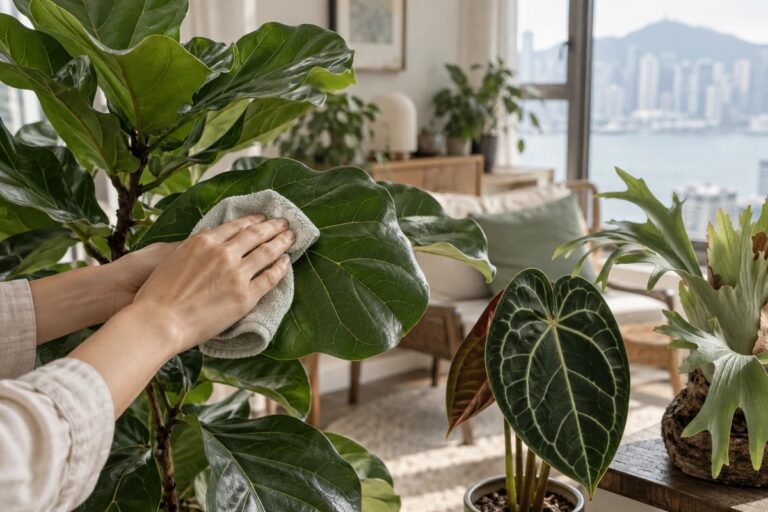
Velvety leaves collect dust easily — use a soft, dry makeup brush (natural bristle) to gently sweep dust from the leaf base toward the tip. Never wipe with a cloth or sponge, as this damages the leaf surface's velvet texture (Life Tips, 2026).
Propagation methods
Division
When repotting, if you find a rooted side shoot, you can carefully separate it for planting. This is the simplest method with the highest success rate (Epic Gardening, 2022).
Stem cuttings
If the plant has developed a longer stem, cut a section with 2–3 leaves attached and insert it into moist sphagnum moss or a propagation mix, keeping it warm and humid. Roots typically form within a few weeks. As one grower put it wryly: "There's nothing shameful about cloning — it gives us plants with 100% of the desired traits" (Tropical Plant Kit, 2025).
Seed propagation
Seeds can be produced through hand pollination. Use a fine brush to collect pollen and store it in the refrigerator (which helps preserve viability) until another flower's stigma becomes receptive (moist and glossy). After successful pollination, fruit takes roughly 6–12 months to mature. Seeds must be sown fresh — never allowed to dry out — sown onto moist sphagnum moss, and typically germinate within a few weeks. Growing from seed to a presentable plant can take 1–3 years (Tropical Plant Kit, 2025; Plant and Stories, 2026).
Common problems
Yellowing leaves: most commonly caused by overwatering leading to root rot. Check soil moisture and reduce watering frequency. Another possibility is humidity too low or a nutrient imbalance.
Browning leaf tips: usually caused by low humidity, underwatering, or fertiliser burn. Increase humidity, adjust watering frequency, and make sure fertiliser is sufficiently diluted.
No new growth for a long time: may indicate insufficient light or a weak root system. Increase light and check root health, repotting if necessary.
Brown spots on new leaves: often caused by transport stress or sudden humidity changes. Keep conditions stable and new leaves should grow normally.
Deteriorating leaf texture: could simply be individual cultivar character, but could also indicate insufficient light. Try slightly increasing light or supplementing with trace elements (Tropical Plant Kit, 2025; Odd Leaf Houseplants, 2026).
Pests: aphids, mealybugs, spider mites, and whitefly can all attack this plant. Check leaf undersides regularly and treat with soapy water, neem oil, or insecticidal soap (Gardener's Supply Company, 2024; Proven Winners, n.d.).
Toxicity information
Like all Anthurium species, Hybrid Crystal Anthurium contains calcium oxalate crystals, toxic to both humans and pets. Ingestion causes irritation and swelling of the mouth and throat, and in severe cases may cause difficulty breathing. Wear gloves when handling the plant to avoid sap contact with skin or eyes (Tropical Plant Kit, 2025; Patch Plants, 2026).
Styling suggestions
The velvety leaves and elegant form of Hybrid Crystal Anthurium make it a real focal point in any indoor space. It's especially well suited to a side table in the living room, a bookshelf in a home office, or a dedicated plant display cabinet. Given its humidity requirements, a glass cabinet (such as an IKEA Rudsta) or a room with a humidifier is ideal. Under soft light, its leaves display subtle shifts in sheen, perfect for creating a calm, elegant atmosphere (Foliage Factory, 2026; Grow Tropicals, 2026).
References
- Tropical Plant Kit. (2025). Anthurium Red Crystallinum Care Guide. https://tropicalplantkit.com/anthurium-red-crystallinum-care-guide-easy-tips-pricing-range/
- Odd Leaf Houseplants. (2026). How to Care for Anthurium Crystallinum and Develop Bold Veining. https://oddleafhouseplants.co.uk/blogs/rare-houseplants/how-to-care-for-anthurium-crystallinum-and-develop-bold-veining-in-2026
- Epic Gardening. (2022). How to Plant, Grow, and Care For Anthurium Crystallinum. https://www.epicgardening.com/anthurium-crystallinum/
- Grow Tropicals. (2026). Anthurium Care Guide for Foliage Anthuriums. https://growtropicals.com/blogs/houseplant-care-a-z/foliage-anthurium-care-guide
- Foliage Factory. (2026). Anthurium Plants | Velvet Leaf Aroids. https://foliage-factory.com/collections/anthurium
- Green Mirrors. (2022). Anthurium Crystal Hope X crystallinum. https://mirrors.green/en-eu/products/anthurium-crystal-hope-x-crystallinum
- Aroid Wiki. (2023). Anthurium Red Crystallinum | How To Best Care Guide. https://aroidwiki.com/anthurium-red-crystallinum/
- Carnivero. (n.d.). Anthurium 'Red Crystallinum'. Product page.
- Gardener's Supply Company. (2024). How to Grow & Care for Crystal Anthurium. https://www.gardeners.com/how-to-grow-care-for-crystal-anthurium
- Plant and Stories. (2026). Anthurium Care Essential Tips Foliage. https://plantandstories.com/en/blogs/entretien-famille-plantes-guide-conseils/entretien-anthurium-conseils-essentiels-feuillage
For Hong Kong homes and offices. Stock and pricing follow the product page.
IN STORE NOW
Plants for this guide
Related plants in stock now — live prices, delivery or Causeway Bay pickup.
Anthurium crystallinum
Anthurium crystallinum
Original price was: HK$780.00.HK$380.00Current price is: HK$380.00.
In stock · store pickup
View plant
FREE PLANT ADVICE
Send us a photo before you change anything
WhatsApp a photo of the plant and your window light. Our Causeway Bay team will suggest care steps or plants that suit your space.
STORE · CAUSEWAY BAY
4/F, 39 Yiu Wa Street, Causeway Bay
Daily 12:30–8:00pm · ~3 min walk from Times Square
Map & directionsPlant Care