

Foliage Plant Trend Forecast 2025-2026: What Will Be the Next Hot Varieties?


Introduction
Welcome back to the Specimen Archive — this is the final stop on our long journey.
If you’ve been with us from the very first article, congratulations — you’ve completed a reading journey equivalent to a botanical encyclopedia. From basic care to advanced techniques, from cultivar introductions to market analysis, from nomenclature to propagation industries — we’ve traveled a considerable distance together.
But a collector’s learning never ends. The plant world doesn’t stand still: new species are discovered, new technologies invented, new trends emerging. Foliage plant trends flow like an ever-moving river, and we who love plants must learn to navigate downstream while maintaining our own sense of direction.
In this final lesson, I want to talk about the future — what will the foliage plant world look like in 2025-2026? Which popular foliage plants will dominate next? And how should we prepare ourselves?
Looking Back: The Trajectory of Recent Hot Trends
To predict the future, we must first understand the past. Let’s briefly review how trends have evolved:
2019-2020: The Golden Age of Variegated Monsteras Monstera deliciosa ‘Albo Borsigiana’ and ‘Thai Constellation’ exploded on social media, becoming phenomenon-level plants. For a time, the entire world was showing off their variegated Monsteras, and prices soared accordingly.
2021-2022: Alocasia and Philodendron Take Turns Variegated Alocasias (especially within the Alocasia genus) conquered new enthusiasts with their bold visual impact. Subsequently, various rare Philodendron species (such as P. gloriosum, P. melanochrysum) became targets for advanced collectors.
2023-2024: Begonia and Epipremnum Rise The Begonia genus, with its astonishing diversity and relatively accessible prices, attracted a wave of devotees. Meanwhile, various variegated and special-leaf-form Epipremnum cultivars also began gaining attention.
What patterns emerge from this trajectory? Every wave has its specific driving forces — social media amplification, tissue culture breakthroughs increasing supply, and a natural rotation following aesthetic fatigue. Who’s next?
Prediction One: Deep Exploration of Philodendron Species
I believe the most likely trend for 2025-2026 is further heating up of Philodendron species (true species).
In recent years, market enthusiasm for cultivars has reached a certain peak. Variegation, hybridization, artificial selection — all beautiful, but increasingly “artificial.” I’m observing a counter-trend emerging: more and more experienced collectors are returning to true species, seeking natural forms untouched by human intervention.
Specifically, the following Philodendron species categories warrant attention:
Cloud forest species: Philodendron species from Central and South American high-elevation cloud forests carry unique leaf textures, often with velvet-like surfaces or silver-white markings. They require higher humidity and suit growers with some experience.
Climbing species: Compared to self-heading types, climbing philodendrons display breathtaking mature leaf forms when given proper support — beauty that potted juvenile stages simply cannot match.
Prediction Two: Small Variegated Varieties for Compact Spaces
Hong Kong’s space constraints are a reality. Not everyone has room for a Monstera that will eventually reach two meters. This is why I predict small variegated varieties will grow increasingly popular.
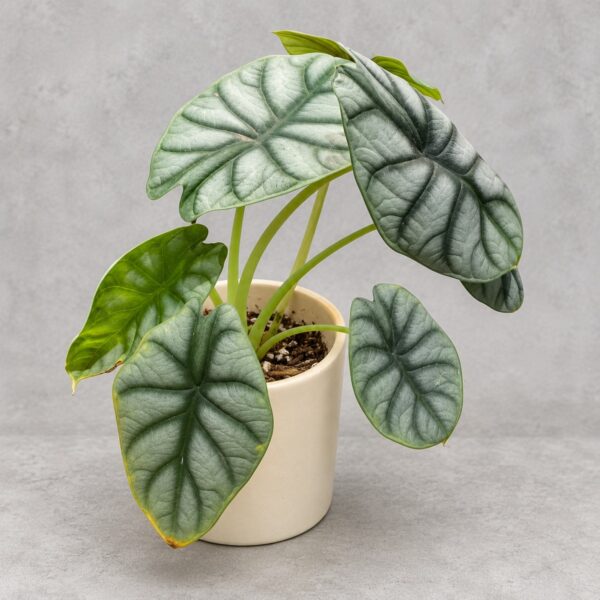
Compact Alocasias: Some Alocasia species are naturally small-statured (like A. baginda ‘Dragon Scale’), perfect for desktop display. Variegated versions are the icing on the cake.
Miniature Philodendrons: Certain Philodendron species (like P. brandtianum) grow well in small spaces, with silver markings on leaves that shimmer with a metallic sheen under proper lighting.
For urbanites living in compact units, “small but exquisite” will become the mainstream philosophy for 2025 plant selection.
Prediction Three: Dark Foliage and Metallic Sheen Varieties
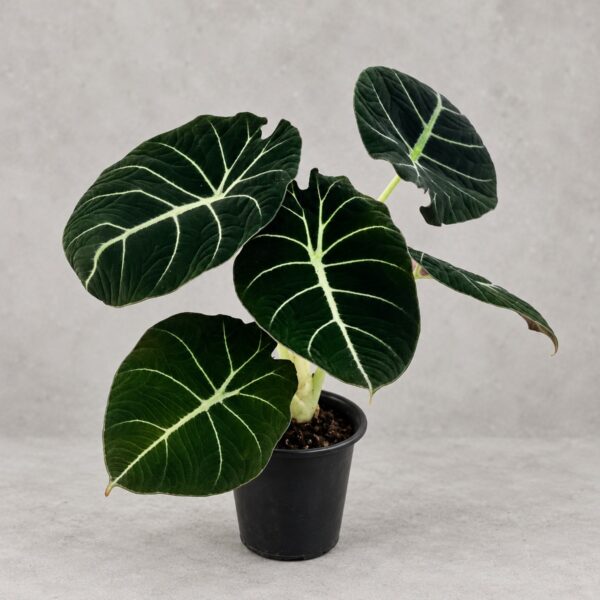
I’m noticing rising market interest in “dark aesthetics.” Deep purple, near-black leaves with metallic sheen possess a low-key, mysterious quality that contrasts sharply with the bright flamboyance of variegated plants.
These popular foliage plants include: certain Begonia cultivars with near-black foliage, Alocasias with metallic blue sheen, and Philodendrons with deep purple-red leaf undersides. They particularly suit modern minimalist interiors, creating strong visual contrast against light walls and wood furniture.
Prediction Four: Special Leaf Forms Continue Rising
Beyond color, leaf form is a major driver of plant trends. Several special forms I believe will maintain attention:
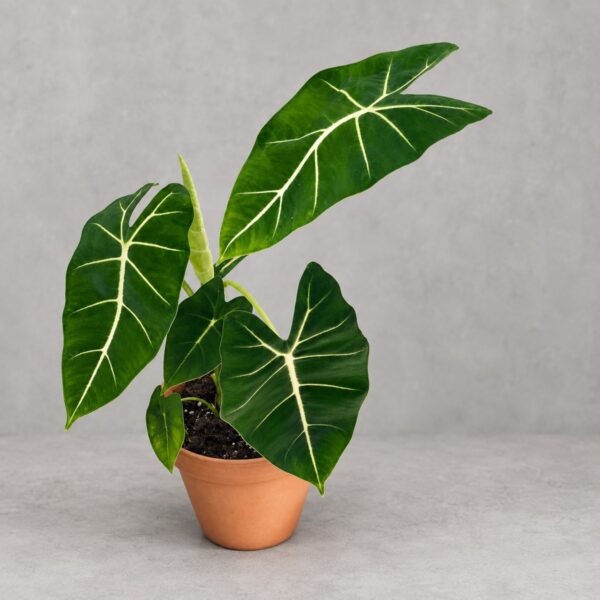
Round/heart-shaped leaves: Varieties like Philodendron grazielae with nearly perfectly round or heart-shaped leaves carry a cute, healing quality that performs exceptionally well on Instagram.
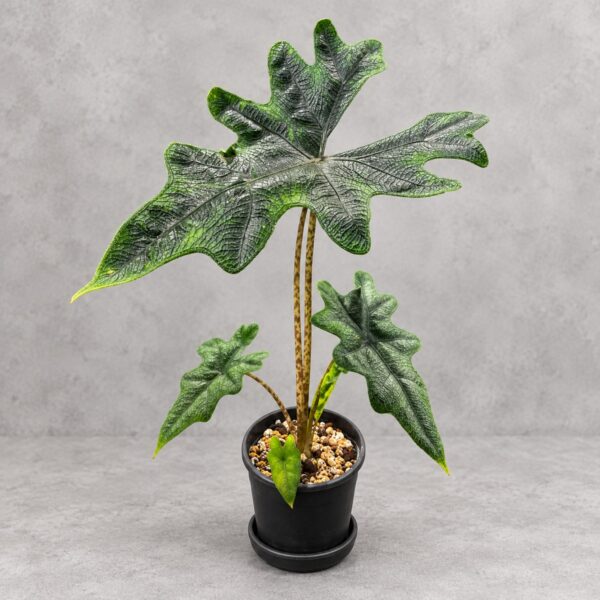
Finely divided leaves: Certain Amydrium species with extremely finely divided leaves, resembling ferns or palms, evoke an exotic tropical rainforest atmosphere.
Thick velvety leaves: Fuzzy-textured leaves (like Philodendron gloriosum) display unique light-shadow interplay and irresistible tactile appeal.
Social Media: Trend Accelerator or Distorting Mirror?
There’s no denying Instagram and TikTok’s enormous influence on foliage plant trends. A perfect plant photo can rack up tens of thousands of likes within hours, causing the featured cultivar to sell out within days.
This phenomenon has its positive aspects: it introduces more people to the beauty of foliage plants, driving industry growth. But it also has negative effects:
Excessive beautification: Social media plant photos are carefully lit and edited, potentially differing significantly from real-world appearance. Beginners who buy based on photos, only to find “this looks nothing like the picture,” often feel frustrated.
Trend-following consumption: Seeing an influencer showcase a particular cultivar and buying it blindly, only to discover it’s completely unsuited to your environment or skill level. This consumption pattern wastes both personal money and plant lives.
Price manipulation: Certain plant influencers collaborate with retailers, intentionally or not, to inflate specific cultivar prices. When the hype passes, ordinary consumers are often left holding the bag.
My advice: use social media for inspiration and knowledge, but maintain independent judgment. Don’t let “must-have lists” dictate your choices — select plants truly suited to you.
Sustainable Growing: Not Just a Slogan, But the Future
Another important trend for 2025-2026 is the deepening of sustainable growing philosophy. This isn’t just for environmental activists — it’s something every plant enthusiast should care about.
Eco-friendly media: Traditional peat moss extraction causes widespread wetland ecosystem destruction. More and more growers are transitioning to alternatives like coco coir, bark, and perlite in peat-free formulations. Some pioneering brands have already launched premium potting soils completely free of peat.
Local propagation reduces carbon footprint: Importing plants from Thailand or Indonesia generates considerable carbon emissions through transport. Supporting locally propagated specimens is an effective way to reduce your personal plant collection’s carbon footprint. This is why Plantjai has always been committed to propagating and cultivating quality plants right here in Hong Kong.
Recycling and reuse: Recycling old pots, making homemade compost, rainwater collection for irrigation — these small habits accumulate to make your plant life more environmentally friendly.
Technology Meets Plants: Green Living in the Smart Era
Technology is quietly changing how we grow plants:
Smart watering systems: Multiple smart irrigation systems are already on the market, capable of automatically watering based on soil moisture and remote control via smartphone apps. For frequent travelers, these are lifesavers.
Plant monitoring apps: Some applications help you record watering schedules, track growth conditions, and even identify plant species through photos. For advanced collectors managing large collections, these tools are increasingly practical.
LED grow light普及: As LED technology matures and prices drop, high-quality plant lights are no longer exclusive to professional greenhouses. Everyday growers can now equip their plant walls with proper supplemental lighting, making indoor plant choices more flexible than ever.
Final Words for Collectors
This is the final lesson of our 50-article series. Permit me a few heartfelt words.
Foliage plant forecasting is inherently uncertain. I can make educated guesses based on market data, industry dynamics, and personal experience, but true trends often emerge from unexpected corners. Perhaps tomorrow someone will discover an unprecedentedly beautiful plant in some remote rainforest, completely reshaping the market.
So rather than blindly chasing trends, cultivate your own vision and judgment. Here are my final pieces of advice:
Choose based on your conditions: Your space, light, time, and budget are the most important factors determining what you should grow. Someone else’s “dream list” may not suit you.
Focus on the plant’s intrinsic beauty, not its price tag: A cheap pothos grown well is more beautiful than an expensive variegated specimen kept half-alive. A plant’s value lies in the joy it brings you, not market prices.
Stay open and curious: Try new species, new care methods, new styling approaches. The plant world is vaster than any of us can imagine.
Share and pass it on: When you’ve gained joy and knowledge from this hobby, don’t forget to share it outward. Give a cutting to a friend, teach a beginner how to water, share your authentic experiences on social media — these are how plant culture continues to thrive.
Conclusion
Fifty articles, from zero to here. I don’t know how many late-night reading hours these words have accompanied, or how many plants have been saved or matched with suitable owners because of them. But if even one sentence, one perspective, has been even slightly helpful to you, then all this writing has been worthwhile.
The doors of the Specimen Archive remain forever open. Whether you’re a complete beginner or a seasoned veteran, you’re welcome to visit our shop at 4/F, Nan Hing Place, 39 Yiu Wa Street, Causeway Bay — see with your own eyes the plants we’ve described in these pages, touch the velvet leaf textures with your own hands, and hear the stories from deep within the rainforest.
If you haven’t visited yet, now is the perfect time. Check out [plantjai.com](https://plantjai.com) for our latest selection, or simply walk into our shop. The Plantjai team will continue this never-ending plant journey with you, armed with professional knowledge and genuine passion.
Thank you for walking into the Specimen Archive. We’ll meet again, somewhere among the leaves.
IN STORE NOW
Plants for this guide
Related plants in stock now — live prices, delivery or Causeway Bay pickup.
FREE PLANT ADVICE
Send us a photo before you change anything
WhatsApp a photo of the plant and your window light. Our Causeway Bay team will suggest care steps or plants that suit your space.
STORE · CAUSEWAY BAY
4/F, 39 Yiu Wa Street, Causeway Bay
Daily 12:30–8:00pm · ~3 min walk from Times Square
Map & directions