

The World of Tuber Plants: The Underground Storage Organs of Alocasia and Caladium

Introduction
One day, a frantic guest rushed into the archive clutching an alocasia: “Curator! My alocasia’s leaves are all turning yellow — is it dying?!” I checked the soil, felt the tuber — firm and plump, completely normal. I smiled and told her: “Your alocasia isn’t dying. It’s just sleeping.”
She looked utterly confused: “Plants… sleep?”
They do. And for tuber plants, this “sleep” is one of the most important phases in their life cycle. Today, let’s lift the soil and explore the mysterious underground world of alocasia and caladium — the world of tubers.
Tuber, Bulb, and Tuberous Root: What’s the Difference?
Three Types of “Underground Storage Rooms”
Before diving deeper, let’s clarify a few concepts that commonly confuse people. Garden shops often lump these plants together as “bulb plants,” but strictly speaking, tubers, bulbs, and tuberous roots are three different types of underground storage organs.
Bulbs are the most structured, like onions or daffodils — layers of scales wrapped around a shortened stem disc, with a dry membranous outer skin. True bulbs are relatively rare among foliage plants, though some Hippeastrum species have similar structures.
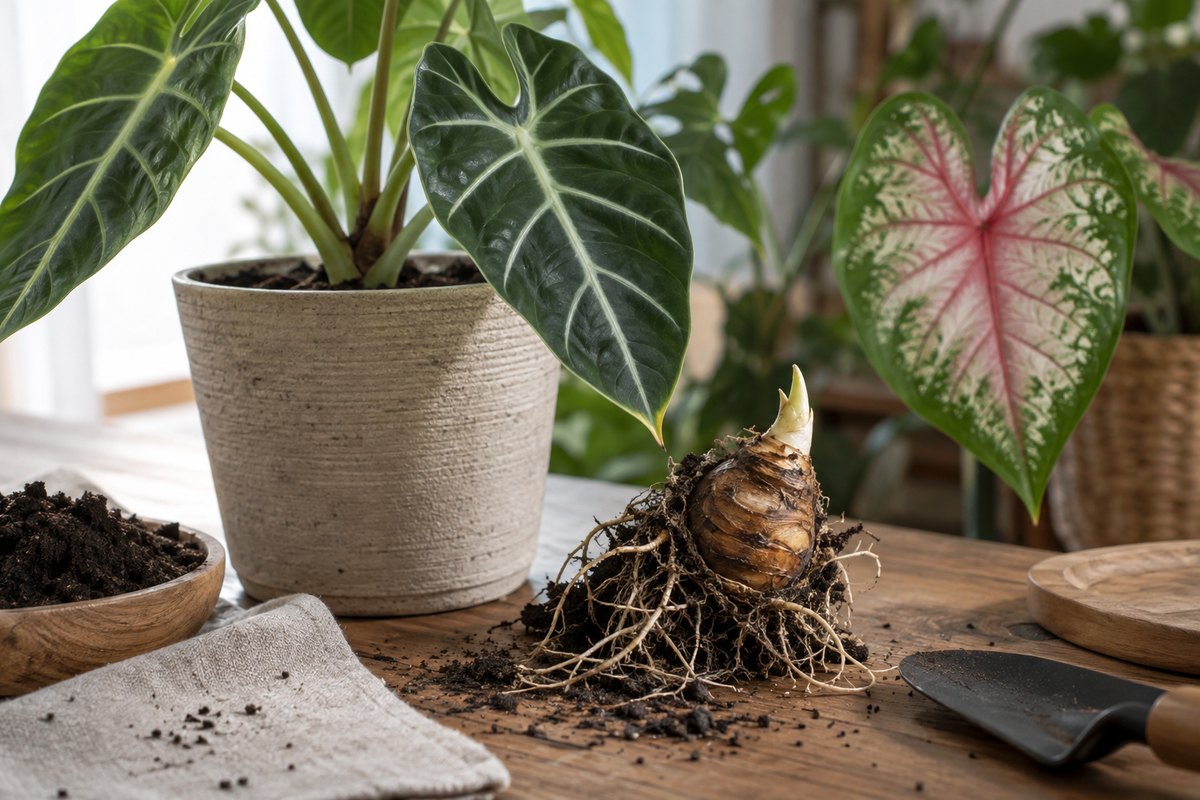
Tubers/corms are our main subject today. A tuber is a swollen underground stem with “eyes” (points that can sprout new growth) on the surface, without layered scales. The potato is the quintessential tuber. The underground organs of alocasia and caladium belong to this category (more precisely corms, which in Chinese are often grouped under the broad term “tubers”).
Tuberous roots are swollen roots, not stems. Dahlia is the classic tuberous-root plant. Tuberous roots have no eyes on their surface; new shoots can only emerge from the “neck” where root meets stem.
Why do plants develop these oddly shaped underground organs? In one word: storage. Tropical rainforests have distinct wet and dry seasons. When conditions turn harsh (too cold, too dry, insufficient light), the plant’s above-ground portions wither, and all nutrients retreat into the underground “storage room,” waiting for conditions to improve before starting anew. It is an extraordinarily clever survival strategy.
The Tuber Secrets of Alocasia
The Birth of a Tuber
The growth process of an alocasia tuber is a spectacular performance in itself. A young alocasia, starting from seed or tuber division, first produces small leaves and delicate roots. As photosynthesis continues, excess nutrients are transported underground, gradually accumulating and concentrating until a solid tuber forms.
A mature Alocasia macrorrhizos tuber can weigh several kilograms with a diameter exceeding twenty centimeters. Indoor alocasia varieties (such as Alocasia amazonica and Alocasia Polly) typically have smaller tubers, five to ten centimeters in diameter. Don’t underestimate this “potato” — the energy it stores is sufficient to support the entire plant through months of dormancy.
The Internal Structure of Alocasia Tubers
If you cut open an alocasia tuber (please don’t do this casually — it will kill the plant), you would see tightly packed parenchyma cells filled with starch granules. This starch is the ultimate storage form of photosynthesis. The tuber’s outer layer consists of harder cortical tissue that protects internal nutrients from pathogen invasion.
The surface of an alocasia tuber has many small depressions; each depression is an “eye” — a potential growth point. This is why when dividing alocasia tubers, each piece must include at least one to two eyes; otherwise, the cut tuber section cannot sprout.
The Tuber Characteristics of Caladium
Unique Features of Caladium Tubers
Caladium tubers are flatter and more disc-shaped than alocasia tubers, somewhat like a squashed onion. This form makes it easier for the plant to spread horizontally in soil and simplifies propagation by division.
One interesting feature of caladium tubers is their “central eye” — a prominent central growth point at the tuber apex from which all new leaves emerge. After dormancy ends, mature caladium tubers produce multiple bud points from this central eye, sometimes sending up three to five new leaves simultaneously — a spectacular sight.
The Relationship Between Tuber Size and Leaf Quality
Here’s essential knowledge for selecting caladium: The larger the tuber, the bigger and more vibrant the leaves it produces. A small three-centimeter tuber might only produce leaves around ten centimeters; a large six-centimeter tuber can easily generate stunning leaves exceeding twenty centimeters.
This is why imported large-specification caladium tubers command premium prices — growers have invested years of cultivation to achieve that tuber size. When you buy a large tuber, you are essentially buying time.
Dormancy Management: Let Your Plant Sleep Well
How to Recognize Approaching Dormancy
Alocasia and caladium dormancy is usually triggered by two signals: temperature drop or reduced light. In Hong Kong, this typically occurs in late autumn to early winter (November to January), when indoor temperatures consistently fall below 18°C or daylight hours noticeably shorten.
Signs of approaching dormancy include:
– New leaf growth stops
– Existing leaves yellow, starting from the oldest ones
– Soil remains wet long after watering (reduced root activity decreases water uptake)
– The stem above the tuber begins to soften
Storing Tubers During Dormancy
When your alocasia or caladium enters dormancy, here’s how I recommend handling it:
Method 1: In-Pot Storage (Recommended for Beginners)
Stop watering and let the soil completely dry. Move the pot to a cool, ventilated spot (no sunlight needed). When spring arrives (around March to April) and temperatures rise above 20°C, resume light watering, and the tuber will naturally awaken. This method is simplest and carries the lowest risk.
Method 2: Out-of-Pot Storage (Recommended for Experienced Growers)
Dig up the tuber, remove old soil, and inspect for rot or pests. Wrap in newspaper or wood shavings, store in a ventilated, cool place (maintaining temperature between 10-15°C). Check every few weeks to ensure the tuber hasn’t molded or shriveled. If surface mold appears, wipe with a clean cloth dampened with diluted fungicide.
Waking the Sleeping Tuber
When spring arrives, how do you know it’s time to “wake” your tuber? Watch for two signals: stable temperatures above 20°C, and small bumps appearing on the tuber surface (new growth stirring beneath).
Plant the tuber in fresh potting mix at a depth approximately twice the tuber’s diameter (for example, a five-centimeter tuber should be planted about ten centimeters deep). Water thoroughly, place in bright indirect light, and keep the soil lightly moist. Usually within two to four weeks, you’ll see new shoots breaking through the soil — that moment of joy is one of the greatest rewards of growing tuber plants.
Tuber Propagation: The Magic of Division
The Best Time to Divide Tubers
The optimal time for tuber propagation is during dormancy — when the plant is in a resting state and division causes minimal trauma. Whether alocasia or caladium, the principle is the same: use a sharp, sterilized knife to cut the tuber into halves or more pieces, with each piece containing at least one to two eyes.
After cutting, let the cut surfaces dry in a cool, ventilated area for one to two days until a callus forms (a thin, dry protective film). Then plant in soil. This drying step is crucial — fresh cuts placed directly in soil are highly susceptible to bacterial infection and rot.
Offshoot Division Method
Some alocasia species (particularly certain Alocasia types) produce small offshoots around the mother tuber. These offshoots already carry their own small root systems and can be carefully separated and planted individually. This method has a higher success rate than tuber division because the offshoot is already a relatively independent small plant.
Important Notes When Buying Tuber Plants
How to Select Healthy Tubers
When selecting tuber plants at plantjai.com or in our store, keep these points in mind:
– Tuber firmness: Gently press the tuber area beneath the soil surface — it should feel firm and resilient. Soft, mushy tubers indicate rot
– Leaf condition: If buying a plant with leaves, check for disease spots, pest signs, or abnormal yellowing
– Root inspection: If possible, gently lift the plant to examine roots — healthy roots should be white or pale yellow, plump and resilient
– Avoid “forced awakening” plants: Some sellers force tubers to sprout using artificial methods during cold seasons to make plants look lush. These plants often re-enter dormancy after you bring them home
Special Care for Tuber Plants in Hong Kong’s Climate
The Double-Edged Sword of High Humidity
Hong Kong summers are extremely humid — a blessing and a challenge for alocasia and caladium. High humidity promotes leaf growth and more vibrant colors, but it also increases tuber rot risk, especially when potting mix drainage is poor.
My recommendation: use an extremely well-draining potting mix (with generous perlite or coarse coco chips), ensure the pot has drainage holes, and strictly follow the “dry-between-waterings” principle. In Hong Kong’s humid weather, slightly drier soil is far preferable to the risk of waterlogged, rotting roots.
Dormancy Management in Air-Conditioned Spaces
Hong Kong winters rarely require heating, but office plants may face direct air-conditioning. Alocasia and caladium are extremely sensitive to cold; prolonged exposure to temperatures below 16°C forces premature dormancy. If your desk plant starts yellowing for no apparent reason, first check the direction of the AC vent.
Conclusion
Tubers are nature’s most exquisite “savings accounts.” Alocasia and caladium deposit the fruits of spring and summer photosynthesis, bit by bit, into their underground tubers, then enter dormancy when conditions turn harsh, relying on these “savings” to safely weather the winter. When spring returns, they withdraw energy from this storage vault and unfurl their magnificent leaves once more.
Understanding the life cycle of tubers gives you the key to successfully growing these plants. Don’t fear dormancy — it is the plant preparing for its next spectacular performance.
Want to see what alocasia and caladium tubers actually look like? Visit us at PLANTJAI Specimen Archive at 4/F, Nam Hing Fong, 39 Yiu Wa Street, Causeway Bay, where we display various tuber foliage plants at different growth stages. You can also browse our alocasia and caladium collections at plantjai.com and choose your own “underground treasure.”
May every tuber sleep safely through each dormancy.
IN STORE NOW
Plants for this guide
Related plants in stock now — live prices, delivery or Causeway Bay pickup.
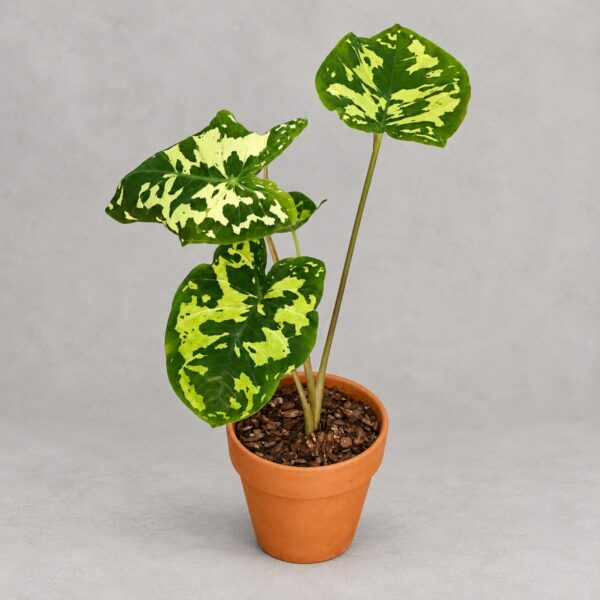
Caladium praetermissum 'Hilo Beauty'
Caladium praetermissum 'Hilo Beauty'
HK$188.00
In stock · store pickup
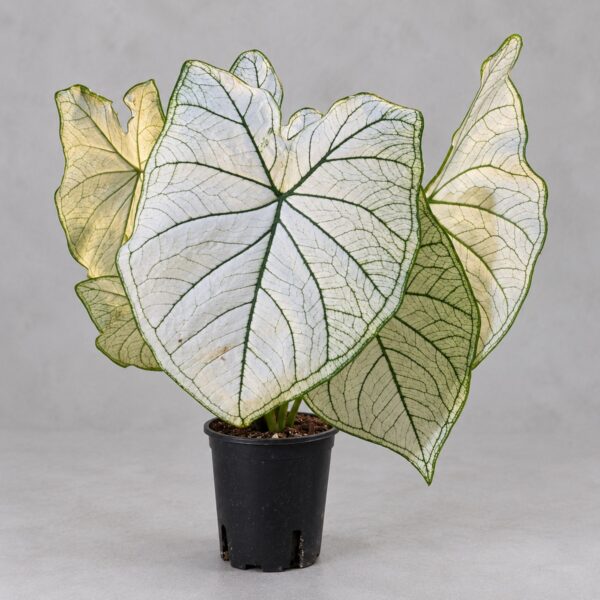
View plantCaladium 'White Christmas'
Caladium 'White Christmas'
Original price was: HK$398.00.HK$298.00Current price is: HK$298.00.
In stock · store pickup
View plant
FREE PLANT ADVICE
Send us a photo before you change anything
WhatsApp a photo of the plant and your window light. Our Causeway Bay team will suggest care steps or plants that suit your space.
STORE · CAUSEWAY BAY
4/F, 39 Yiu Wa Street, Causeway Bay
Daily 12:30–8:00pm · ~3 min walk from Times Square
Map & directions