

The Mystery of Aerial Roots: How Monstera and Philodendron Climb

Introduction
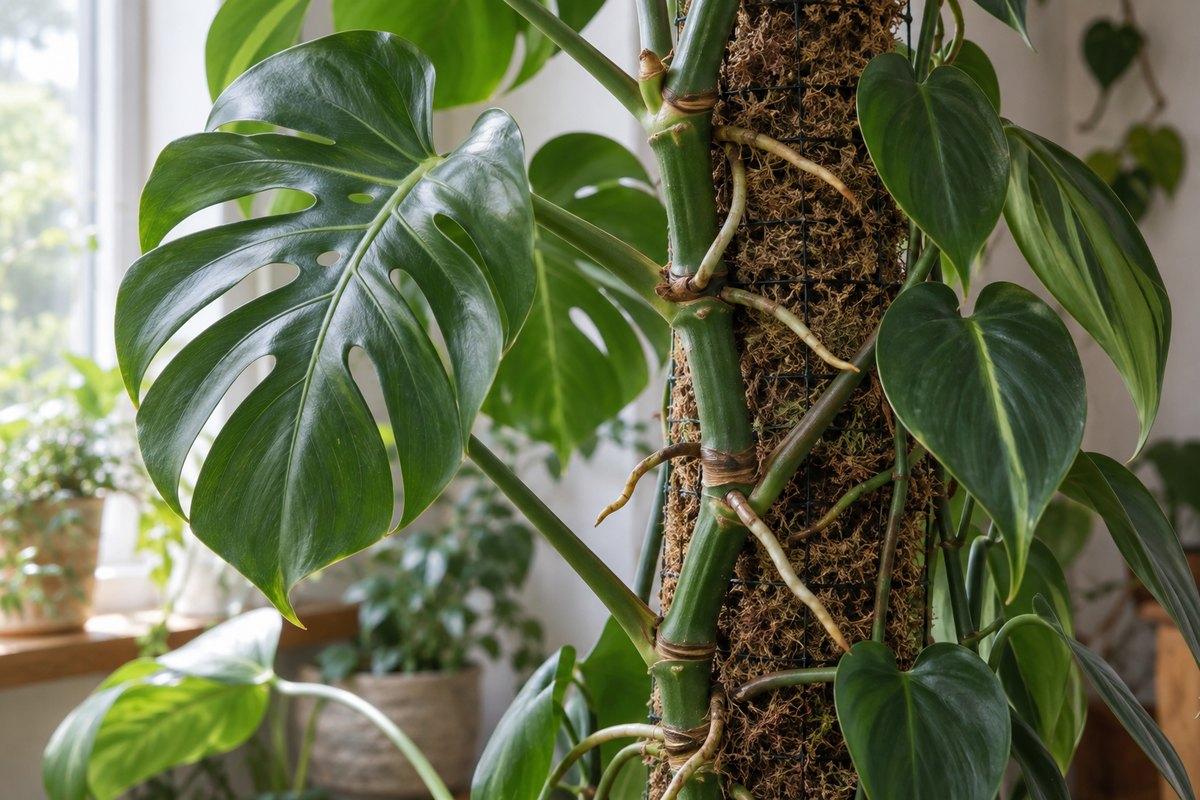
Last week, an excited guest at the archive pulled me over to look at her phone photos: “Curator! My monstera has grown white whiskers! Is it sick?” I laughed heartily — those “white whiskers” were not a disease. They were aerial roots, a gift from the plant. She looked skeptical: “Aren’t roots supposed to grow in the soil?”
This is one of the most frequently misunderstood phenomena at the archive. Aerial roots grow outside the soil, suspended in air, and they certainly don’t look like “normal” roots. But for many foliage plants, aerial roots are among their most crucial survival tools. Today, let’s unravel the secrets behind these floating white threads.
What Are Aerial Roots?
Roots That Cross the Boundary from Soil to Air
Aerial roots, as the name suggests, are roots that grow in the air. Unlike the underground roots we are familiar with (which absorb water and nutrients from soil), aerial roots emerge from nodes along stems or petioles, dangling in mid-air or directly attaching to tree trunks, rocks, and other supports.
Not all plants possess this “cross-boundary” capability. Only specific groups have evolved aerial roots, primarily epiphytes and climbers in tropical rainforests. For them, aerial roots are the “climbing ropes” that lead from the forest floor to the canopy.
Three Key Functions of Aerial Roots
Attachment and support is the most visible function. Imagine a monstera in its native habitat — its seed lands on the forest floor, where the seedling struggles to survive on limited filtered light. It faces a choice: remain forever in the dim understory, or find a way to climb upward. Aerial roots are its “mountaineering gear” — root tips secrete adhesive substances that firmly attach to bark or rock surfaces, allowing the plant to steadily push toward the brighter heights.
Water and nutrient absorption is the second critical function. Tropical rainforest air is extremely humid, and aerial roots are covered with a spongy tissue layer (velamen) that can directly absorb moisture from the air. These roots can also capture rainwater running down tree trunks and organic debris accumulated on bark.
Respiration is a function many people overlook. In waterlogged, oxygen-poor environments, underground root respiration is limited, while aerial roots can obtain oxygen directly from the air, supplementing the plant’s respiratory needs.
Which Foliage Plants Have Aerial Roots?
Monstera deliciosa
Monstera aerial roots are thick and powerful. Mature plants produce numerous brown, woody aerial roots. In their native habitat, these roots can grow several meters long, tightly wrapping around host tree trunks. When grown indoors without climbing support, these roots typically dangle in mid-air or extend into the potting mix to function as ordinary absorbing roots.
Epipremnum aureum (Golden Pothos)
Golden pothos is among the most aerial-root-proficient foliage plants. Almost every stem node produces tiny aerial roots. These roots are remarkably sensitive — upon contact with a moist surface, they rapidly attach. This is why pothos can “climb on its own” on walls: each tiny root is trying its best to grab any available support.
Philodendron Species
Philodendrons are a large family of climbing foliage plants with varied aerial root morphologies. Some species (like velvet-leaf philodendron) produce fine, dense aerial roots that cover the stem like fuzz. Others (like Philodendron erubescens) develop thicker individual roots that powerfully attach and climb upward.
Epipremnum pinnatum
Epipremnum pinnatum has aerial roots similar to golden pothos but more robust. As the plant matures during its climbing journey, aerial roots become woody, forming vine-like structures. These roots not only attach but also store water and nutrients, providing reserve resources during dry periods.
The Growth Code of Aerial Roots: Thigmotropism and Hydrotropism
Thigmotropism: Touch and Grab
Aerial roots possess a remarkable characteristic called thigmotropism — root tips can sense touch and grow toward the source of contact. When an aerial root tip touches a tree trunk, moss pole, or coir pole, it “realizes” it has found support, and begins secreting adhesive substances while wrapping and anchoring itself.
This process takes only days to weeks. The first time I observed a monstera aerial root tip under a microscope, I was amazed at how the tiny root hairs gripped the fiber surface like countless little hands. Plants have no brain, yet they can make such precise “decisions.”
Hydrotropism: Chasing Water
Aerial roots also exhibit hydrotropism — they grow toward higher humidity. This is why, when you moisten a moss pole, surrounding aerial roots seem to “smell” the moisture and turn toward the pole. This characteristic is the key to using aerial roots to promote plant growth.
How to Utilize Aerial Roots: Helping Your Plants Climb Higher
Moss Pole: A Five-Star Hotel for Aerial Roots
The moss pole (sphagnum moss pole) is the most popular climbing support tool. Wrap sphagnum moss around a plastic pipe or wooden stake, keep it moist, and insert it into the center of the pot. Aerial roots will naturally climb up, absorbing water and nutrients from the damp moss. You’ll discover that monstera or philodendron plants with moss poles produce larger leaves and thicker stems — because the additional nutrients absorbed by aerial roots translate directly into enhanced growth momentum.
I recommend spraying the moss pole at least two to three times per week, or placing a small cup at the top of the pole to slowly drip water, keeping the moss moist but not waterlogged.
Coco Coir Pole: An Affordable Alternative
Coco coir poles are made from coconut fiber with a rough texture that aerial roots easily grip. Although less water-retentive than moss poles, they are cheaper and more durable. They are well-suited to humid climates (like Hong Kong), where ambient humidity already provides some moisture for aerial roots.
Climbing Board: The Ultimate Stage for Large Plants
For large monstera plants or mature Epipremnum pinnatum, moss poles and coir poles may be too small. In these cases, a climbing board — a wooden plank covered with moss or coir — allows the plant to freely attach across a large surface. Climbing boards are not only highly functional but also create striking visual impact as interior decor.
Pruning and Managing Aerial Roots
Many guests ask: “Can I cut aerial roots?” The answer: Yes, but regular pruning is not recommended.
Aerial roots are important organs for the plant. Cutting them reduces the plant’s absorption capacity and growth rate. But if aerial roots become too long, affect aesthetics, or extend where they shouldn’t (walls, floors), moderate pruning is fine. Use clean, sharp scissors to cut at the root base. Don’t cut too many at once — I recommend no more than one-third of the total aerial roots per pruning session.
Tips for Guiding Aerial Roots
If you want aerial roots to grow in a specific direction, try these methods:
– Humidity guidance: Spray more frequently in the direction you want roots to grow — they will “chase” the moisture
– Touch guidance: Gently press aerial roots against the climbing pole and temporarily secure with garden wire. After a few days, they will attach on their own
– Darkness guidance: Aerial roots prefer darker environments. They typically grow more vigorously on the back side of climbing poles (where light is weaker)
Advanced Technique: Propagation from Aerial Roots
Certain foliage plants (especially Philodendron species) develop what are known as “root nodes” along their aerial roots as they grow. Once these root nodes are fully developed, you can cut the stem segment above the node, aerial roots and all, and plant it. Because aerial roots are already mature root systems, this propagation method has a much higher success rate than ordinary stem cuttings.
My personal favorite time for this operation is spring — as temperatures warm and humidity rises, the new division’s acclimation period is shortest. Plant the stem segment with aerial roots in a new pot, keep the soil lightly moist, place in bright indirect light, and usually within two weeks you’ll see new leaves unfurling.
Conclusion
Aerial roots are among the most underrated marvels in the foliage plant world. They draw life from the air, allowing plants to break free from ground-level constraints and reach endlessly toward the light. When you see white aerial roots emerging from your monstera, don’t panic — it is telling you: “I’m ready. I’m going to climb.”
Learning to work with aerial roots gives you the key to unlocking the maximum potential of your foliage plants. Your monstera will grow larger and stronger. Your philodendron will climb higher and lusher. Your indoor jungle will ascend to an entirely new level.
Want to see aerial roots in climbing action in person? Visit us at PLANTJAI Specimen Archive at 4/F, Nam Hing Fong, 39 Yiu Wa Street, Causeway Bay, where several large climbing foliage plants are demonstrating their aerial root “climbing techniques.” You can also browse our climbing plant collection at plantjai.com and select one to begin your own “climbing experiment” at home.
May every aerial root find its support.
IN STORE NOW
Plants for this guide
Related plants in stock now — live prices, delivery or Causeway Bay pickup.
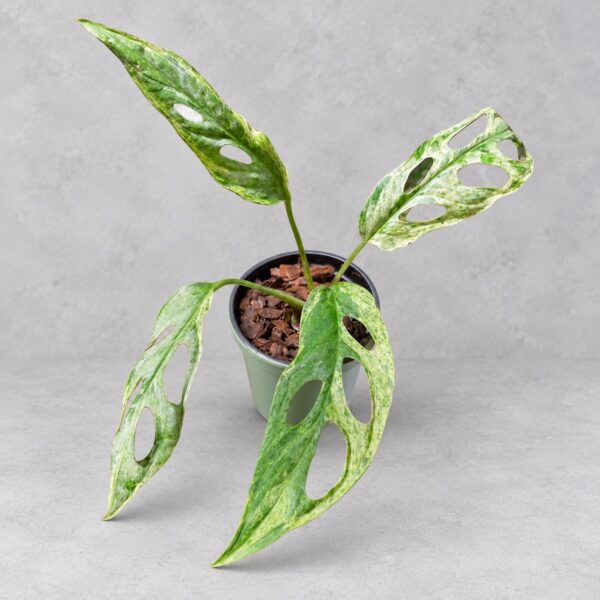
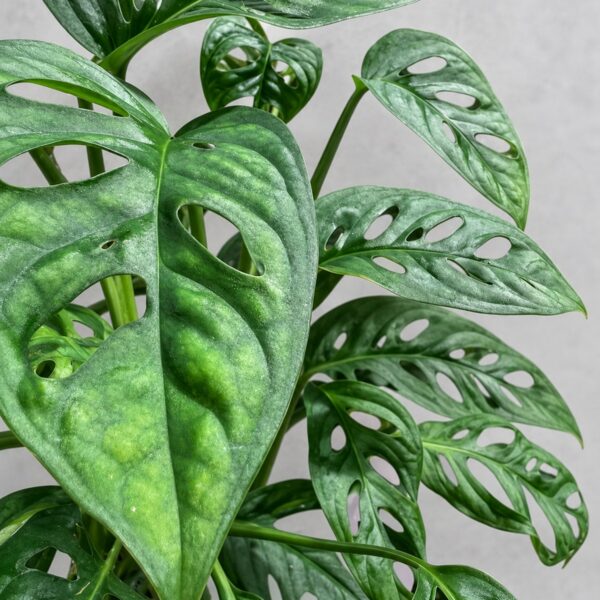
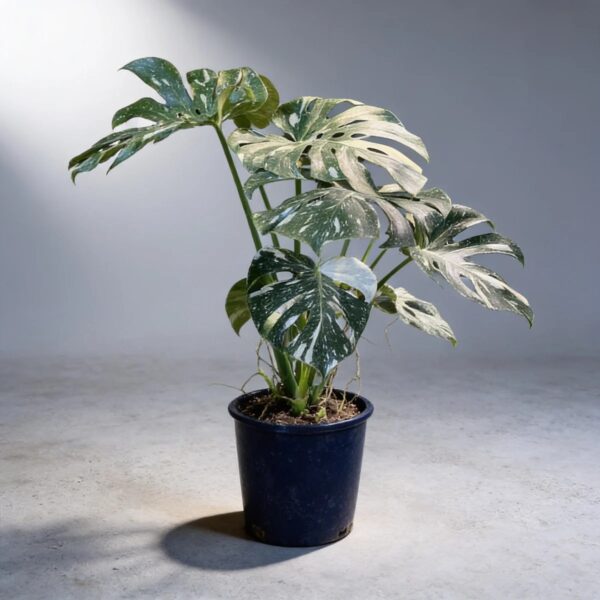
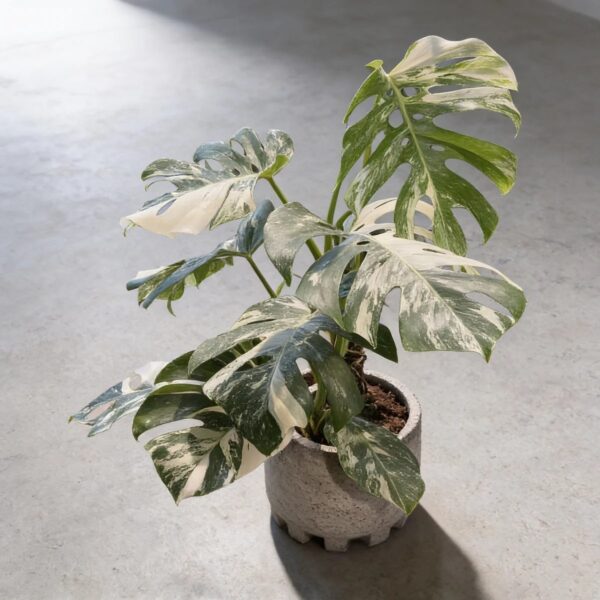
Monstera 'Thai Constellation'
Monstera 'Thai Constellation'
from HK$280.00
In stock · store pickup
View plant
FREE PLANT ADVICE
Send us a photo before you change anything
WhatsApp a photo of the plant and your window light. Our Causeway Bay team will suggest care steps or plants that suit your space.
STORE · CAUSEWAY BAY
4/F, 39 Yiu Wa Street, Causeway Bay
Daily 12:30–8:00pm · ~3 min walk from Times Square
Map & directions