

The Layered Structure of Tropical Rainforests: Understanding the Natural Habitat of Plants


Introduction
Walk into our Specimen Archive and you’ll see rows of monstera, alocasia, ferns, and peperomia — each growing differently. But what you might not know is that these seemingly unrelated plants are actually neighbours in their native tropical rainforests. They simply live on different “floors.” Some enjoy sunlight high above; others rest in the shade below; some never see daylight yet thrive contentedly.
Today I want to take you deep into the rainforest, looking through the Archive’s windows toward the equatorial green ocean thousands of kilometres away. Understanding plants’ natural habitats is how you truly learn what they need in your living room.
The Four-Layer Structure of Tropical Rainforests
A tropical rainforest isn’t a uniform green carpet — it has remarkably clear vertical stratification. Imagine a skyscraper where each floor has different “residents” and “lifestyles.”
Emergent Layer: Lonely Giants in the Clouds
The emergent layer, reaching fifty metres and beyond, consists of the tallest rainforest trees — dipterocarps (Dipterocarpaceae), Brazil nut trees, and others. Their crowns rise above the surrounding forest like islands floating on a green ocean. Here, winds are strong, sunlight intense, and daily temperature fluctuations large — but the view is spectacular. Few ornamental foliage plants come from this layer, as the environment is simply too extreme. However, some climbing vines may ascend from the ground to eventually reach these heights.
Canopy Layer: The Arena of Sunlight
Thirty to fifty metres up, the canopy is the rainforest’s busiest “floor.” Interlocking branches and leaves form a continuous green umbrella that intercepts over ninety percent of sunlight. The canopy environment features: strong but dappled light (filtered through leaves), high humidity with good ventilation, and stable temperatures. Many familiar foliage plants are closely connected to this layer — perhaps not as canopy trees themselves, but living as climbers or epiphytes here.
Understory Layer: Adaptors in Dim Light
From the ground to about twenty metres, the understory exists beneath the canopy. Light here is dramatically reduced — only about two to five percent of canopy light penetrates through. The understory is damp, dark, and temperature-stable. It’s the native home of many medium-sized foliage plants. Plants here have evolved various strategies for low-light adaptation: broad leaves, deep green colouration, even extensive aerial roots.
Forest Floor: The Kingdom of Darkness and Moisture
The rainforest floor receives virtually no direct sunlight, perpetually covered with a thick layer of fallen leaves. Humidity approaches saturation; temperatures remain constantly warm. This is the world of ferns, mosses, small herbaceous plants, and seedlings. Nutrients released from decomposing leaves cycle back into the ecosystem through rain and root systems. Forest floor plants are generally small, shade-tolerant, and moisture-loving — they’re also the easiest species to keep alive indoors.
Environmental Characteristics by Layer
| Layer | Light | Humidity | Temperature | Wind Speed |
|——-|——-|———-|————-|————|
| Emergent | Extremely strong | Medium | Large daily variation | Strong |
| Canopy | Strong (dappled) | High | Stable | Moderate |
| Understory | Weak (2-5%) | Very high | Stable | Weak |
| Forest Floor | Extremely weak | Near saturation | Stable | Very weak |
This table is our “codebook” for foliage plant care. Every position in your home corresponds to a rainforest layer in terms of light and humidity conditions. Place a canopy-light plant in a dark bathroom, and it will slowly decline. Put a forest floor fern on a west-facing windowsill, and it will rapidly scorch.
Native Layer Positions of Different Foliage Plants
Let’s look at common plants in our Archive and identify which rainforest layer they naturally inhabit.
Monstera Monstera deliciosa: Canopy Climber
In its native habitat, monstera isn’t a “potted plant” — it’s a climbing vine. Its aerial roots wrap around tree trunks and climb upward, eventually reaching near-canopy heights. Those famous leaf fenestrations (holes) actually serve a practical purpose: they allow wind and rain to pass through at height, reducing damage to the leaf. This is why monstera needs bright indirect light — it’s accustomed to the dappled sunlight of the canopy. Place it by an indoor window with sheer curtains, and it’ll grow as happily as if it were back home.
Alocasia Alocasia Species: Understory Kings
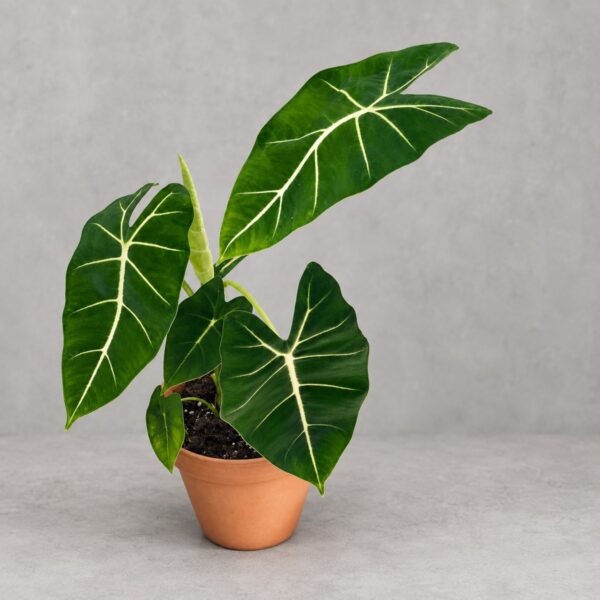
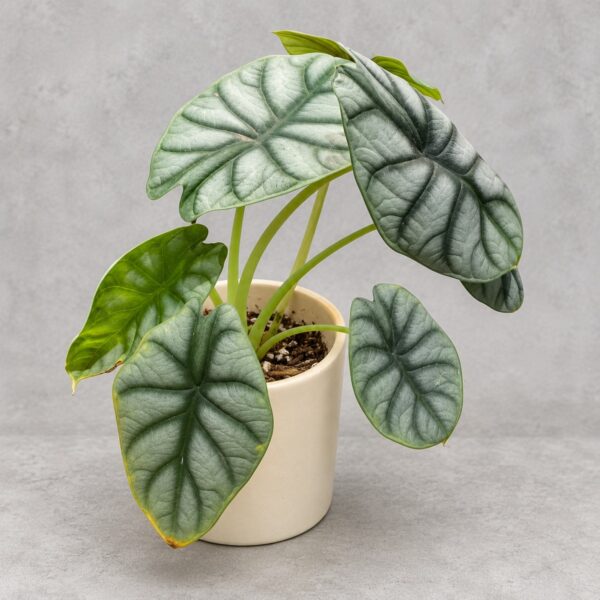
Alocasias mostly grow in the understory, receiving weak light filtering through canopy gaps. Their leaves are enormous yet thin, with deep green colour — an evolutionary result of maximising light absorption surface area. Alocasias demand extremely high humidity because understory air is almost permanently moist. Growing alocasia in Hong Kong’s air-conditioned dry environment requires regular misting or humidification; otherwise, brown leaf edges are nearly inevitable.
Ferns: Wetland Residents of the Forest Floor
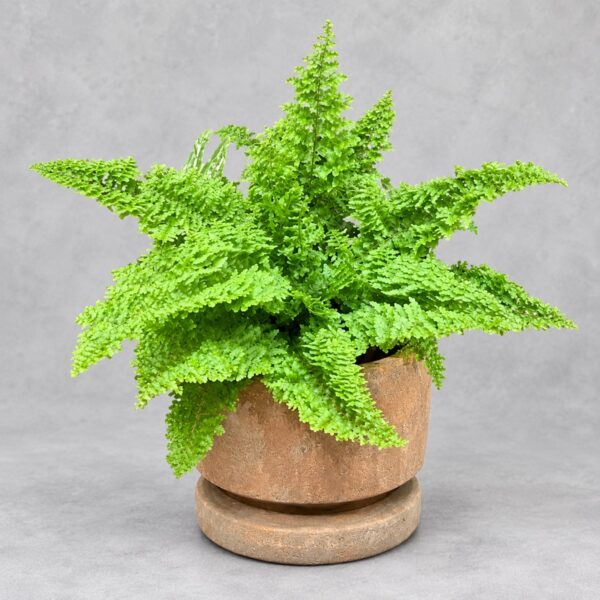
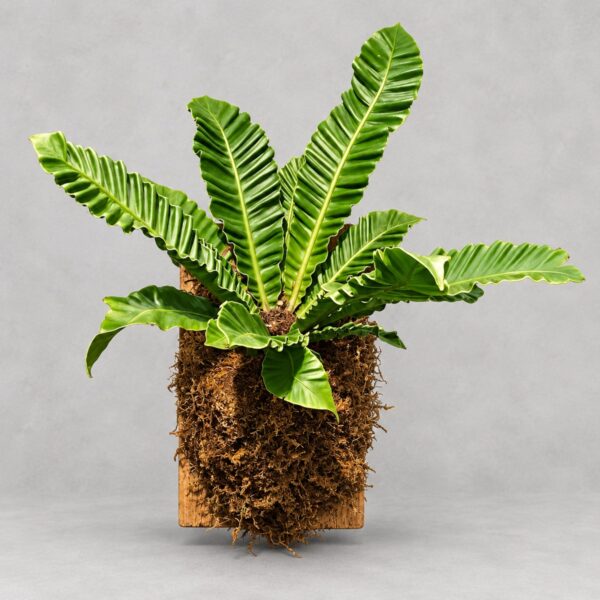
Ornamental ferns — Boston fern, bird’s nest fern, hare’s foot fern, maidenhair fern — all hail from the forest floor. Permanently dark and damp, with thick humus-rich soil providing abundant nutrients. Fern fronds are typically thin because they don’t need thick cuticles to prevent water loss — forest floor humidity is already sufficient. This explains why ferns are so difficult in dry indoor environments: you’ve removed them from near-saturated humidity and placed them in a living room at forty percent humidity. Of course they’ll protest.
Peperomia Peperomia: Drought-Tolerant Oddities of the Forest Floor
Peperomia is an interesting exception. They also grow at forest floor level, but typically as epiphytes on rotting wood or in rock crevices rather than in moist soil. Peperomia leaves are thick and succulent, storing water — an adaptation to the drier microenvironments within the forest floor. This is why peperomias are much easier to care for than ferns: they tolerate dryness and don’t require such high ambient humidity. Place them on a desk or coffee table, and they won’t immediately complain if you occasionally forget to water.
Marantaceae Marantaceae: Light-and-Shadow Dancers of the Understory
Marantaceae plants — peacock plant, calathea, prayer plant — inhabit the brighter positions within the understory. Their leaves often carry spectacular patterns believed to help maximise light-use efficiency in low-light conditions. More fascinating is the “prayer movement” — certain Marantaceae species raise their leaves upward at night, then unfurl them during the day. This movement is thought to be related to light-tracking, helping the plant maximise light absorption in dim environments.
How Understanding Native Habitat Informs Plant Care
Light Management: Where’s Your “Rainforest Layer”?
Walk into your home and look around. Window positions with bright indirect light equate to the “canopy,” the central living room further from windows equals the “understory,” and dark bathroom corners approach the “forest floor.” Use this framework to place suitable plants in suitable positions. This works better than any care guide.
Humidity Simulation: Hong Kong’s Air-Conditioning Dilemma
When Hong Kong runs air conditioning in summer, indoor humidity can drop below thirty percent — a disaster for most tropical rainforest plants. Solutions include: using humidifiers, grouping plants together to create a micro-humid environment, placing water-filled trays with pebbles beneath pots, and regular misting. My top recommendation is grouping plants together — their collective transpiration creates a more humid microclimate.
Medium Selection: Simulating Rainforest Soil
Rainforest floor soil is loose, well-draining, and rich in organic matter. When growing foliage plants, choose media with similar properties — peat moss mixed with perlite and bark chips, or commercial foliage plant potting mix. Avoid heavy, compact garden soil, which suffocates roots. It’s like taking someone from the rainforest and dumping them in a swamp.
Introduction to Major Native Regions
Borneo: Southeast Asia’s Rainforest Treasure Trove
The world’s third-largest island, Borneo’s rainforests are the native homeland of countless foliage plants. Dipterocarp trees dominate here, with alocasia, pitcher plants (Nepenthes), and orchids growing in the understory. Borneo’s climate is perpetually hot and humid, closely resembling Hong Kong’s summer conditions. Many familiar ornamental varieties, including some alocasias and philodendrons (Philodendron), originate from here.
Sumatra: The Gift of Volcanic Soil
Also part of Indonesia, Sumatra has fertile soil from volcanic activity. The island’s rainforest biodiversity is extraordinarily high, with the Araceae family being particularly well-represented. Many wild relatives of monstera, various philodendrons, and anthuriums (Anthurium) are native to this region. Volcanic ash soil is mineral-rich, explaining why these plants thrive best in organic-rich potting media.
Amazon: The Lungs of the Earth
South America’s Amazon rainforest is the world’s largest tropical rainforest, covering over half of all rainforest area on Earth. Its structure is even more spectacular, with emergent trees reaching above sixty metres. Many classic indoor foliage plants are native here — wild relatives of rubber plant (Ficus elastica), various philodendrons, and the familiar pothos (Epipremnum aureum). The Amazon’s climate is characterised by year-round warmth and abundant rainfall with no distinct dry season, which helps explain these plants’ water requirements.
Conclusion
Whenever I gaze at a monstera in the Archive, I imagine how it climbs tree trunks in Costa Rica’s rainforest. Seeing an alocasia, I recall the ever-present moisture of Borneo’s understory. These plants are more than mere decorations in our living rooms — they’re travellers from tropical rainforests thousands of kilometres away, carrying memories and genes from their native lands.
Understanding their natural habitat isn’t just about keeping them alive better — it’s about forging a connection between you and one of Earth’s oldest, most flourishing ecosystems. When you mist your alocasia, you’re recreating the morning fog of Borneo’s understory. When you place your monstera by a window, you’re simulating the dappled sunlight of the canopy.
If you’d like to learn more stories about the native habitats of foliage plants, visit the PLANTJAI Specimen Archive. We’re on the 4th floor of Nam Hing Fong, 39 Yiu Wa Street, Causeway Bay, where each plant is labelled with its native region. You can also browse our online plant catalogue at plantjai.com to discover the rainforest stories behind each variety.
May every plant in your home find its own rainforest layer.
IN STORE NOW
Plants for this guide
Related plants in stock now — live prices, delivery or Causeway Bay pickup.
Asplenium nidus var plicatum
Original price was: HK$428.00.HK$180.00Current price is: HK$180.00.
In stock · store pickup
View plant
FREE PLANT ADVICE
Send us a photo before you change anything
WhatsApp a photo of the plant and your window light. Our Causeway Bay team will suggest care steps or plants that suit your space.
STORE · CAUSEWAY BAY
4/F, 39 Yiu Wa Street, Causeway Bay
Daily 12:30–8:00pm · ~3 min walk from Times Square
Map & directions