

The Variegated Aesthetics of Syngonium: From Godzilla to Pink Allusion


Getting to Know the Syngonium Family
The Shape-Shifting Spirits of Araceae
The genus Syngonium, like Philodendron, Epipremnum, and Monstera, belongs to the Araceae family. With approximately 30+ wild species, the genus is primarily distributed across tropical American rainforests, from southern Mexico to Brazil.
In their native habitats, Syngoniums are mostly climbing or trailing vines that grow up tree trunks or rocks. Their juvenile and adult leaves look dramatically different — a trait that makes growing Syngoniums particularly fascinating, as you can witness the plant transform from “cute” to “monster” right before your eyes.
Syngonium ‘Godzilla’
Why the Name “Godzilla”?
The name is no exaggeration. Godzilla Syngonium’s mature leaves can reach 40–60 cm in length, deeply split into three to five major lobes with prominent, robust veins and naturally crinkled leaf textures. From a distance, it genuinely evokes the classic monster movie Godzilla’s dorsal fins — commanding, primal, and full of raw power.
I still remember the first time I saw a mature specimen of this cultivar in Japan. I couldn’t believe my eyes. The plant had climbed all the way to the greenhouse ceiling, each leaf larger than my face, with deep green split leaves gleaming under the lights — the visual impact is something I still vividly recall.
The Joy of Watching It Grow
The most fascinating aspect of Syngonium ‘Godzilla’ is its growth journey. When you first bring it home, it might just be a small seedling with standard arrowhead-shaped leaves, looking no different from an ordinary Syngonium. But over time, give it a climbing pole and let it ascend, and the leaves will gradually enlarge, split, and eventually transform into those breathtaking, dramatic lobed forms.
This “ugly duckling to swan” transformation takes about a year, but the patience is absolutely worth it. Every time a new leaf unfurls, that sense of anticipation and surprise is one of the greatest joys of plant parenthood.
Quality Syngonium ‘Godzilla’ plants are currently available at plantjai.com. If you’d like to experience the satisfaction of growing your own little seedling into a big monster, come browse our selection.
Syngonium Growth Transformation: From Arrow to Split Leaf
Juvenile Stage: Charming Arrowhead Leaves
Nearly all Syngoniums start with arrowhead-shaped juvenile leaves — the leaf base curves inward like a heart, with the tip pointing forward. At this stage, leaves are typically small with vibrant colors (especially in variegated varieties), perfect for desktop or shelf display.
Many people prefer the look of juvenile Syngoniums, finding them delicate and refined. But let me tell you — mature Syngoniums offer a completely different kind of beauty: bolder, wilder, more evocative of a tropical rainforest.
Mature Stage: Bold Split Leaves
When Syngoniums climb upward with support, their leaf shape undergoes a significant transformation. Leaves enlarge, edges develop splits, and the shape gradually changes from arrowhead to three-lobed, five-lobed, or even more complex forms. This transformation is common among climbing aroids, but each genus and variety presents it slightly differently — which is precisely what makes them so captivating.
Common Varieties Tour
Green Syngonium Syngonium podophyllum
This is the most basic Syngonium variety — emerald green, arrowhead-shaped leaves with vigorous growth and near-indestructible resilience. It’s the entry point for many people’s Syngonium journey. While it lacks any special patterns, that pure green is timeless and complements any indoor environment.
Pink Allusion Syngonium Syngonium ‘Pink Allusion’
This variety’s leaves carry a pinkish hue, especially when new leaves emerge — they’re almost salmon-pink, gradually transitioning to green with a pink glow. In sunlight, the leaves glow with a faint pink translucence that’s absolutely dreamy. It’s a favorite among many, and looks particularly feminine and charming on a bedroom dresser or vanity.
Confetti Syngonium Syngonium ‘Confetti’
Green, white, and pink simultaneously appear on the leaves like scattered confetti. This variety has relatively stable variegation that doesn’t easily revert, making it a popular beginner-friendly variegated cultivar.
Milk Confetti Syngonium Syngonium ‘Milk Confetti’
This variety’s leaves are nearly pure white or cream-colored, dotted with pink spots. It looks incredibly soft and warm, like a glass of milk with strawberry syrup. Milk Confetti grows more slowly because white leaves contain less chlorophyll, but its unique charm makes it a must-have for many collectors.
Care Guide: Easy Enough for Beginners
Light: Highly Shade-Tolerant
Syngoniums are very shade-tolerant and can survive in dimly lit corners. But if you want vibrant leaf colors and faster growth, bright, indirect light is recommended. Variegated varieties especially need a bit more light, or the white and pink portions may turn green.
Watering: Keep Lightly Moist
Syngoniums prefer slightly moist environments, but like all aroids, cannot tolerate waterlogging. My rule of thumb: water when the top layer of soil is dry, but don’t let the pot sit in standing water for extended periods. They’re slightly more moisture-loving than Philodendrons — water more frequently in summer, reduce in winter.
Climbing or Trailing?
This depends on your space and preferences. Trailing Syngoniums maintain smaller arrowhead leaves with vines cascading downward — perfect for elevated placement. If you want to see leaves enlarge and split into spectacular forms, you need to give them a climbing pole to ascend. Syngonium ‘Godzilla’ especially needs climbing support to reach its full potential.
Potting Mix and Fertilizer
Standard foliage plant potting mix works fine — peat moss and perlite is the classic combo. During the growing season, feed with diluted liquid fertilizer every two weeks for lusher growth.
Conclusion: Don’t Underestimate This Overlooked Family
The Syngonium family is like that classmate who seems unremarkable at first, but the more you get to know them, the more fascinating they become. They’re inexpensive, easy to care for, and offer endless surprises — from the juvenile-to-adult leaf transformation, to the riot of colors in variegated forms, to the dramatic shift from compact desktop plant to bold climbing specimen.
Next time you walk into a plant shop, give Syngoniums a second look. You might just find yourself exclaiming, just like that visitor who first laid eyes on Syngonium ‘Godzilla’: “Wait, THIS is a Syngonium?!”
Visit plantjai.com to browse our Syngonium ‘Godzilla’ and other curated varieties. The Archive also holds many rare variegated specimens that you won’t find online, waiting for you to discover at our Causeway Bay store. Take a Syngonium home, watch it grow from a tiny arrowhead into a magnificent split-leaf giant — that sense of accomplishment is something I think you’ll truly enjoy.
IN STORE NOW
Plants for this guide
Related plants in stock now — live prices, delivery or Causeway Bay pickup.
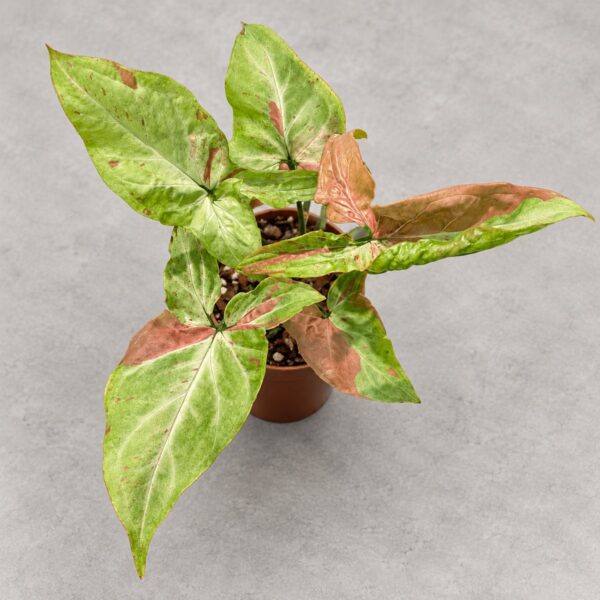
Syngonium podophyllum 'Pink Salmon'
Syngonium podophyllum 'Pink Salmon'
HK$380.00
In stock · store pickup
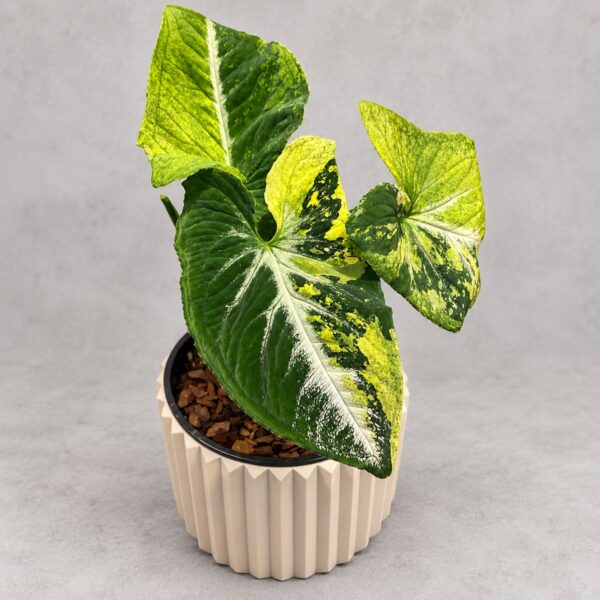
View plantSyngonium Wendlandii 'Scrambled Eggs'
Original price was: HK$1,280.00.HK$280.00Current price is: HK$280.00.
In stock · store pickup
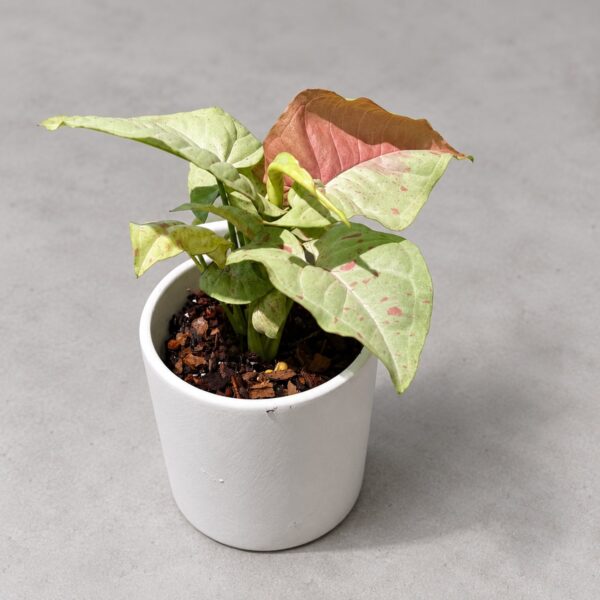
View plantSyngonium podophyllum 'Milk Confetti'
Syngonium podophyllum 'Milk Confetti'
HK$168.00
In stock · store pickup
View plant
FREE PLANT ADVICE
Send us a photo before you change anything
WhatsApp a photo of the plant and your window light. Our Causeway Bay team will suggest care steps or plants that suit your space.
STORE · CAUSEWAY BAY
4/F, 39 Yiu Wa Street, Causeway Bay
Daily 12:30–8:00pm · ~3 min walk from Times Square
Map & directions