
How to Care for Philodendron Colombia in Hong Kong | Plantjai

Hong Kong care guide for Philodendron Colombia.
Thick, heart-shaped leaves with a velvety, felt-like texture, deep green colouring radiating understated luxury, and a distinctive crawling growth habit — a collector-grade Philodendron that delights both touch and si…
Botanical name pending confirmation
Origin & characteristics
This Colombian Philodendron (botanical name pending confirmation, tentatively listed as Philodendron sp. 'Colombia') is native to the tropical rainforest of Colombia in South America, a perennial herbaceous member of the genus Philodendron in the Araceae family. Its leaves are thick and heart-shaped, with a distinctive texture — a velvety, fuzzy feel — maturing into a deep emerald green with an understated sheen. Its growth habit is "crawling," spreading horizontally along the soil surface rather than climbing upward in the typical Philodendron manner, which is why it needs a wide, shallow pot to develop properly. The entire plant is toxic, containing insoluble calcium oxalate crystals; ingestion causes mouth irritation, drooling, and gastrointestinal discomfort, and it must be kept away from pets and children. This species is relatively rare in the plant world and highly favoured by collectors.
Light
- Ideal conditions: bright indirect light is best, placed near a south-facing window filtered by a sheer curtain, or an east- or north-facing windowsill
- Acceptable range: medium to bright indirect light both work — slightly more shade-tolerant than typical climbing Philodendron species
- Best performance: with ample light, leaves become thicker with more pronounced velvety texture; insufficient light causes leaves to thin out and fade in colour
- Avoid: intense direct sun scorches the velvety leaf surface, causing scorch spots or discolouration
- Tip: the velvety leaf surface collects dust easily — rotate the pot regularly so all sides receive even light
Watering
- Frequency: water once the top 2-3 cm of soil dries out, roughly every 7-10 days
- Method: water thoroughly around the rim, letting water drain from the base, then empty tray runoff
- Judging timing: test the soil with a finger, watering only once it feels dry — better slightly dry than overwatered
- Summer: active growth period, roughly every 5-7 days
- Winter: growth slows, roughly every 10-14 days
- Water quality: fairly sensitive to hard water — filtered water, rainwater, or tap water left standing overnight is recommended
- Warning signs: drooping, limp leaves = underwatering; yellowing leaves or a soft, blackened stem = overwatering/root rot
Soil & pot
- Soil recipe: loose, breathable, well-draining, with some moisture retention, rich in organic matter
- Recommended recipe: peat soil + perlite + orchid bark + coco coir (ratio 2:1:1:1)
- Advanced recipe: an aroid-specific soil mix (Aroid Mix) with a coarser, more breathable texture
- Pot choice:
- Key point: since it grows in a crawling habit, it needs a wide, shallow pot rather than a deep one
- Terracotta or another breathable material is best, with drainage holes essential
- Repotting timing: roughly once every 1-2 years, repot when roots emerge from the drainage holes, choosing a wider rather than deeper pot
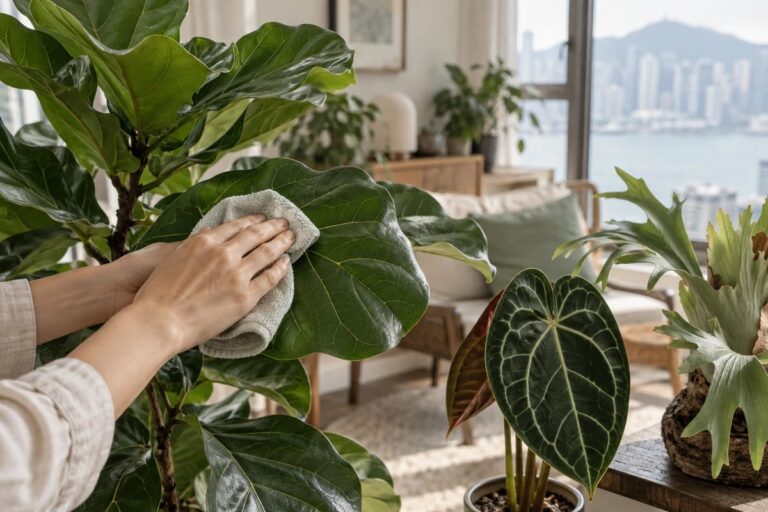
- Tip: regularly wipe dust off the leaf surface to maintain the velvety texture and photosynthetic efficiency
Temperature & humidity
- Ideal temperature: 18-27°C, with 20-26°C being most comfortable
- Minimum tolerance: not below 15°C; prolonged cold stalls growth
- Humidity requirement: 50-80% is ideal — velvety-leaved species generally prefer more humid conditions
- Ways to increase humidity:
- Use a humidifier (most effective)
- Group plants together to create a humid microclimate
- Line the pot base with damp pebbles
- Occasionally mist the surrounding air lightly (avoid spraying directly on leaves, as standing water on the velvety texture can cause rot)
- Avoid: direct AC airflow, cold drafts, heater vents, dramatic temperature swings
Common problems
| Symptom | Likely cause | What to do |
|---|---|---|
| Leaves losing their velvety sheen | Insufficient light or humidity too low | Increase indirect light, raise surrounding humidity |
| Leaves thinning and shrinking | Prolonged insufficient light | Gradually move to a brighter position |
| Scorched leaf edges | Light too strong | Move away from direct light, filter with a sheer curtain |
| Yellowing leaves | Overwatering/root rot | Stop watering to check roots, improve drainage |
| Growth stalled | Temperature too low or dormancy | Check temperature, reduce watering in winter |
| Dust on leaf surface | Prolonged lack of cleaning | Gently wipe with a damp cloth, being careful not to damage the velvety texture |
| Plant becoming loose and untidy | Pot too small or insufficient light | Repot into a wider pot, increase light |
How to explain to customers
"This Colombian Philodendron grows in a crawling habit — meaning it spreads horizontally across the pot's surface rather than climbing upward, so you'll want to give it a wide, shallow pot to develop in. Its biggest feature is the velvety texture of its leaves — wonderfully soft to touch, with a deep green sheen that has real character. For care, remember to keep humidity on the higher side, water only once the soil dries out, and since the leaves have that velvety texture, wipe off dust gently with a damp cloth. This one is toxic, so please keep it well away from pets and young children. It's a bit hard to come by, so take good care of it and it'll only get more beautiful!"
Fun facts
- The botanical name for this Colombian Philodendron hasn't been formally published yet, so it's listed in the trade as Philodendron sp. 'Colombia' — "sp." is short for "species," indicating an undetermined species
- Its velvety leaf texture is an evolutionary adaptation — the fine hairs help the leaf shed water in high-humidity environments, preventing fungal growth
- Unlike climbing Philodendron species, crawling types don't need a sphagnum pole — instead they need "space" to spread out, and the bigger the pot, the happier it grows
- It shares a similar velvety-leaf quality with Philodendron gloriosum, but differs in leaf shape and vein patterning
Keywords
Plantjai, Colombian Philodendron, Philodendron Colombia, Philodendron sp Colombia, velvety leaf, Araceae, crawling growth, indoor plant, foliage plant, toxic plant, deep green, velvety texture, collector's plant, indirect light, high humidity, rare cultivar, wide shallow pot, tropical plant
參考資料(想知來源可展開)
References
- Royal Botanic Gardens, Kew — Plants of the World Online: genus Philodendron, https://powo.science.kew.org/
- ASPCA — Toxic and Non-Toxic Plant List, https://www.aspca.org/pet-care/animal-poison-control/toxic-and-non-toxic-plants
⚠️ Contains insoluble calcium oxalate crystals; toxic to humans and pets if ingested. Keep out of reach of children and pets.
Plantjai · Causeway Bay collector indoor plants · WhatsApp +852 66807550
For Hong Kong homes and offices. Stock and pricing follow the product page.
IN STORE NOW
Plants for this guide
Related plants in stock now — live prices, delivery or Causeway Bay pickup.
Philodendron 'Florida Ghost'
Philodendron 'Florida Ghost'
from HK$118.00
In stock · store pickup
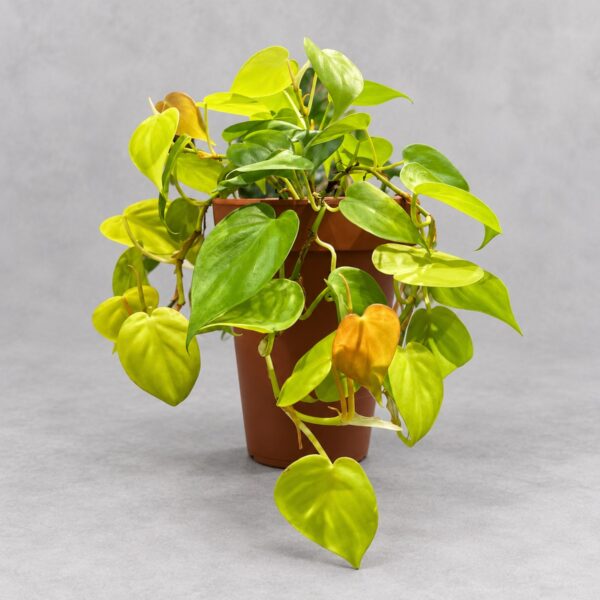
View plantPhilodendron hederaceum 'Lemon Lime'
Philodendron hederaceum 'Lemon Lime'
HK$198.00
In stock · store pickup
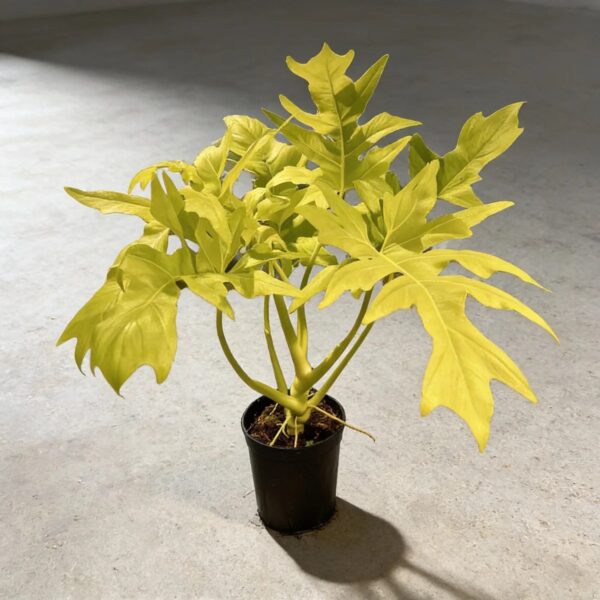
View plantPhilodendron warscewiczii 'Aurea Flavum'
Philodendron warscewiczii 'Aurea Flavum'
HK$298.00
In stock · store pickup
View plant
FREE PLANT ADVICE
Send us a photo before you change anything
WhatsApp a photo of the plant and your window light. Our Causeway Bay team will suggest care steps or plants that suit your space.
STORE · CAUSEWAY BAY
4/F, 39 Yiu Wa Street, Causeway Bay
Daily 12:30–8:00pm · ~3 min walk from Times Square
Map & directionsPlant Care