
How to Care for Philodendron Dean Mcdowell in Hong Kong | Plantjai

Hong Kong care guide for Philodendron Dean Mcdowell.
A dream hybrid born from two hugely popular Philodendron species — Philodendron gloriosum and Philodendron pastazanum — combining enormous heart-shaped leaves with pale, embossed venation and an impressive crawling gr…
Origin & characteristics
Philodendron 'Dean McDowell' is a horticultural hybrid, crossed from Philodendron gloriosum and Philodendron pastazanum, a perennial herbaceous member of the genus Philodendron in the Araceae family. It inherits the best traits of both parents: the enormous, velvety, heart-shaped leaves of gloriosum, combined with the pale, embossed venation of pastazanum. The leaf texture is thick with a velvety touch, and mature leaves can reach 30-40 cm or even larger. Its growth habit is crawling/terrestrial, spreading horizontally along the soil surface, requiring a wide, shallow pot to develop properly. It grows quickly, and with good care can form a spectacular large cluster in no time. The entire plant is toxic, containing insoluble calcium oxalate crystals; ingestion causes mouth irritation, drooling, and gastrointestinal discomfort, and must be kept away from pets and children.
Light
- Ideal conditions: bright indirect light, roughly 10,000-20,000 lux, placed near a south-facing window filtered by a sheer curtain, or an east-facing windowsill
- Best performance: with ample indirect light, leaves grow larger with more pronounced embossed venation; insufficient light causes leaves to shrink and growth to slow
- Avoid: intense direct sun scorches leaves, and the pale venation is especially prone to scorch spots
- Tip: it grows quickly, so rotate the pot regularly to ensure all sides receive even light and avoid one-sided growth
Watering
- Frequency: water once the soil is roughly 30-50% dry, roughly every 7-10 days
- Method: water thoroughly around the rim, letting water drain from the base, then empty tray runoff
- Judging timing: insert a finger about two finger-widths into the soil, watering once it feels dry
- Summer: active growth period, roughly every 5-7 days
- Winter: growth slows, roughly every 10-14 days
- Water quality: filtered water, rainwater, or tap water left standing overnight is recommended — fairly sensitive to hard water
- Warning signs: drooping, limp leaves = underwatering; yellowing leaves or a soft stem = overwatering/root rot
Soil & pot
- Soil recipe: loose, breathable, fast-draining with some moisture retention
- Recommended recipe: peat soil + perlite + orchid bark + coco coir (ratio 2:1:1:1)
- Advanced recipe: an aroid-specific soil mix (Aroid Mix), bark-based with a medium grain texture
- Pot choice:
- Key point: its crawling habit needs a wide, shallow pot, rather than a deep one
- Terracotta pots offer the best breathability, with drainage holes essential
- Repotting timing: fast growing — repot roughly annually or when roots emerge from the drainage holes, moving up to a larger wide pot
- Tip: given its rapid growth rate, ensure sufficient space for it to spread and crawl
Temperature & humidity
- Ideal temperature: 18-29°C, with 20-27°C being most comfortable
- Minimum tolerance: not below 15°C; prolonged cold seriously slows growth
- Humidity requirement: 50-60% is ideal — it adapts to typical household humidity, though leaves look even better with higher humidity
- Ways to increase humidity:
- Use a humidifier
- Group plants together
- Line the pot base with damp pebbles
- Occasionally mist the surrounding air lightly
- Avoid: direct AC airflow, cold drafts, heater vents, dramatic temperature swings
Common problems
| Symptom | Likely cause | What to do |
|---|---|---|
| Leaves thinning and shrinking | Insufficient light | Move closer to a well-lit position |
| Embossed venation not pronounced | Insufficient light or humidity | Increase indirect light and surrounding humidity |
| Scorched edges/spots on leaves | Light too strong | Move away from direct light, filter with a sheer curtain |
| Yellowing leaves | Overwatering/root rot, or natural ageing | Check watering frequency, trim off lower older leaves |
| Growth stalled | Temperature too low or dormancy | Check temperature, reduce watering in winter |
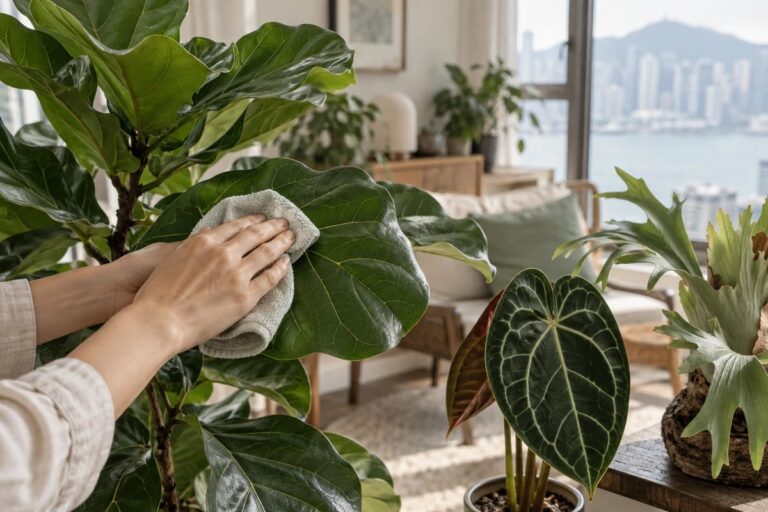
| Dust on leaf surface | Prolonged lack of cleaning | Gently wipe with a damp cloth |
| Plant leaning to one side | Uneven light exposure | Rotate the pot 180 degrees regularly |
How to explain to customers
"Dean McDowell is like the 'celebrity offspring' of the Philodendron world — its father is Philodendron gloriosum, and its mother is Philodendron pastazanum, and it's inherited the best genes from both: huge leaves, velvety texture, and pale embossed venation, giving it real presence! It grows in a crawling habit, spreading across the pot's surface, so give it a wide, shallow pot. It grows fairly quickly, and with good care it can become impressively large within a year. Remember: let the soil dry about halfway before watering, give it enough light without direct sun, and keep humidity on the medium-to-high side. It's toxic, so please keep it well away from pets and young children. This one is an absolute must-have for any Philodendron enthusiast!"
Fun facts
- The name "Dean McDowell" honours American horticulturist Dean McDowell, who made significant contributions to Philodendron breeding
- Its two parent species — Philodendron gloriosum and Philodendron pastazanum — are both superstars in the Philodendron world, making this cross a true "power couple" pairing
- Unlike climbing Philodendron species, Dean McDowell doesn't need a sphagnum pole — it crawls across the soil surface on its own, with leaves spreading in all directions to create a ground-covering effect
- Its growth rate is on the faster side among Philodendron species — with good care, it can go from a small seedling to an impressively sized medium plant within a year
- The pale venation isn't a variegation trait but an inherent species characteristic, and it won't disappear regardless of changes in lighting
Keywords
Plantjai, Philodendron Dean McDowell, Philodendron, hybrid cultivar, Philodendron gloriosum, Philodendron pastazanum, Araceae, crawling growth, indoor plant, foliage plant, toxic plant, velvety leaf, embossed venation, large-leaf cultivar, collector's plant, indirect light, wide shallow pot, fast growing, tropical plant
參考資料(想知來源可展開)
References
- Royal Botanic Gardens, Kew — Plants of the World Online: genus Philodendron, https://powo.science.kew.org/
- ASPCA — Toxic and Non-Toxic Plant List, https://www.aspca.org/pet-care/animal-poison-control/toxic-and-non-toxic-plants
⚠️ Contains insoluble calcium oxalate crystals; toxic to humans and pets if ingested. Keep out of reach of children and pets.
Plantjai · Causeway Bay collector indoor plants · WhatsApp +852 66807550
For Hong Kong homes and offices. Stock and pricing follow the product page.
IN STORE NOW
Plants for this guide
Related plants in stock now — live prices, delivery or Causeway Bay pickup.
Philodendron 'Florida Ghost'
Philodendron 'Florida Ghost'
from HK$118.00
In stock · store pickup
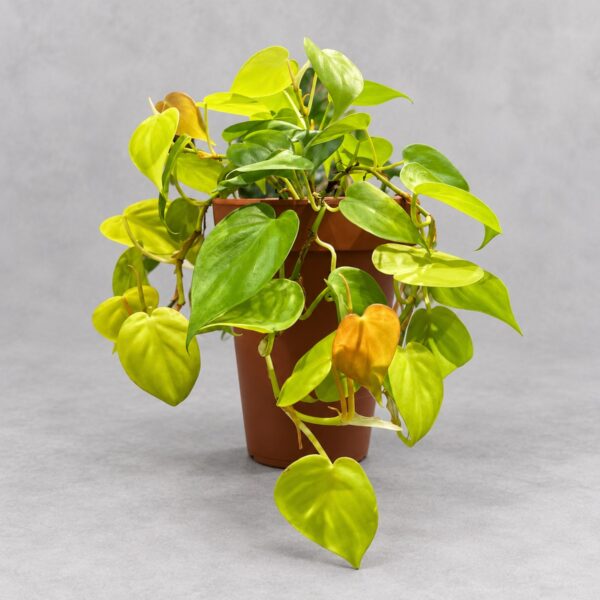
View plantPhilodendron hederaceum 'Lemon Lime'
Philodendron hederaceum 'Lemon Lime'
HK$198.00
In stock · store pickup
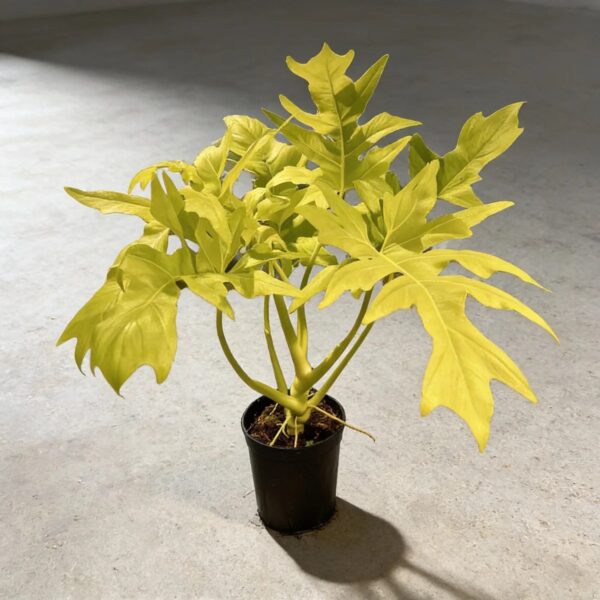
View plantPhilodendron warscewiczii 'Aurea Flavum'
Philodendron warscewiczii 'Aurea Flavum'
HK$298.00
In stock · store pickup
View plant
FREE PLANT ADVICE
Send us a photo before you change anything
WhatsApp a photo of the plant and your window light. Our Causeway Bay team will suggest care steps or plants that suit your space.
STORE · CAUSEWAY BAY
4/F, 39 Yiu Wa Street, Causeway Bay
Daily 12:30–8:00pm · ~3 min walk from Times Square
Map & directionsPlant Care