How to Care for Nephrolepis Exaltata Marisa in Hong Kong | Plantjai

Hong Kong care guide for Nephrolepis Exaltata Marisa.
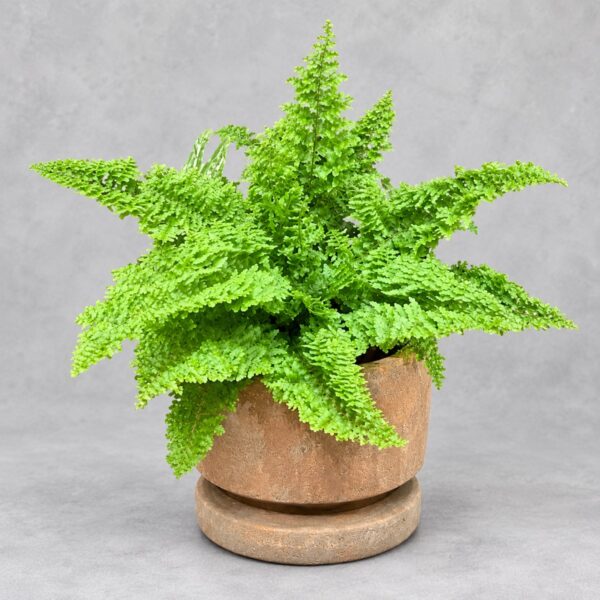
Fluffy, curled fronds that look and feel like cotton candy — a soothing, huggable presence that's the star of any office or living room, and effortlessly easy for beginners to grow!
Origin & characteristics
| Item | Details |
|---|---|
| Botanical name | Nephrolepis exaltata 'Marisa' |
| Family | Nephrolepidaceae (sword fern family) |
| Native range | Tropical and subtropical regions (South America, Central America, Southeast Asia) |
| Growth habit | A perennial herbaceous fern that loves warm, humid conditions |
| Mature size | Frond spread roughly 30-50 cm, plant height roughly 25-40 cm |
| Display period | Evergreen year-round, suited to long-term indoor display |
| Toxicity | Non-toxic ✓ safe for pets and children |
'Marisa' is a horticultural cultivar of the Boston fern (Nephrolepis exaltata), most distinctive for its naturally curled fronds and leaflets, which give it the appearance of a fluffy ball of cotton candy — utterly charming. Its foliage is a fresh apple-green, appearing especially bright and lively in well-lit conditions. Compared to a typical Boston fern, 'Marisa' has more tightly curled, softer-textured fronds that feel wonderfully soft to the touch.
Light
This cotton-candy fern loves bright indirect light and should never be exposed to direct sun, or its fronds will easily yellow and develop scorched edges.
| Setting | Recommendation |
|---|---|
| Ideal placement | Near an east- or north-facing windowsill, or 1-2 metres from a south-facing window |
| Acceptable | A bright indoor spot, or a windowsill filtered by a sheer curtain |
| Avoid | Harsh midday direct sun, or a permanently dark corner |
| Lighting fix | A grow light for 6-8 hours daily can supplement insufficient natural light |
Tip: if you notice fading leaf colour and slow new growth, light may be insufficient; if leaf tips develop brown scorched edges, it may be sunburn.
Watering
This fern has fairly high water needs and prefers consistently moist soil, but must never sit in standing water that leads to root rot.
| Season | Frequency | Notes |
|---|---|---|
| Spring/summer (growing season) | Roughly every 2-3 days, watering once the soil surface feels slightly dry | Keep soil moist, misting can help boost humidity |
| Autumn/winter (dormant season) | Roughly every 4-5 days | Wait until the top 1-2 cm of soil dries out before watering |
Watering technique:
- Use room-temperature water (water that's too cold shocks the roots)
- Water slowly around the rim until it just starts seeping from the base, then stop
- Empty tray runoff after half an hour to prevent root rot
- Mist the leaf surface 1-2 times daily (morning or evening) — with enough humidity, fronds stay greener and more curled
Soil & pot
Soil recipe:
This fern needs a soil that's both well-draining and moisture-retentive. Recommended recipe:
| Material | Ratio | Function |
|---|---|---|
| Quality indoor plant potting soil | 50% | Provides base nutrients |
| Perlite | 20% | Improves aeration, prevents standing water |
| Coco coir/peat | 20% | Retains moisture, adds organic matter |
| Bark or coco husk chips | 10% | Improves drainage, mimics native conditions |
Pot choice:
- Material: either ceramic or plastic pots work; ceramic is more stable and less prone to tipping
- Drainage: drainage holes are essential — never use a pot without them
- Size: choose a pot just 2-3 cm larger than the current one — an oversized pot makes soil harder to dry out, risking root rot
- Repotting: repot once a year or two in spring, refreshing the soil
Temperature & humidity
| Item | Ideal range | Minimum tolerance |
|---|---|---|
| Temperature | 18-26°C | Not below 10°C |
| Humidity | 60-80% | Not below 50% |
Temperature notes:
- This fern is a tropical plant and hates the cold! Bring it indoors in winter without fail
- Avoid direct AC air exposure — large temperature swings easily cause yellowing leaves
- Hong Kong summers are generally fine, but pay attention to ventilation
Ways to increase humidity:
- Mist the leaf surface daily (simplest and most effective)
- Place on a pebble tray (water in the tray, pot elevated above the waterline)
- Group with other plants to create a humid microclimate
- Use a humidifier (especially when running heating in winter)
Common problems
Q1: Why are the leaf tips turning yellow?
The most common causes are low humidity or improper watering (too much or too little). Check soil moisture — water thoroughly if dry, or pause watering for a few days if too wet. Increase misting to boost humidity as well.
Q2: Why have the fronds become uncurled and flat?
This may be due to excessive light or insufficient water. Move to an indirect light position, check soil moisture, and maintain consistent moisture levels.
Q3: Why are there brown spots on the leaves?
Usually sunburn (direct strong light) or cold damage (temperature too low). Move to an appropriate spot, trim off severely damaged fronds, and wait for new growth.
Q4: Why are leaves turning black and mushy?
This strongly suggests root rot (overwatering or poor drainage). Stop watering immediately, check the roots, trim off rotten portions, and repot in fresh, well-draining soil.
Q5: Why is growth slow with no new fronds?
Possibly insufficient light, insufficient fertiliser, or the need for repotting. Move to a brighter spot, and apply diluted liquid fertiliser every 2 weeks during the growing season.
Q6: What about pests?
This fern occasionally gets spider mites (tiny specks and webbing on leaf undersides) or scale insects. Wipe the fronds with a damp cloth; for severe infestations, spray with neem oil or soapy water.
How to explain to customers
"This is our cotton-candy fern, botanically Nephrolepis exaltata 'Marisa' — a special cultivar of the Boston fern. Its biggest selling point is how curly and fluffy the fronds are, looking just like a ball of cotton candy — so soothing to look at! Care is really simple, just remember three key points: first, don't put it in direct sun, a bright indoor spot is enough; second, keep the soil consistently moist, don't let it dry out completely; third, humidity needs to be adequate, so a daily misting will keep it happy! Don't worry, this fern is completely non-toxic, so it's totally fine even with cats, dogs, or young children around. It does dislike the cold though, so remember not to point the AC directly at it in winter! In the first week after bringing it home, keep an eye on the fronds for any changes — once it settles into its new environment, new growth will start coming in. Feel free to WhatsApp us anytime with questions!"
Fun facts
- Where the name comes from: the cultivar name 'Marisa' was actually named after a family member of the breeder, while the nickname "cotton candy fern" describes the adorable appearance of its curled fronds.
- A natural air purifier: the Boston fern is one of the air-purifying plants studied by NASA, effectively filtering indoor pollutants like formaldehyde and xylene — especially suited for newly renovated homes!
- An ancient plant lineage: ferns have existed on Earth for over 300 million years, predating even the dinosaurs — a genuine "living fossil" plant.
- Reproduces via spores: ferns don't flower or fruit, reproducing instead via spores on the underside of their fronds. If you're curious, you can try collecting the brown spore cases from the frond undersides to propagate new plants!
- The secret of the curl: 'Marisa's' curled fronds are actually the result of a genetic mutation in form, which has made it more popular than other Boston ferns and turned it into one of the trendiest plants of recent years.
Keywords
Plantjai, cotton candy fern, Boston fern, Nephrolepis exaltata, Nephrolepidaceae, indoor plant, foliage plant, non-toxic plant, pet-friendly, beginner plant, high-humidity plant, air purification, fern, curly-leaf plant, soothing plant, office plant, Hong Kong indoor plant, indirect light plant
參考資料(想知來源可展開)
References
- Missouri Botanical Garden — Plant Finder: Nephrolepis exaltata, https://www.missouribotanicalgarden.org/PlantFinder/PlantFinderDetails.aspx?kempercode=278837
- ASPCA — Toxic and Non-Toxic Plant List, https://www.aspca.org/pet-care/animal-poison-control/toxic-and-non-toxic-plants
Non-toxic — safe for pets and children.
Plantjai · Causeway Bay collector indoor plants · WhatsApp +852 66807550
For Hong Kong homes and offices. Stock and pricing follow the product page.
IN STORE NOW
Plants for this guide
Related plants in stock now — live prices, delivery or Causeway Bay pickup.
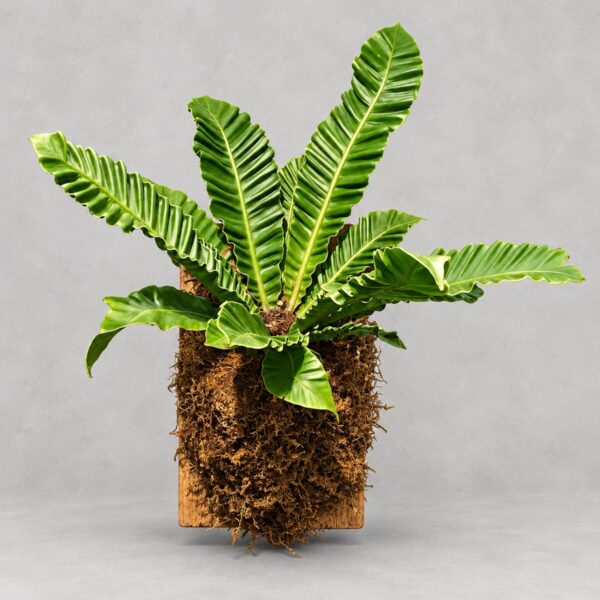
Asplenium nidus var plicatum
Original price was: HK$428.00.HK$180.00Current price is: HK$180.00.
In stock · store pickup
View plant
FREE PLANT ADVICE
Send us a photo before you change anything
WhatsApp a photo of the plant and your window light. Our Causeway Bay team will suggest care steps or plants that suit your space.
STORE · CAUSEWAY BAY
4/F, 39 Yiu Wa Street, Causeway Bay
Daily 12:30–8:00pm · ~3 min walk from Times Square
Map & directionsPlant Care