How to Care for Monstera Adansonii in Hong Kong | Plantjai

Hong Kong care guide for Monstera Adansonii.
"Cascading vines with an ethereal quality, small leaves riddled with holes swaying gently in the breeze — effortlessly bringing jungle vibes into your home!"
Origin & characteristics
Monstera adansonii is native to tropical rainforest in Central and South America, distributed across southern Mexico, Panama, Colombia, Ecuador, Peru, and Brazil. It belongs to the family Araceae, genus Monstera, and is a perennial evergreen climbing vine.
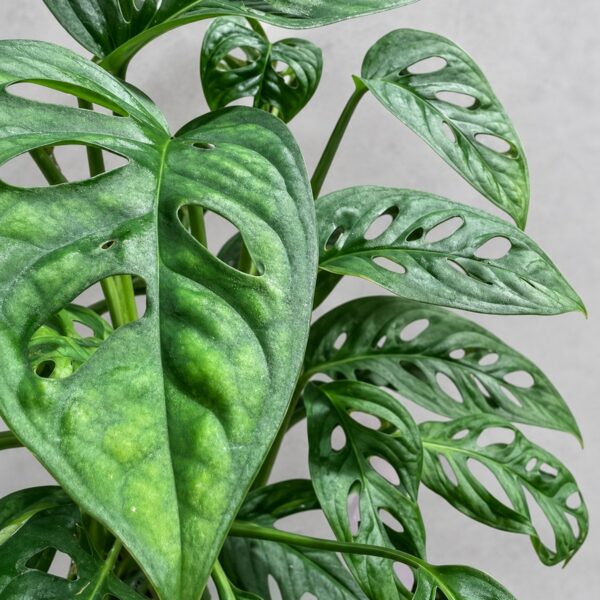
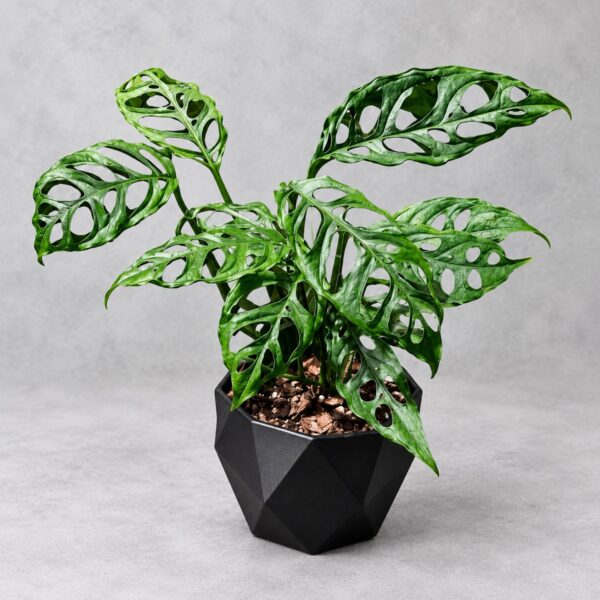
Its biggest feature is its leaves riddled with holes — the oval to long-oval leaf blade develops numerous irregular, elongated perforations as it matures. In botany, these holes are called "fenestrations," an evolutionary adaptation to the rainforest environment: when wind blows or heavy rain falls, the holes reduce impact force on the leaf while allowing light to penetrate through to the leaves below, so even lower leaves receive some light.
The leaves have a leathery texture, deep green on top with a paler underside. In the wild, it uses aerial roots to climb trees or rocks, with vines extending several metres long. Indoors, it's most suited to being grown as a hanging plant or climbing plant, depending on the desired display style.
Common varieties in the market include:
- Narrow-leaf form (Monstera adansonii var. laniata): narrower, longer leaves with larger, longer holes
- Round-leaf form (Monstera adansonii subsp. round form): rounder leaf shape with smaller holes
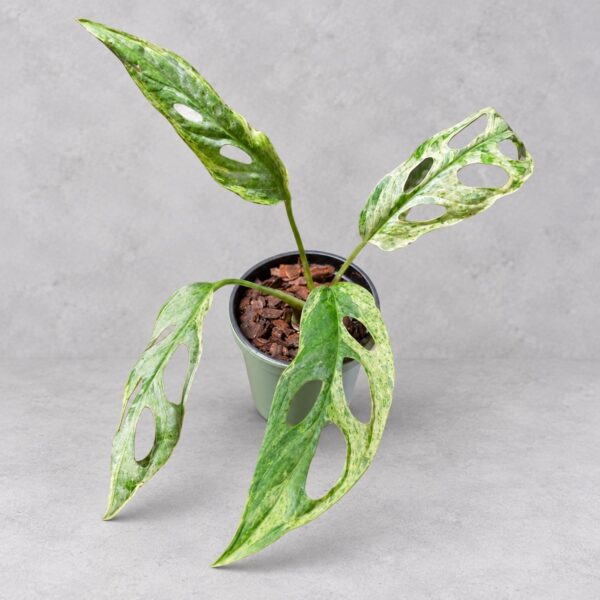
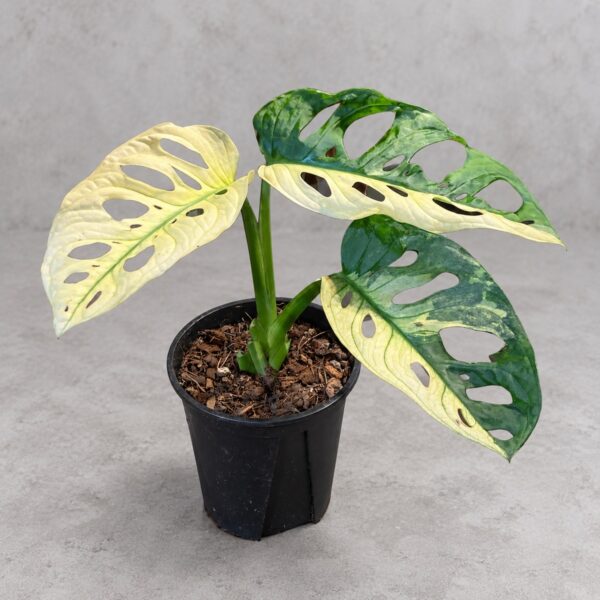
- Variegated form: leaves marked with white or yellow patterning, a rarer form
⚠️ Toxicity warning: the entire Monstera adansonii plant contains calcium oxalate raphides, toxic to both humans and pets. Ingestion causes mouth burning, tongue swelling, drooling, and vomiting. While generally not fatal, it causes significant discomfort. Keep it out of reach of children and pets, and wash your hands after pruning.
Light
| Item | Recommendation |
|---|---|
| Ideal light | Bright indirect light (10,000-20,000 lux) |
| Placement | Near an east- or north-facing windowsill; 1-2 metres from a south-facing window |
| Avoid | Harsh midday direct sun (leaves scorch and turn yellow easily) |
| Acceptable | Semi-shade (a softly lit indoor space), though growth will slow |
Monstera adansonii is native to the mid-canopy of the rainforest, accustomed to indirect light conditions. With ample light, leaves become a richer green, holes more pronounced, internodes shorter, and overall growth denser; with insufficient light, leaves become smaller, paler, internodes stretch (legginess), and new leaves may even lack holes entirely.
💡 Diagnostic tips:
- New leaves have obvious holes, leaf colour is deep green and glossy → light level is just right
- New leaves lack holes, are small, and stems are elongated → light is insufficient
- Yellow spots or scorched edges appear on the leaf surface → too much sun
For artificial supplemental lighting, use a full-spectrum LED grow light for 8-12 hours daily.
Watering
| Item | Recommendation |
|---|---|
| Frequency | Every 4-6 days in spring/summer; every 7-10 days in autumn/winter |
| Principle | Water once the top 2-3 cm of soil dries out, avoiding standing water |
| Water quality | Room-temperature tap water left standing, filtered water, or rainwater |
| Method | Water evenly around the rim, discarding runoff from the base after 15 minutes |
| Special note | Soil dries faster in hanging pots, so check more frequently |
Monstera adansonii has moderate water needs — it dislikes staying constantly wet, but also shouldn't be allowed to wilt from dryness. Since trailing plants have more soil surface exposed to air, water evaporates faster than in upright plants.
⚠️ Standing water warning: yellowing leaves (especially older, lower leaves), a foul smell from the soil, and soft, blackened roots → signs of root rot, requiring an immediate stop to watering and a root check.
⚠️ Underwatering warning: drooping leaves, slight curling, completely dry soil → water promptly; recovery typically occurs within 1-2 days of watering.
Soil & pot
Recommended soil ratio
| Material | Ratio | Function |
|---|---|---|
| Quality potting soil | 40% | Base for moisture and nutrient retention |
| Perlite | 25% | Improves aeration and drainage |
| Coco coir | 20% | Lightweight and loose |
| Pine bark (fine to medium grade) | 15% | Provides organic matter, mimics native conditions |
Pot choice
| Display style | Recommended pot | Notes |
|---|---|---|
| Cascading waterfall style | Hanging pot, wall-mounted pot | The classic presentation, vines trail down naturally |
| Jungle climbing style | Regular pot + sphagnum/coco pole | Vines climb upward, leaves grow larger with more holes |
| Shelf decoration style | Regular pot placed up high | Vines cascade down the shelf naturally, creating layered visual interest |
- Drainage: drainage holes are essential, and clay pellets can be layered at the base
- Repotting: repot every 1-2 years in spring, increasing the diameter by 3-5 cm
💡 Sphagnum pole tip: if you want larger leaves with more holes, consider setting up a sphagnum pole. When aerial roots attach to moist sphagnum moss, the plant "thinks" it's climbing a tree, triggering its maturity mechanism and producing larger, more perforated leaves.
Temperature & humidity
| Item | Range |
|---|---|
| Ideal growing temperature | 18-27°C |
| Acceptable range | 12-30°C |
| Minimum tolerance | 10°C (briefly), prolonged temperatures below 12°C stall growth |
| Ideal air humidity | 50-70% |
| Minimum humidity | 40% (leaf edges easily scorch if consistently lower) |
Monstera adansonii is highly adaptable, one of the relatively easy-to-care-for species within the Monstera family. Hong Kong's year-round climate generally suits it well, with just a few points to watch:
- When running AC/heating: the air becomes quite dry — remember to mist occasionally or use a pebble tray
- Winter: reduce watering frequency below 15°C, avoiding prolonged root moisture in cold conditions
- Ventilation: although it likes humidity, good ventilation is still needed to avoid fungal disease from stuffy conditions
💡 Practical humidification methods: group several potted plants together, use a pebble tray, or mist 1-2 times each morning.
Common problems
Q1: My new leaves have no holes — did I buy a fake?
Not at all! Young Monstera adansonii plants, or those in insufficient light, produce completely oval new leaves without holes. As the plant matures (usually from around the 5th-8th leaf) and receives ample light, new leaves will begin developing holes. If your plant is mature but still lacks holes, try increasing light or adding a sphagnum pole.
Q2: The vines keep getting longer — can I trim them?
Absolutely! Monstera adansonii tolerates pruning very well, and trimming actually encourages branching, making the plant fuller. The trimmed cuttings can be used for propagation — a win-win.
Pruning tips:
- Do this during the active spring growing season
- Cut 1-2 cm above a node
- Use clean, sterilised scissors for a clean cut
- Leave 2-3 nodes on cut stems for propagation
Q3: What if the leaves turn yellow?
| Symptom | Cause | Solution |
|---|---|---|
| Lower older leaves uniformly yellowing | Natural ageing | Normal, simply remove them |
| Multiple leaves yellowing simultaneously | Overwatering / root rot | Stop watering, check roots, repot if necessary |
| Leaf tips or edges yellowing first | Humidity too low / fertiliser damage | Increase humidity or pause fertilising, flush the soil with clean water |
| Yellow spots on leaf surface | Sunburn / disease | Move away from strong light, check for spreading disease spots |
Q4: How do I propagate it?
Monstera adansonii is very easy to propagate, with a high success rate.
Water propagation (most recommended for beginners):
- Cut a healthy stem section with 2-3 nodes
- Remove the lower leaves, keeping 1-2 leaves at the top
- Place in a clear container, with the water level submerging the nodes (aerial roots will grow from the nodes)
- Keep in bright indirect light, changing the water every 3-4 days
- White roots typically appear after 1-3 weeks; transfer to soil once roots reach 3-5 cm
Soil propagation:
- Cut a stem section as described above
- Insert into a pre-moistened perlite and coco coir mix
- Keep the soil lightly moist, in a bright position
- Roots typically form within 2-4 weeks
Q5: There are small yellow dots on the leaf surface — can they be wiped off?
This may be scale insects or whitefly. Wipe gently with an alcohol-soaked cotton swab, or spray with neem oil diluted 1:100. For severe infestations, use insecticidal soap every 3-5 days for 2-3 consecutive weeks.
Q6: The vines have become sparse and leggy — how do I fix this?
This is usually due to insufficient light or lack of pruning. You can:
- Move to a spot with better light
- Trim back overly long stems to stimulate new growth at the base
- Insert the trimmed cuttings back into the original pot for a fuller-looking plant
- Apply balanced liquid fertiliser (NPK 20-20-20) once a month
How to explain to customers
"Monstera adansonii is the most approachable member of the Monstera family! Its leaves are small and riddled with holes, and when they cascade down and sway in the breeze, it really does have an ethereal quality. You can place it on top of a bookshelf or hang it up, letting the vines trail down naturally, and the whole space instantly feels like a jungle. Care is really simple — just remember these two rules: 'don't let it sit in standing water, and don't expose it to direct sun.' If you want bigger leaves with more holes, add a sphagnum pole for it to climb. Just a reminder though, the whole plant is toxic, so households with cats, dogs, or children should keep it up high, out of their reach."
Fun facts
- Where does the name come from? Its English nickname "Swiss Cheese Plant" describes how the holes in its leaves resemble Swiss cheese.
- The real function of the holes: scientists believe the holes evolved as an adaptation to the rainforest environment — during strong winds and heavy rain, they reduce the leaf's surface area exposed to wind while allowing light to reach the leaves below, improving overall photosynthetic efficiency.
- The same plant, wildly different leaf shapes: young plants have complete, hole-free leaves; as they climb and receive more light, leaves become larger with more holes. This is why a climbing form and a hanging form of Monstera adansonii can look like two completely different plants!
- Aerial roots are multi-talented: besides climbing, Monstera adansonii's aerial roots also absorb moisture and nutrients from the air. Some research suggests aerial roots may even absorb harmful substances from the air, providing a mild air-purifying effect.
- It can grow quite large in the wild: in its native habitat, Monstera adansonii's vines can extend over 6 metres, climbing to the top of large trees, with mature leaves reaching 30-40 cm and holes large enough to fit a finger through.
- A relative, but a different species from Monstera deliciosa: many people assume Monstera adansonii is just a small version of the common Monstera deliciosa, but they're actually two distinct species. Monstera adansonii has narrower, more densely perforated leaves, while Monstera deliciosa has larger leaves with deeper splits and fewer perforations.
Keywords
Monstera adansonii, Swiss Cheese Plant, Monstera, hanging plant, vining plant, climbing plant, indoor foliage plant, easy-to-grow plant, beginner recommendation, beginner-friendly, rainforest plant, aerial root plant, toxic plant, pet safety, Hong Kong growing, greening your home, sphagnum pole, propagation by cuttings, Plantjai
參考資料(想知來源可展開)
References
- Royal Botanic Gardens, Kew — Plants of the World Online: Monstera adansonii, https://powo.science.kew.org/
- ASPCA — Toxic and Non-Toxic Plant List, https://www.aspca.org/pet-care/animal-poison-control/toxic-and-non-toxic-plants
⚠️ Contains calcium oxalate raphides; toxic to humans and pets if ingested. Keep out of reach of children and pets.
Plantjai · Causeway Bay collector indoor plants · WhatsApp +852 66807550
For Hong Kong homes and offices. Stock and pricing follow the product page.
IN STORE NOW
Plants for this guide
Related plants in stock now — live prices, delivery or Causeway Bay pickup.
Monstera obliqua Peru
Original price was: HK$480.00.HK$280.00Current price is: HK$280.00.
In stock · store pickup
View plant
FREE PLANT ADVICE
Send us a photo before you change anything
WhatsApp a photo of the plant and your window light. Our Causeway Bay team will suggest care steps or plants that suit your space.
STORE · CAUSEWAY BAY
4/F, 39 Yiu Wa Street, Causeway Bay
Daily 12:30–8:00pm · ~3 min walk from Times Square
Map & directionsPlant Care