
How to Care for Ficus Elastica Shivereana in Hong Kong | Plantjai

Plantjai 植仔 · Care Encyclopedia
Ficus Elastica Shivereana
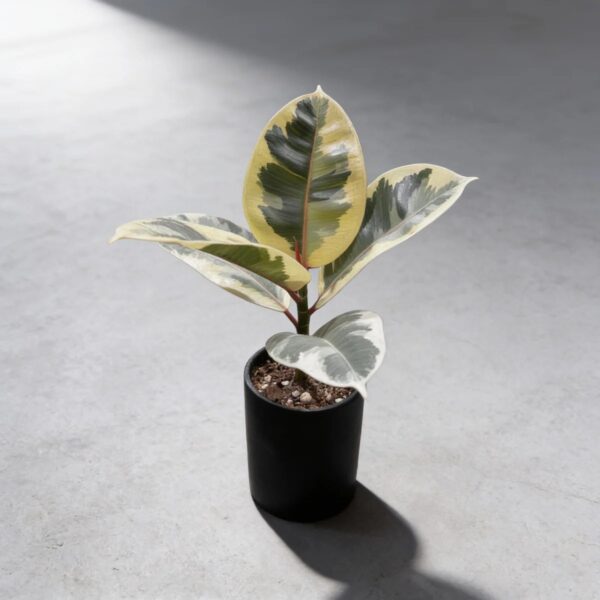
Ficus elastica variegata 斑葉印度榕
Hong Kong care guide — useful before you buy and after it arrives.
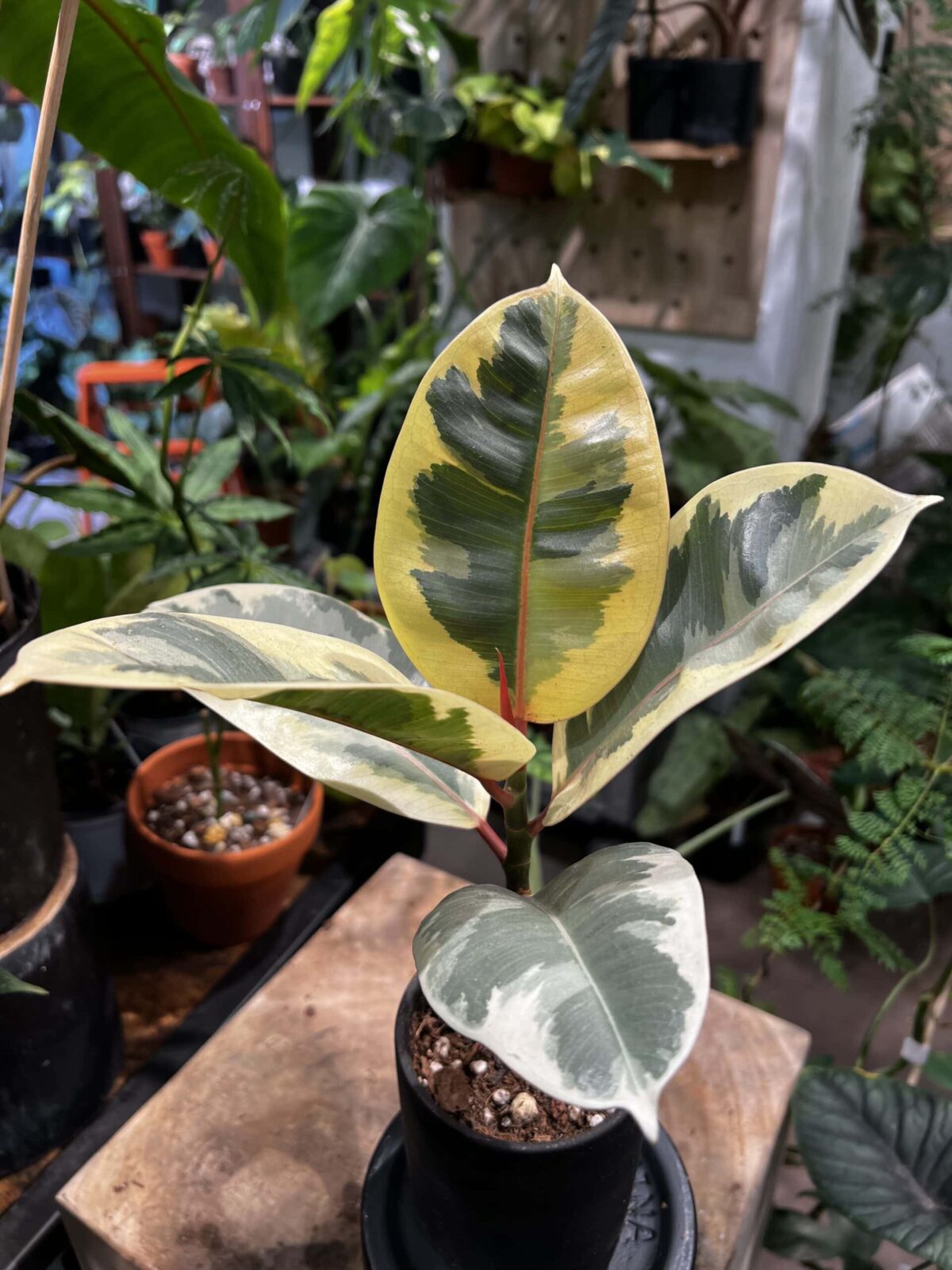
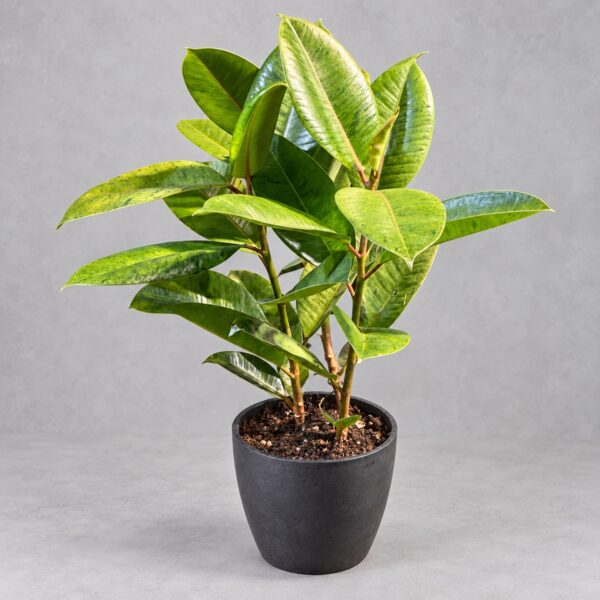
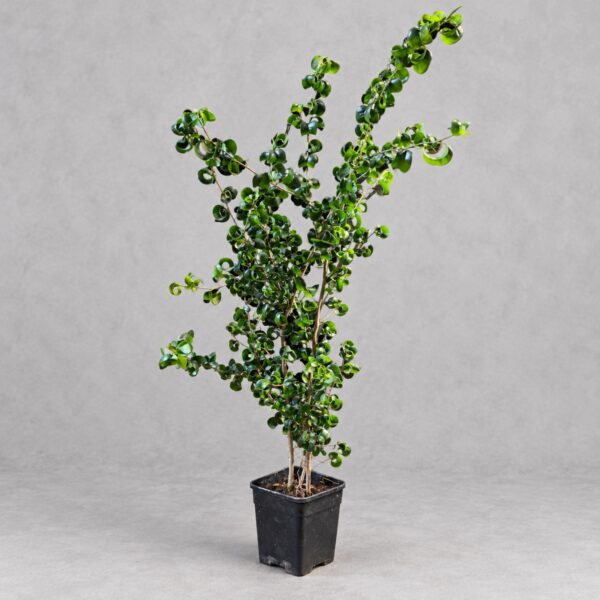
Shop this plantA matcha-green base laced with orange-pink veins — every leaf its own unique marble painting, and an Instagram-worthy centrepiece for any collection.
Origin & characteristics
'Shivereana' — sometimes nicknamed the "freckled beauty rubber plant" — is a rare cultivar of the rubber plant (Ficus elastica). The species itself is native to tropical South and Southeast Asia, including northeastern India, Myanmar, the Malay Peninsula, and Indonesia, and belongs to the fig family (Moraceae) as an evergreen tree. 'Shivereana' is prized for its striking marbled patterning and has become a highly sought-after cultivar among houseplant collectors in recent years.
Key characteristics:
- An evergreen small tree, typically 60–120 cm in pots, growing at a moderate rate
- Broad, elongated-oval leaves, thick and leathery with a glossy finish
- New leaves emerge reddish-brown, maturing into a matcha-green base marbled with pale green to creamy-white patches
- Leaf veins carry an orange-pink to reddish-brown tone that shifts with light intensity
- A dense, upright canopy with a clean, striking silhouette
- ⚠️ Toxicity note: the sap contains an irritant latex; ingestion may cause gastrointestinal upset, and contact with skin or eyes may trigger an allergic reaction. Always wear gloves when pruning, and keep the plant out of reach of children and pets
Light
- Ideal light: bright, indirect light to partial direct sun (an east- or southeast-facing window works best)
- Can tolerate lower light, though the marbling will fade and the leaves take on a deeper, more uniform green
- Bright, filtered light helps keep both the marbling and the orange-pink veining vivid
- Avoid intense direct sun at midday in summer, which can cause leaf scorch
- Indoors, keep it 1–2 metres from a window, and rotate the pot a quarter turn every one to two weeks for even growth
Watering
- Principle: err dry, not wet — let it dry out fully before watering
- Spring/summer growing season: water once the soil has dried 3–5 cm down, roughly every 7–10 days
- Autumn/winter dormant season: reduce significantly to roughly every 10–14 days, confirming dryness with a finger test before watering
- Each time, water slowly and thoroughly until it drains from the base, then empty the saucer
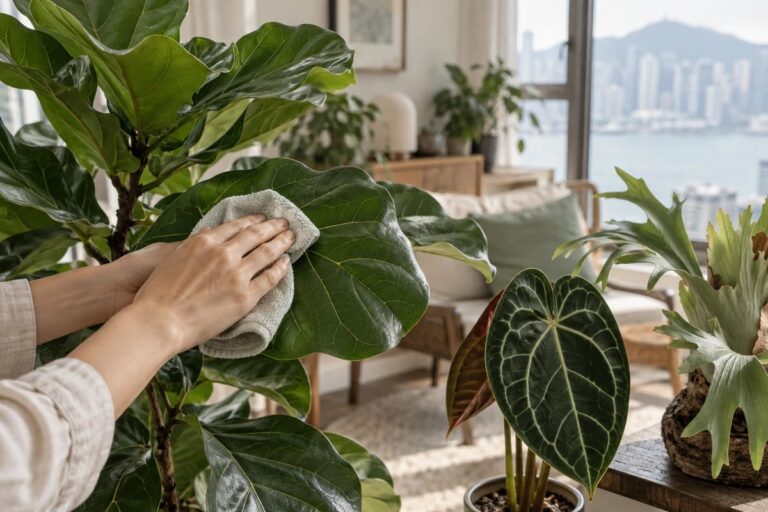
- Wipe the leaves periodically with a slightly damp cloth to remove dust and keep them glossy
- Note: members of the rubber plant family fear waterlogging above all else — never let the base sit in standing water
Soil & pot
- Soil recipe: a coarser, well-aerated mix, suggested ratio:
- General potting soil 50% + perlite 25% + coco chunks/bark 25%
- A small amount of charcoal chips can be added to help with moisture regulation and prevent fungal issues
- pH: slightly acidic to neutral (6.0–7.0)
- Pot selection:
- Must have drainage holes; terracotta or concrete pots add extra breathability
- Don't rush to size up before the roots have filled the pot — 'Shivereana' actually grows better slightly pot-bound
- When repotting, choose a new pot 2–3 inches wider in diameter
- Repotting timing: spring, roughly every 2 years, or once roots are visibly crowded and emerging from the drainage holes
Temperature & humidity
| Item | Ideal range | Notes |
|---|---|---|
| Temperature | 18–28°C | Never below 10°C; extended periods below 15°C cause dormancy |
| Humidity | 40–60% | Not especially fussy about humidity — typical indoor conditions suffice |
- Compared to other Ficus elastica cultivars, 'Shivereana' is slightly more cold-tolerant, but still avoid cold drafts
- Keep it away from AC vents, doorways, and heaters
- In dry seasons, occasional misting or a humidifier helps maintain the leaves' glossy finish
- Watch for temperature swings during seasonal transitions, especially the autumn-to-winter shift, which can cause leaf drop
Common problems
| Issue | Cause | Solution |
|---|---|---|
| Yellowing, dropping lower leaves | Overwatering causing root rot | Reduce watering frequency, check root health |
| Soft, drooping leaves | Underwatering or root damage | Check soil moisture and water as needed; if soil is very wet, root rot may be the cause |
| Fading marbled pattern | Insufficient light | Move closer to a window for brighter, indirect light |
| Small new leaves, slow growth | Insufficient nutrients or root-bound pot | Feed with diluted liquid fertiliser during the growing season, or consider repotting |
| Brown spots on leaves | Sunburn or fungal infection | Move away from strong light, improve ventilation, use fungicide if severe |
| Leggy stems, wide leaf spacing | Severe light deficiency | Gradually increase light, prune leggy stems to encourage new shoots |
| White specks and webbing on leaf undersides | Spider mite infestation | Increase humidity, treat with neem oil or a dedicated miticide |
How to explain to customers
This "freckled beauty" is a rare cultivar that's become really popular in recent years — its marbled leaves, matcha-green base with orange-pink veins, make every single leaf different, and it photographs beautifully. It's about as easy to care for as a standard rubber plant — remember "let it dry before you water" and you're most of the way there. It does best near a natural-light window, no need for direct sun. It's reasonably cold-tolerant, but water less in winter and keep it away from AC vents. One important note: the sap is toxic, so if you have kids or pets, keep it up high, and wear gloves when pruning.
Fun facts
- Rubber plant latex was once used as a source of natural rubber, though its quality and yield never matched the true rubber tree (Hevea brasiliensis), which eventually took over the market.
- 'Shivereana's marbled pattern is actually a chimeric mutation — meaning two genetically distinct cell lines coexist within the leaf tissue, which is why no two leaves ever look exactly alike.
- The rubber plant is considered sacred in India and Nepal, where Buddhists associate fig-family trees, including the sacred fig (Ficus religiosa), with the Buddha's enlightenment.
- In the 1890s, the rubber plant was considered the height of fashion in Victorian-era European parlours, with nearly every middle-class household owning one.
Keywords
Ficus elastica Shivereana, freckled rubber plant, marbled variegation, rubber plant, variegated plant, indoor foliage plant, low-maintenance houseplant, rare cultivar, Hong Kong indoor plants, Plantjai, air-purifying plant, pet-unfriendly plant, toxic plant, Instagram plant
Plantjai · Causeway Bay collector indoor plants · WhatsApp +852 66807550
Plantjai shop · In stock online
Ficus elastica variegata
HK$138.00
Hong Kong delivery · Causeway Bay pickup
For Hong Kong homes and offices. Stock and pricing follow the product page.
IN STORE NOW
Plants for this guide
Related plants in stock now — live prices, delivery or Causeway Bay pickup.
Ficus elastica 'Shivereana'
Ficus elastica 'Shivereana'
from HK$198.00
In stock · store pickup
View plant
FREE PLANT ADVICE
Send us a photo before you change anything
WhatsApp a photo of the plant and your window light. Our Causeway Bay team will suggest care steps or plants that suit your space.
STORE · CAUSEWAY BAY
4/F, 39 Yiu Wa Street, Causeway Bay
Daily 12:30–8:00pm · ~3 min walk from Times Square
Map & directionsPlant Care