
How to Care for Begonia Sophie Cecile in Hong Kong | Plantjai

Hong Kong care guide for Begonia Sophie Cecile.
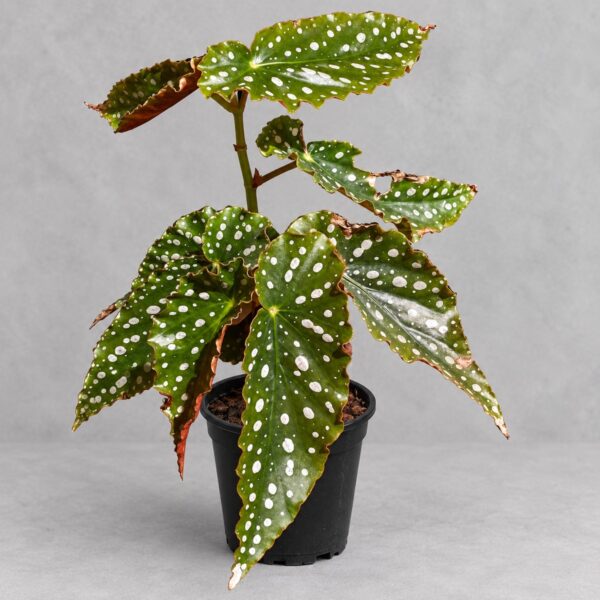
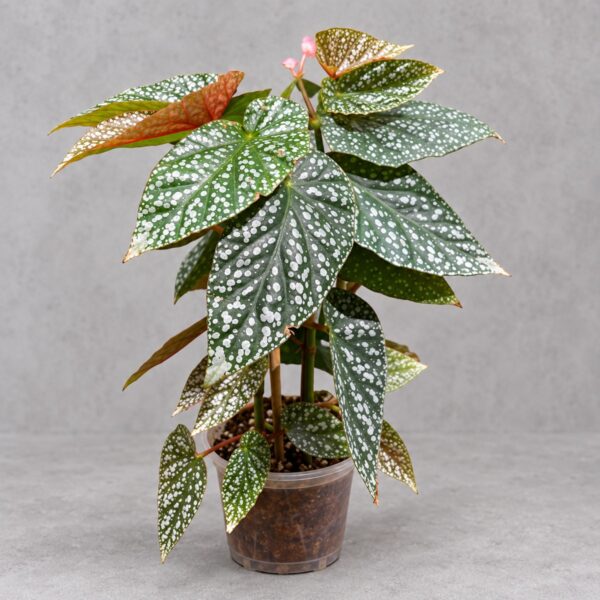
Upright cane stems with silver-splashed foliage and a wine-red underside, cascading into a waterfall of blooms when it flowers.
⚠️ Toxicity warning: Begonias contain soluble calcium oxalate, which can cause oral burning and vomiting if ingested, and are toxic to pets and children. Keep out of reach.
Origin & characteristics
Sophie Cecile (also known as 'Sophia') was bred by Belva Nelson Kusler in 1961, crossing Begonia 'Lenore Olivier' with Begonia aconitifolia. It belongs to the cane-type begonia group, also called an angel-wing cultivar. The large, deeply lobed leaves are deep green on top with a splashed silver pattern, and a wine-red underside, giving it striking visual depth. Plants can grow 1.2–1.8 metres tall, producing clusters of salmon-pink flowers from spring through autumn — a truly impressive display.
Light
- Needs bright, diffused light; ample light helps maintain vivid silver patterning and promotes flowering
- Best positioned near an east-facing window, or about 1–1.5 metres from a south- or west-facing window
- If only a south-facing window is available, use a sheer curtain to filter strong light
- Avoid harsh summer midday direct sun, which can scorch the leaves within days
- Insufficient light causes the silver patterning to fade and flowering to drop off significantly, or even stop entirely
- Rotate the pot every two weeks to encourage even growth
Watering
- Water once the topsoil is dry about 2–3 cm down, roughly every 5–7 days during the growing season
- Extend to every 7–10 days in winter as growth slows
- Keep the soil evenly moist during active growth and flowering, but never waterlogged
- The sturdy cane stems are prone to base rot if kept too wet in winter
- Always empty standing water from the saucer after watering
- Testing soil moisture by hand is more accurate than watering on a fixed calendar
Soil & pot
- Needs a light, loose, well-draining general potting soil
- Recommended recipe: coco coir or peat 40% + perlite 30% + bark 15% + worm castings 15%
- Given the plant's height, choose a heavier, more stable pot to prevent tipping
- The pot must have drainage holes — a sealed decorative pot is completely unsuitable
- Insert a support stake into the pot to help the cane stems stay upright
- Repot roughly every 12–18 months, ideally in spring
Temperature & humidity
- Ideal temperature: 18–27°C
- Minimum tolerance: about 15°C; prolonged exposure below this causes leaf drop
- Avoid AC vents, heaters, and drafty doors/windows — large temperature swings cause leaves to drop
- Humidity requirement: 50–60%
- Moderate to slightly higher humidity reduces leaf-tip scorching and supports flowering
- A pebble tray or humidifier can help raise humidity
- Keep the leaf surface dry to prevent mould growth
Common problems
| Issue | Likely cause | What to do |
|---|---|---|
| Stems leaning or breaking | Plant too tall and heavy without support | Insert a support stake, prune the growing tip appropriately to encourage branching |
| Reduced flowering | Insufficient light or lacking fertiliser | Increase light, feed a half-strength liquid fertiliser every two weeks during growth |
| Leaves dropping | Cold drafts, air too dry, or inconsistent watering | Move to a more stable environment, keep warm and consistently humid |
| Powdery mildew | High humidity with poor ventilation | Increase air circulation, avoid wetting the leaves, treat if necessary |
| Silver patterning fading | Insufficient light | Move to a brighter position |
| Scorched leaf tips | Humidity too low | Increase ambient humidity above 50% |
How to explain to customers
"Sophie Cecile is a cane-type cultivar that can grow quite tall, with large leaves carrying silver patterning and a wine-red underside — beautifully layered."
"It flowers with pink blooms cascading down, really lovely. Just remember to give it enough diffused light and keep it away from AC vents, and it'll flower beautifully for you."
Fun facts
Sophie Cecile was bred by renowned American begonia breeder Belva Nelson Kusler in 1961 and remains a classic, enduring cultivar over sixty years later. Cane-type begonias are called "Angel Wing" varieties because their leaf shape resembles angel wings, and their bamboo-like jointed stems make them exceptionally easy to propagate from cuttings.
Keywords
Sophie Cecile Begonia, Begonia Sophie Cecile, Begonia Sophia, cane begonia, angel-wing begonia, silver-splashed begonia, large potted plant, flowering begonia, bright diffused light, toxic plant, Plantjai, Hong Kong plant shop
In-depth care guide
Introduction
Sophie Cecile, also sold under the name 'Sophia', is a classic cane-type begonia with a genuinely impressive pedigree — it was bred in 1961 by the celebrated American begonia hybridiser Belva Nelson Kusler, crossing 'Lenore Olivier' with Begonia aconitifolia. More than sixty years on, it remains a beloved and widely grown cultivar, a testament to just how well it combines dramatic foliage with an equally impressive flowering display.
As a cane-type or "angel-wing" begonia, Sophie Cecile grows from sturdy, upright, bamboo-like stems rather than a creeping rhizome, allowing it to reach an impressive 1.2 to 1.8 metres in height under good conditions. This makes it one of the larger begonias suitable for indoor growing, capable of becoming a genuine architectural statement piece in a living room or study, especially once it begins its long flowering season.
Light requirements
Sophie Cecile needs bright, diffused light — this isn't optional for this cultivar, since ample light directly affects both the vividness of its silver leaf patterning and the abundance of its flowering. An east-facing window is ideal, or a position about 1–1.5 metres from a south- or west-facing window. If a south-facing window is your only option, a sheer curtain will help filter the light down to a safe intensity.
Harsh summer midday direct sun should be avoided entirely — it can scorch this plant's leaves within just a few days. On the other end of the spectrum, insufficient light causes the silver patterning to fade noticeably and flowering to drop off significantly, sometimes stopping altogether. Rotating the pot every two weeks helps ensure the tall, upright growth develops evenly on all sides rather than leaning toward one light source.
Watering
Water once the topsoil has dried out to a depth of about 2–3 cm, typically every 5–7 days during the growing season, extending to every 7–10 days in winter as growth slows. Keep the soil evenly moist during active growth and flowering — this is a plant that shouldn't be allowed to dry out completely while it's putting on new growth or blooms — but it should never become waterlogged either.
A particular point of caution: the sturdy cane stems on this cultivar are prone to base rot if kept too wet during the cooler winter months, when the plant's water uptake naturally slows. Always empty any standing water from the saucer after watering, and rely on testing the soil by hand rather than watering on a fixed schedule, since actual conditions vary considerably with season and location in your home.
Soil and pot
A light, loose, well-draining general potting soil suits Sophie Cecile well. A useful recipe combines coco coir or peat (40%), perlite (30%), bark (15%), and worm castings (15%), giving good drainage alongside adequate nutrition to support this vigorous grower.
Given the plant's substantial height, choose a heavier, more stable pot to prevent tipping as it grows taller and top-heavier. The pot must have drainage holes — a sealed decorative pot without drainage is completely unsuitable for this species. Inserting a support stake into the pot can help the cane stems stay upright as the plant matures, particularly important once it starts flowering and carrying the additional weight of blooms. Repot roughly every 12–18 months, ideally in spring.
Temperature and humidity
Sophie Cecile grows best between 18°C and 27°C, tolerating a minimum of around 15°C before prolonged exposure starts causing leaf drop. Avoid AC vents, heaters, and drafty gaps around doors and windows, since large temperature swings are a common trigger for leaves dropping on this cultivar. Humidity should ideally sit between 50% and 60%.
Moderate to slightly higher humidity within this range helps reduce leaf-tip scorching and supports more reliable flowering. A pebble tray or humidifier can help raise ambient humidity in drier conditions, but it's equally important to keep the leaf surface itself dry to prevent mould growth — raise humidity in the air around the plant rather than on the foliage directly.
Common problems in detail
Leaning or breaking stems typically result from the plant growing too tall and heavy without adequate support — insert a support stake and prune the growing tip appropriately to encourage bushier, more balanced branching.
Reduced flowering points to insufficient light or a lack of fertiliser — increase light exposure and feed with a half-strength liquid fertiliser every two weeks during the growing season.
Dropping leaves can result from cold drafts, air that's too dry, or inconsistent watering — move the plant to a more stable environment and keep it warm with consistent humidity.
Powdery mildew develops from high humidity combined with poor ventilation — increase air circulation, avoid wetting the leaves, and treat with a fungicide if the problem persists.
Fading silver patterning signals insufficient light — move the plant to a brighter position.
Scorched leaf tips typically indicate humidity too low — increase ambient humidity above 50%.
Toxicity information
Sophie Cecile contains soluble calcium oxalate throughout the plant, which can cause oral burning and vomiting if ingested, and is toxic to both pets and children. Keep the plant well out of reach, and wash your hands after handling or pruning.
參考資料(想知來源可展開)
References
- American Begonia Society. Cane-like Begonias. https://www.begonias.org/
- RHS. Begonias as Houseplants. https://www.rhs.org.uk/plants/begonias/houseplants
- ASPCA. Begonia – Toxic and Non-Toxic Plants. https://www.aspca.org/pet-care/animal-poison-control/toxic-and-non-toxic-plants/begonia
For Hong Kong homes and offices. Stock and pricing follow the product page.
IN STORE NOW
Plants for this guide
Related plants in stock now — live prices, delivery or Causeway Bay pickup.
FREE PLANT ADVICE
Send us a photo before you change anything
WhatsApp a photo of the plant and your window light. Our Causeway Bay team will suggest care steps or plants that suit your space.
STORE · CAUSEWAY BAY
4/F, 39 Yiu Wa Street, Causeway Bay
Daily 12:30–8:00pm · ~3 min walk from Times Square
Map & directionsPlant Care