
How to Care for Begonia Solimutata in Hong Kong | Plantjai

Hong Kong care guide for Begonia Solimutata.
Golden-patterned leaves that look like sunlight spilling across the foliage, bringing a warm glow even indoors.
Origin & characteristics
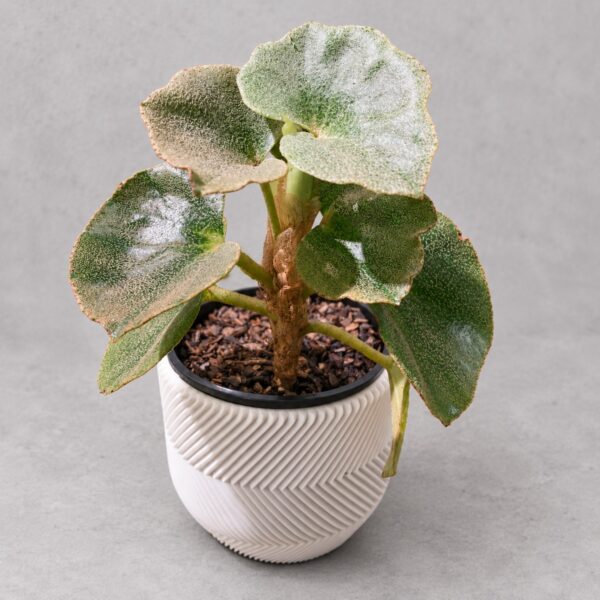
Native to the tropical rainforests of Brazil, Sun-Changing Begonia is a perennial herb in the family Begoniaceae. Its most distinctive feature is the irregular golden-yellow to yellow-green patterning covering the leaves, as if sunlight has broken through the canopy and scattered across the foliage; the underside is a reddish-brown with a fine texture. The plant grows vigorously, readily forming a dense, clumping habit, making it a great entry point into ornamental foliage begonias.
Light
- Bright, diffused light is best, such as a spot behind a sheer curtain by a window
- The golden patterning needs plenty of light to look its brightest — insufficient light dulls the leaf colour and fades the patterning
- Avoid direct sun, especially harsh midday light, which can scorch the leaves and cause discolouration or crisp edges
- An east- or north-facing window is ideal
Watering
- Water once the topsoil is dry about 2–3 cm down, keeping the soil lightly moist but never waterlogged
- Begonia roots are sensitive to waterlogging — standing water leads to root rot easily
- Reduce watering frequency in winter as growth slows
- Use room-temperature water, avoiding cold water that shocks the roots
- A pebble tray can help increase humidity, but keep the pot base clear of the water surface
Soil & pot
- Choose a well-draining, breathable medium: peat + perlite + bark (roughly 5:3:2)
- A little coco coir can be added for extra moisture retention
- The pot must have drainage holes; plastic or terracotta both work, with terracotta draining slightly faster and being a safer choice
- Repot once a year in spring, sizing up according to root growth
Temperature & humidity
- Optimal temperature: 18–26°C
- Never below 15°C; growth slows above 32°C
- Humidity of 50–70% is ideal
- Hong Kong's typical indoor humidity is generally acceptable; mist or use a humidifier in dry seasons
- Avoid placing directly in AC airflow
Common problems
| Issue | Likely cause | What to do |
|---|---|---|
| Leaves going soft and yellowing | Overwatering causing root rot | Check roots, trim rotten sections, repot in dry soil |
| Patterning fading or disappearing | Insufficient light | Move closer to a well-lit position |
| Scorched leaf edges | Direct sun exposure or air too dry | Move away from direct light, increase humidity |
| Mould on leaves | Poor ventilation combined with high humidity | Improve ventilation, reduce misting |
| Growth stalling | Temperature too low or root-bound | Check temperature, consider repotting |
⚠️ Plant safety note: Begonias are generally considered mildly toxic to humans and pets, and ingestion may cause gastrointestinal upset. Keep out of reach of children and pets.
How to explain to customers
"Sun-Changing Begonia does best near a window with a bit of natural light — those golden patches on the leaves are genuinely beautiful, but remember, no harsh midday sun, or you'll scorch the leaves."
"Watering doesn't need to be frequent — just feel whether the topsoil's dry before watering. Better a little dry than waterlogged, since begonias really struggle to recover from root rot."
Fun facts
Sun-Changing Begonia is sometimes called the "Sunburst Begonia" in English, a name describing the radiating golden patterning on its leaves, resembling rays bursting from the sun. The genus Begonia is one of the most diverse genera among flowering plants, with over 2,000 known species!
Keywords
Begonia, foliage plant, Sun-Changing Begonia, golden patterning, indoor plant, diffused light, high humidity, rainforest plant, mildly toxic, pet safety
In-depth care guide
Introduction and background
Sun-Changing Begonia (Begonia solimutata L.B.Sm. & Wassh.), also known as Sun Tan Begonia, is one of the most distinctive and genuinely fascinating species within the family Begoniaceae, genus Begonia. Its species name "solimutata" derives from the Latin "soli" (sun) and "mutata" (changed), meaning "changed by the sun" — a name that perfectly captures its most remarkable trait: the leaf colour actually shifts depending on light intensity.
Sun-Changing Begonia is native to the tropical rainforest understory of southern Brazil, and belongs to the rhizomatous begonia group. Its signature ability is that the chloroplasts within its leaves can reorient themselves within minutes in response to changing light — when the plant moves from a shaded spot into bright light, the leaf colour shifts from deep green toward a deep copper-green; when light dims again, it quickly reverts to deep green. This phenomenon, called "chloroplast movement," is a natural mechanism plants have evolved to protect themselves from light damage, but it's especially pronounced in Sun-Changing Begonia, visible almost in real time to the naked eye — genuinely fascinating to watch.
Morphologically, Sun-Changing Begonia is a small-to-medium rhizomatous herb that forms dense, spreading, clumping colonies. The leaves are asymmetrical and rounded, with a densely hairy (hirsute) surface and a bumpy (pustulate) texture, feeling almost like goosebumps to the touch. The leaf surface is deep green with vivid yellow-green to pale green veins; the underside is a very pale white-green with pink and red mottling — genuinely beautiful. Under strong light, the whole leaf takes on a coppery tone, paired with bright green veins, creating an excellent visual effect. Leaves measure roughly 13 cm long and 21 cm wide, with densely hairy petioles in a very pale green with reddish tones. The flowers are white and, while not especially showy, add a touch of understated elegance.
Sun-Changing Begonia is an evergreen perennial that maintains its ornamental appeal year-round given the right conditions. Its compact growth habit doesn't take up too much space, making it well suited to Hong Kong's indoor environments. Since its leaves contain oxalic acid, it's mildly toxic to pets, and dogs or cats that ingest it may experience gastrointestinal upset, so it's best kept somewhere pets can't reach.
Light requirements
Sun-Changing Begonia does best in semi-shade to bright indirect light. Being native to the rainforest floor, it's accustomed to diffused light filtered through the canopy, so it should never be exposed to direct sun — midday sun will burn its delicate, hairy leaves, causing permanent scorch marks.
That said, it's not a plant that can be left in a dark corner indefinitely either. Insufficient light causes the leaves to become dull and lifeless, losing both their deep green colour and the coppery tone they display under stronger light, and growth will become sparse with elongated petioles. The ideal placement is about 3–5 feet from an east- or north-facing window, or behind a sheer curtain at a south-facing window. Gentle direct light in the early morning or evening is acceptable, and may even help deepen leaf colour.
If you want to see its "colour-changing" effect for yourself, try moving the plant from a dimmer spot to a brighter one and wait a few minutes — you'll see the leaf colour gradually shift, which is genuinely delightful to observe. Under stronger light, the leaves display a more pronounced coppery tone, while under moderate light they stay deep green with bright green veins — both looks have their own appeal, so adjust the plant's position according to your preference.
If your home lacks sufficient natural light, supplement with an LED grow light, choosing a full-spectrum model at around 4000K colour temperature, run for 8–10 hours daily, positioned about 12–18 inches from the plant.
Watering technique
Sun-Changing Begonia's water needs are best described as "moderate and consistent." The correct approach: wait until the top layer of soil (roughly 2–3 cm deep) has dried out before watering again. In a typical Hong Kong home, this generally means watering about once a week, though the exact frequency varies with season, temperature, and humidity. In hot, dry summer weather, you may need to water every 5–6 days; in winter, this can extend to every 10–14 days.
A few key watering points:
Err on the side of less. Sun-Changing Begonia is very sensitive to overwatering, and its rhizome easily rots from waterlogging. If you're unsure whether to water, it's better to wait another day or two. You can test soil moisture with a finger or a soil moisture meter.
Avoid wetting the leaves. When watering, aim directly at the soil, avoiding splashing the foliage, since wet, hairy leaves easily develop powdery mildew. A useful trick: pour water directly into the saucer beneath the pot, letting the plant draw water up from below, which reduces the chance of wetting the leaves.
Water quality. Like many foliage plants, Sun-Changing Begonia is somewhat sensitive to water with a high mineral content. If your tap water has a high TDS reading, consider switching to rainwater, distilled water, or tap water left to stand overnight (allowing chlorine to dissipate).
Seasonal adjustment. Reduce watering significantly in winter as growth slows, letting the soil dry out more than half before watering; in summer's active growth, keep the soil lightly moist, but never waterlogged.
Soil and repotting
Sun-Changing Begonia needs a well-draining soil that also retains adequate moisture. Here's an ideal mix ratio:
- 30% quality organic potting mix
- 25% perlite (for drainage)
- 25% coco coir (for moisture retention and breathability)
- 20% compost or worm castings (for nutrients)
The soil pH should stay in the slightly acidic to neutral range (5.5–6.5). Avoid overly heavy, water-retentive garden soil, since the begonia's rhizome rots easily from excess moisture. At the same time, the soil shouldn't be too free-draining either, or the roots will dry out and wilt — striking the right balance is key.
For pots, choose one with drainage holes, made from terracotta, ceramic, or plastic. Since the rhizome creeps along the soil surface, a wide, shallow pot suits it better than a deep, narrow one. Never bury the rhizome too deep — it should be partially exposed to air, or it will rot.
Repot roughly once every 1–2 years, or when you notice the roots have filled the pot and growth has clearly slowed. The best time is spring (March to May). This is also a good opportunity to divide overcrowded clumps for propagation. The new pot should only be about 1 inch larger than the old one.
Humidity requirements
Sun-Changing Begonia prefers moderate to high humidity, with an ideal range of 50% to 70%. Although it's more tolerant of average indoor humidity than many tropical plants, prolonged exposure to humidity below 40% will cause leaf edges to dry out and become brittle, affecting appearance.
A few ways to raise humidity:
Daily misting: Sun-Changing Begonia can tolerate regular misting, which helps raise leaf-surface humidity and reduces the incidence of spider mites. Mist 1–2 times in the morning, allowing the leaves time to dry during the day and avoiding overnight moisture that could trigger disease.
Humidifier: During dry seasons (especially winter with heating running), a humidifier is the most reliable method, maintaining humidity at 55–65%.
Pebble tray: Fill a saucer beneath the pot with pebbles and add water to about half full, placing the pot on top (ensuring the pot base doesn't sit in the water).
Grouping method: Place Sun-Changing Begonia alongside other plants, using their collective transpiration to raise local humidity.
Note that high humidity must be paired with good air circulation. Stagnant air combined with high humidity easily triggers powdery mildew — one of the most common diseases affecting begonias.
Fertilising recommendations
Sun-Changing Begonia needs regular fertilising during the growing season (March to October), but remember the principle of "little and often." Apply a balanced liquid fertiliser (such as N-P-K 20-20-20) every 3 weeks, diluted to half the standard concentration. If you want to encourage leaf growth and deepen colour, choose a formula with a slightly higher nitrogen ratio.
A few fertilising points:
- Start fertilising in spring: begin in early March, timed with the arrival of the growing season
- Reduce fertilising in autumn: start tapering off frequency by late September
- Stop fertilising in winter: halt completely from November to February, letting the plant rest
- Avoid overfertilising: excessive fertiliser causes salt buildup, burnt leaf edges, and even root damage. If you see white salt deposits on the soil surface, flush thoroughly with clean water
- Organic fertiliser option: worm castings are a good choice, applied as a thin layer on the soil surface every 2–3 months, then gently worked into the topsoil
Propagation methods
Sun-Changing Begonia is a very easy plant to propagate, with several common methods available:
Rhizome cuttings
The simplest, most reliable method. Select a healthy rhizome section and cut off at least 5 cm (2 inches), ensuring it includes at least one growth point. Lay the cutting flat on moist, well-draining propagation medium (a mix of perlite and coco coir works well), pressing it in about halfway. Keep the medium moist, the environment warm (21–24°C), and humidity high (using a clear cover or plastic bag), and new roots and shoots should emerge after about 4–6 weeks.
Leaf cuttings
Sun-Changing Begonia can also be propagated from leaves. Select a healthy, mature leaf, keeping the petiole about 2–3 cm long, and insert the petiole into moist propagation medium, maintaining high humidity and warmth. New roots and shoots typically emerge from the petiole base after about 3–6 weeks. You can insert several leaves at once, and success rates are generally quite high.
Leaf wedge cuttings
Cut a large leaf into wedge-shaped pieces, ensuring each piece includes part of a vein, and lay them flat on moist medium, pressing gently into place. Keep humidity high, and new plantlets should emerge from the vein sections after about 4–8 weeks.
Division
When repotting, you can divide an overly dense clump into several sections, ensuring each division retains sufficient roots and at least one rhizome. After dividing, plant into new pots, keep moist and warm, and growth should resume after about 2–4 weeks.
Common problems and solutions
Brittle, browning leaf edges
Almost certainly caused by humidity too low, dry air from heating or AC, or the soil drying out for too long. Raise humidity to above 60% (using a humidifier or pebble tray), keep the soil lightly moist, and avoid placing the plant near vents.
Powdery mildew
The most common disease affecting begonias. Symptoms include a white powdery coating on the leaves, usually triggered by poor air circulation, wet leaves, or large temperature swings. Improve air circulation (use a fan or open a window), avoid watering from above, and remove badly affected leaves. In severe cases, use an organic fungicide (such as sulphur powder or potassium bicarbonate solution).
Rhizome/root rot
A soft, blackened, foul-smelling rhizome, or the plant suddenly collapsing — this is a classic result of overwatering or poor drainage. Let the topsoil dry out before watering again, use a well-draining medium and shallow pot, and ensure the rhizome isn't buried too deep. If rot has already occurred, remove the rotten sections immediately; healthy rhizome portions can be used for propagation.
Leaves fading to a plain, uniform green
Insufficient light causes the leaves to lose their signature deep green and coppery tones, turning a flat, uniform green instead. Move to a brighter indirect-light position, avoiding harsh midday direct sun.
Spider mites, scale insects, aphids, thrips
Sun-Changing Begonia occasionally suffers from these pests, especially spider mites which thrive in dry conditions. Check leaf undersides regularly (especially new growth), isolate newly purchased plants, and treat with insecticidal soap or neem oil at the first sign of pests. Raising humidity helps prevent spider mites.
Tarsonemid mites
An extremely tiny mite that causes new growth to become distorted and twisted, and is notoriously difficult to eliminate. Prevention relies on good hygiene, isolating new plants, and regular inspection.
Seasonal care calendar
| Season | Watering frequency | Humidity target | Key tasks |
|---|---|---|---|
| Spring (Mar–May) | Every 7 days | 55–65% | Begin fertilising, check repotting needs, good time to propagate |
| Summer (Jun–Aug) | Every 5–7 days | 60–70% | Watch for spider mites, maintain good ventilation, avoid midday direct light |
| Autumn (Sep–Nov) | Every 7–10 days | 55–65% | Gradually reduce fertilising, remove aging leaves |
| Winter (Dec–Feb) | Every 10–14 days | 50–60% | Stop fertilising, reduce watering, avoid cold drafts |
參考資料(想知來源可展開)
References
- NParks Singapore Flora & Fauna Web, "Begonia solimutata L.B.Sm. & Wassh.," 2021. https://www.nparks.gov.sg/florafaunaweb/flora/6/0/6018
- Jomo Studio, "Begonia Soli-Mutata Care Guide." https://jomostudio.com/products/begonia-soli-mutata
- Get Growli, "Sun-Changing Begonia (Soli-mutata Begonia) Care." https://www.getgrowli.app/plant-care/begonia-soli-mutata
- The Green Grower, "How To Take Care Of Your Begonia," 2023. https://www.thegreengrower.nz/blogs/plant-care-guides/begonia
- Pacific Horticulture, "Understanding Habitat Origins for Houseplant Happiness: Begonia," 2024. https://pacifichorticulture.org/articles/understanding-habitat-origins-for-houseplant-happiness-begonia/
- The Martha Stewart Blog, "Propagating Begonias from Stem Cuttings," 2022. https://www.themarthablog.com/2022/01/propagating-begonias-from-stem-cuttings.html
For Hong Kong homes and offices. Stock and pricing follow the product page.
IN STORE NOW
Plants for this guide
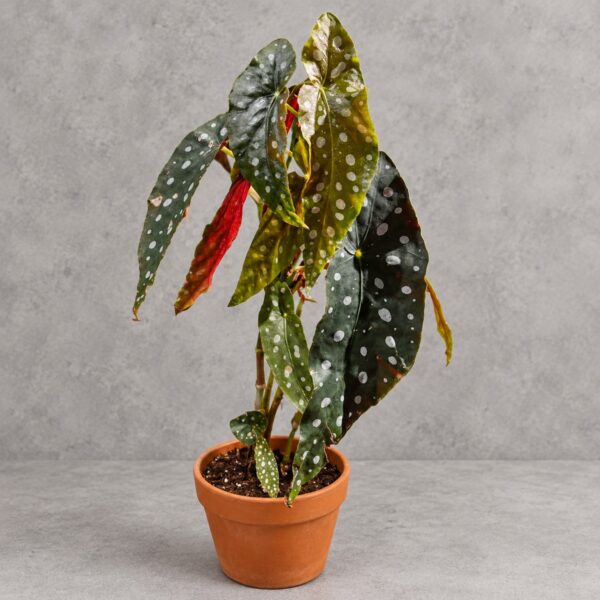
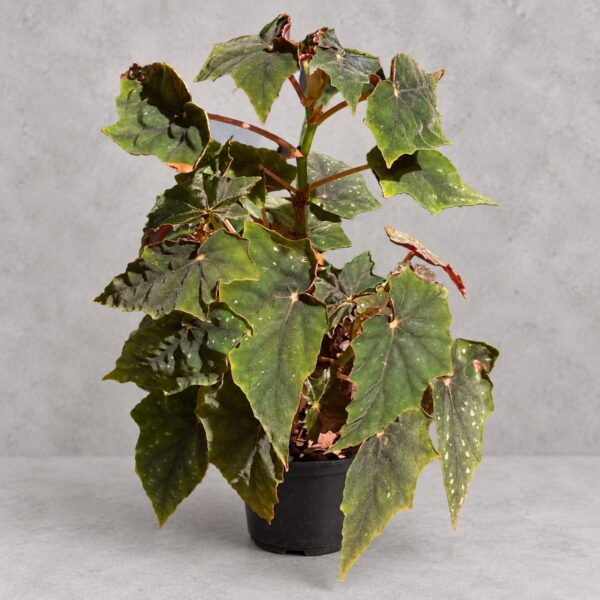
Related plants in stock now — live prices, delivery or Causeway Bay pickup.
FREE PLANT ADVICE
Send us a photo before you change anything
WhatsApp a photo of the plant and your window light. Our Causeway Bay team will suggest care steps or plants that suit your space.
STORE · CAUSEWAY BAY
4/F, 39 Yiu Wa Street, Causeway Bay
Daily 12:30–8:00pm · ~3 min walk from Times Square
Map & directionsPlant Care