How to Care for Begonia Listada in Hong Kong | Plantjai

Plantjai 植仔 · Care Encyclopedia
Begonia Listada
Hong Kong care guide — useful before you buy and after it arrives.
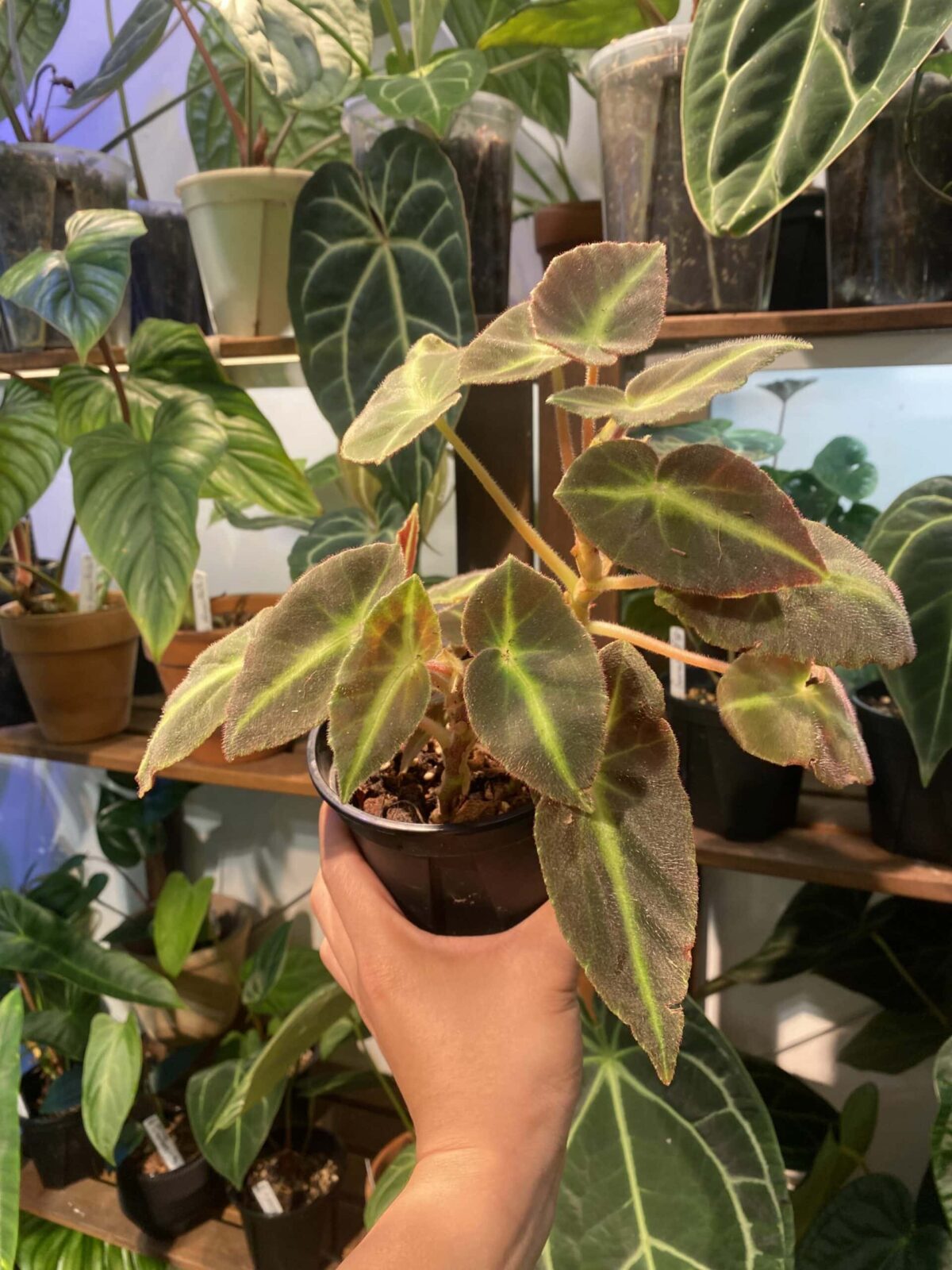
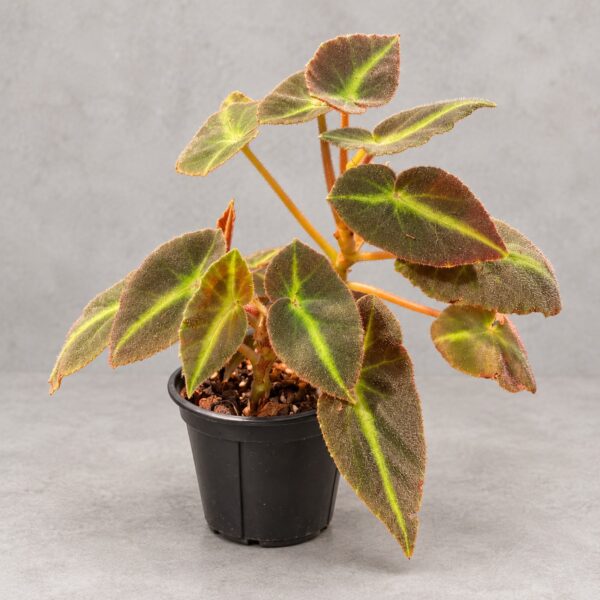
Shop this plantA glowing green stripe down the leaf centre against deep velvet green — mesmerising, like a cat's eye.
Origin & characteristics
Native to southern Brazil, also known as Striped Begonia, this is a hugely popular ornamental species. Leaves have a deep green, velvety texture, with a prominent fluorescent green to yellow-green stripe running down the centre, extending symmetrically on both sides — genuinely reminiscent of a cat's watchful eye. The underside is typically reddish-brown, and the overall form is elegant and compact, a small-to-medium begonia well suited to indoor display.
Light
- Prefers bright, diffused light, never harsh direct sun
- Adequate light makes the central stripe more vivid, but strong light will scorch the velvety leaf surface
- Recommended placement is within about 1 metre of an east- or north-facing window
- Prolonged low light causes the stripe to fade and the plant to grow leggy
- A grow light for 10–12 hours daily can be used as supplementary lighting
Watering
- Water once the topsoil is dry roughly 2–3 cm down
- The velvety leaf texture is prone to rot if wet, so always water carefully along the pot's edge
- Never wet the leaf surface — this easily causes water spots and fungal issues
- Keep the soil lightly moist during the growing season in summer, reducing watering in winter
- Filtered water or rainwater is recommended to avoid mineral residue on the leaves
Soil & pot
- Needs an extremely loose, airy, fast-draining soil
- Recommended recipe: peat moss 3 parts + perlite 3 parts + coco coir 2 parts + bark chips 2 parts
- A high proportion of perlite ensures water drains away quickly
- Pot must have drainage holes, terracotta is the best choice
- Roots are relatively shallow, so a wide, shallow pot suits it better than a deep one
Temperature & humidity
- Ideal growing temperature: 18–26°C
- Never below 15°C; growth slows above 30°C
- Recommended humidity: 60–80% — the velvety leaves look best in higher humidity
- Use a humidifier, water tray, or humidity enclosure to maintain humidity
- If using a humidity enclosure, open it daily for half an hour to prevent mould
- Avoid direct AC airflow, since large temperature swings easily cause leaf drop
Common problems
| Issue | Likely cause | What to do |
|---|---|---|
| Central stripe fading | Insufficient light | Move to a brighter spot, gradually increase light intensity |
| Brown spots on leaf surface | Leaf surface wet or fungal infection | Avoid wetting the leaves, improve ventilation |
| Leaves yellowing and dropping | Overwatering causing root rot | Check roots, reduce watering, repot if necessary |
| Curling, drying leaf edges | Humidity too low | Increase surrounding humidity, use a humidifier |
| Growth stalling | Temperature too low or roots filling the pot | Check temperature, consider repotting |
How to explain to customers
"What's most striking about Cat's Eye Begonia is that fluorescent green stripe down the centre of the leaf, with deep green velvet on either side — genuinely looks upmarket! Just remember the leaves can't get wet — always pour water slowly along the pot's edge, since wet leaves rot easily. This one suits growers with a bit more experience, but as long as you remember not to wet the leaves, it's actually quite easy to care for."
Fun facts
The "listada" in Begonia listada's botanical name comes from the Portuguese word for "striped," referring to that signature central stripe on the leaf. Its velvety leaf surface is actually a layer of extremely fine hairs, which helps reduce water loss through transpiration in high-humidity environments.
Keywords
Cat's Eye Begonia, Begonia listada, striped begonia, foliage plant, velvet leaves, fluorescent stripe, Brazilian begonia, small-to-medium begonia, indoor plant, Plantjai, Hong Kong plant shop, diffused light, high-humidity plant, velvet begonia
參考資料(想知來源可展開)
References
- Plant Proper. Begonia Listada Care Guide. https://plantproper.com/blogs/plant-care-guides/begonia-listada-care
- Longfield Gardens. Simple Tips for Successful Begonia Listada Propagation. https://www.longfield-gardens.com/blogs/begonia-care/simple-tips-for-successful-begonia-listada-propagation
- ASPCA. Begonia – Toxic and Non-Toxic Plants. https://www.aspca.org/pet-care/animal-poison-control/toxic-and-non-toxic-plants/begonia
⚠️ Toxicity warning: Cat's Eye Begonia contains calcium oxalate crystals, toxic to pets and children. Ingestion may cause oral irritation, drooling, and vomiting.
In-depth care guide
Introduction
Cat's Eye Begonia, botanically Begonia listada and also known as Striped Begonia, is a distinctive ornamental species native to Brazil. Its most iconic feature is a deep green, velvet-textured leaf marked by a bold, eye-catching stripe running down the centre, ranging from light green to yellow-green in colour, extending symmetrically along the leaf's length — the resemblance to a watchful cat's eye gives the plant its common name. The leaf underside typically carries a warm, reddish-brown tone, creating a rich, layered colour effect that has made this plant a genuine focal piece within indoor plant collections.
Begonia listada belongs to the shrub-type begonia group, growing in a compact, clumping form that reaches roughly 30–60 cm at maturity, making it well suited to tabletop, shelf, or display cabinet placement. The soft, velvet-like leaf texture is a particular pleasure to touch, and combined with its distinctive striping and reddish-brown underside, makes it a favourite among both beginners and experienced growers alike. While it can flower, its horticultural value centres almost entirely on its extraordinary foliage.
Another advantage of this species is that it's relatively easy to care for compared with some rarer begonias — it adapts reasonably well and grows at a moderate pace, needing only basic humidity and light provisions to stay healthy and attractive. Whether displayed alone or grouped with other tropical plants, Begonia listada consistently draws the eye.
Native habitat and growth habits
Begonia listada is native to the tropical rainforests of Brazil, growing in forest understorey or rocky crevices. In the wild, it's accustomed to warm, humid conditions with light filtered through the forest canopy. As a shrub-type begonia, its stems gradually become woody over time, forming a dense, clumping growth habit.
In terms of growth speed, Begonia listada is moderate, producing a reasonable amount of new growth each year under ideal conditions. Its adaptability to environmental changes is somewhat stronger than many rarer begonia species, though it still prefers stable temperature and humidity. Individual leaves are fairly long-lived, remaining attractive for several months under good care, though lower leaves will gradually yellow and drop if the environment is too dry or light is insufficient.
Light requirements
Begonia listada needs bright, indirect light to display its best leaf colour and healthy growth.
Ideal placement:
- East-, west-, or south-facing windows all work, provided direct sun is filtered
- A south-facing position with sheer curtain filtering is particularly ideal
- Roughly 1.5 metres (5 feet) from a bright window
- Indoor environments with ample artificial light (such as fluorescent or LED grow lights)
Notes:
- Excessive direct sunlight will scorch the velvety leaf surface, particularly around midday, potentially causing permanent damage within just a few days.
- Insufficient light causes the plant to become "leggy" (elongated internodes), the central stripe to fade, new leaves to become smaller, and growth to stall.
- Rotating the pot roughly 90 degrees every two weeks ensures even light exposure on all sides, maintaining a compact, attractive form.
Begonia listada adapts reasonably well to artificial lighting, growing well under fluorescent or LED grow lights — a characteristic that makes it an excellent choice for display cabinets, terrariums, or dedicated indoor growing shelves.
Watering technique
Begonia listada prefers soil kept evenly moist without becoming waterlogged. Its fine root system is sensitive to both excess moisture and drought.
Watering principles:
- Water once the soil surface is dry to a depth of roughly 1–2 cm (½–1 inch). Testing with a finger inserted into the soil is the simplest, most accurate method.
- Use room-temperature rainwater, distilled water, or filtered water. Chemicals in tap water (such as chlorine and fluoride) can damage the plant.
- Water thoroughly — pour slowly until water flows freely from the pot's bottom, then immediately empty any standing water from the saucer.
- Try to avoid splashing water onto the leaves — the velvety texture easily traps moisture, leading to fungal leaf spot or mildew.
- Water in the morning where possible, giving any accidental splashes on the leaves time to dry during the day.
Seasonal adjustments:
- Spring–summer growing season: check roughly every 5–7 days, adjusting for ambient humidity and temperature.
- Autumn–winter slower growth period: extend to every 7–10 days or longer. Soil dries more slowly, so be careful to avoid overwatering.
Overwatering warning signs: yellowing leaves, soft, browning stem bases, and a musty smell from the soil.
Underwatering warning signs: slightly shrivelled, drooping leaves, and a dulled stripe.
Soil and potting
Begonia listada needs a light, loose, well-draining soil that must never become waterlogged.
Recommended soil recipe:
- 40% quality peat-free potting soil or coco coir-based medium
- 25% perlite (improves drainage and aeration)
- 20% peat moss or coco coir (moisture retention and organic content)
- 10% orchid bark or coarse sand (increases aeration)
- 5% worm castings (natural fertility)
This recipe stays light and airy, retaining moderate moisture while draining excess water quickly. Commercial potting mixes designed for begonias or African violets can also be used directly.
Pot selection:
- Drainage holes are absolutely essential for Begonia listada.
- Terracotta pots are the ideal choice — they help soil dry faster, reducing waterlogging risk.
- Choose a pot only slightly larger than the root ball — begonias prefer being slightly snug in their pots.
- If you love a decorative pot without drainage holes, use it as a cachepot, with an inner pot with holes holding the actual plant, removed for watering.
Repotting: repot once every 1–2 years in spring, or when roots begin circling the pot's base or the soil dries unusually quickly. When repotting, gently loosen the outer roots and trim away any rotten sections.
Humidity and temperature
Humidity: Begonia listada prefers 60–80% relative humidity, with a minimum of no less than 50%. Prolonged exposure to dry air causes leaf edges to curl and brown.
- A humidifier is the most direct, effective method.
- Placing the plant in a naturally humid space like a bathroom or kitchen (ensuring adequate light) can help.
- A display cabinet, humidity enclosure, or dedicated growing cabinet is the ideal environment for Begonia listada — easily maintaining high humidity.
- A pebble tray or grouping with other plants can also raise local humidity.
- Avoid misting directly onto the leaves — trapped moisture in the velvety texture easily invites mildew.
Temperature: ideal range is 18–24°C (65–75°F), tolerating 10–30°C.
- Avoid sustained exposure below 10°C, which risks leaf damage and stalled growth.
- Keep away from AC vents, heaters, fireplaces, and doors or windows — these positions experience greater temperature fluctuation.
- Maintaining a stable temperature above 18°C year-round addresses the two biggest indoor stressors for this plant.
Feeding guidance
Begonia listada is a light feeder, and excessive fertilising can actually harm it.
Feeding recommendations:
- Use a balanced liquid fertiliser (such as 10-10-10 or 20-20-20), diluted to half or quarter strength.
- Feed once every 4–6 weeks during the growing season (spring and summer).
- Only fertilise when the soil is already moist, avoiding application to dry soil, which risks root burn.
- Stop feeding entirely in autumn and winter.
- If the plant is under stress (recently repotted, wilting, or growing poorly), pause feeding — fertiliser salts will worsen the situation.
Notes:
- Excessive fertilising causes salt buildup, showing as burnt leaf tips or white crystalline deposits on the soil surface.
- If you notice salt buildup, flush the soil thoroughly with plenty of clean water.
- If you want to slow growth and keep the plant more compact, reducing feeding frequency can help.
Pruning and maintenance
Pruning Begonia listada is relatively simple:
- Remove yellowing, browning, or damaged leaves to keep the plant tidy.
- If the plant becomes too tall or loosely formed, light pruning encourages branching and a more compact form.
- After flowering, trim the flower stems to redirect the plant's energy toward leaf growth.
- Gently wipe leaf dust with a soft, slightly damp cloth to support photosynthesis. Handle gently to avoid damaging the velvety texture.
- Regularly check leaf undersides for pest signs.
Propagation methods
Begonia listada propagates readily, with several main methods:
Stem cuttings (most recommended):
- Choose a healthy, firm stem section, cutting roughly 7–10 cm with sterilised, sharp scissors.
- Remove the lower leaves, keeping the top 2–3 leaves.
- Insert into moist perlite, vermiculite, or dedicated propagation soil, or root in water.
- Maintain bright, indirect light, roughly 18–24°C, and high humidity.
- Once roots reach roughly 2.5–5 cm, transplant into a pot.
Leaf cuttings (most fascinating):
One of the most remarkable things about begonias is their ability to grow an entirely new plant from a single leaf:
- Whole-leaf method: cut the leaf along with its petiole, inserting the petiole into moist soil — a new plant will emerge from the base.
- Vein-cutting method: cut the leaf into several wedge-shaped sections, ensuring each includes part of a main vein, and bury the cut edges into the soil. Within a few weeks, tiny green shoots will emerge from the leaf fragments.
Water propagation:
If you want to observe the rooting process, place stem cuttings in a clear glass jar. Change the water weekly to keep it fresh — within a few weeks you'll see fine white roots begin to emerge. Transplant into soil once roots reach roughly 2.5–5 cm.
Propagation environment tips:
- Use a clear plastic bag or container to create a simple "greenhouse" effect, maintaining high humidity.
- Open daily for a few minutes of ventilation to prevent mould.
- After potting up rooted cuttings, gradually acclimate them to lower humidity (called "hardening off") by progressively extending the time the humidity cover is removed each day, over about a week, until it's removed entirely.
Common problems
Yellowing leaves: most commonly caused by overwatering leading to root rot. Check soil moisture, and pause watering if it's still wet. Natural aging, low humidity, or nutrient imbalance can also cause yellowing.
Brown, brittle leaf edges: usually caused by air humidity too low. Increase humidity or move the plant to a more humid environment.
Stalled growth: may be caused by insufficient light, temperature too low, or roots filling the pot. Check and adjust environmental conditions, repotting if necessary.
Dulling leaf shine or fading stripe: may result from insufficient light. Move to a brighter position, avoiding direct sun.
Fungal infection (mildew or leaf spot): occurs when the leaf surface stays wet for extended periods or the environment is too humid. Improve ventilation, avoid misting the leaves, and use a fungicide if necessary.
Pests: may be affected by aphids, spider mites, or scale insects. Check leaf undersides regularly, wiping away with a damp cloth or treating with soapy water or a dedicated insecticide.
Toxicity information
Like all Begonia species, Begonia listada is toxic to pets (cats, dogs) due to soluble calcium oxalate. While leaf toxicity is relatively low, the underground tubers and rhizome carry the highest concentration. Ingestion may cause oral irritation, drooling, and vomiting. Keep the plant out of reach of pets. According to the ASPCA (American Society for the Prevention of Cruelty to Animals), all Begonia species are listed as toxic to cats and dogs.
References
- Plant Proper. Begonia Listada Care Guide. https://plantproper.com/blogs/plant-care-guides/begonia-listada-care
- Growli. Striped Begonia (Listada) Care Guide. https://www.getgrowli.app/plant-care/begonia-listada
- Longfield Gardens. Simple Tips for Successful Begonia Listada Propagation. https://www.longfield-gardens.com/blogs/begonia-care/simple-tips-for-successful-begonia-listada-propagation
- ASPCA. Begonia – Toxic and Non-Toxic Plants. https://www.aspca.org/pet-care/animal-poison-control/toxic-and-non-toxic-plants/begonia
- RHS. Begonias as Houseplants. https://www.rhs.org.uk/plants/begonias/houseplants
Plantjai shop · In stock online
Begonia listada
Begonia listada
HK$208.00
Hong Kong delivery · Causeway Bay pickup
For Hong Kong homes and offices. Stock and pricing follow the product page.
IN STORE NOW
Plants for this guide
Related plants in stock now — live prices, delivery or Causeway Bay pickup.
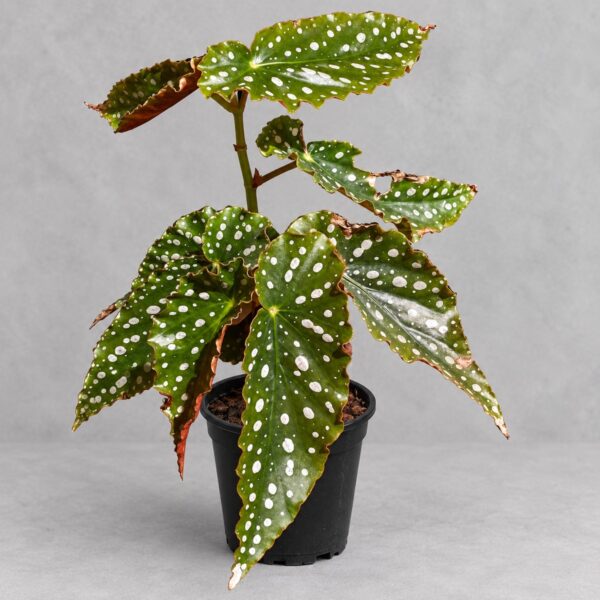
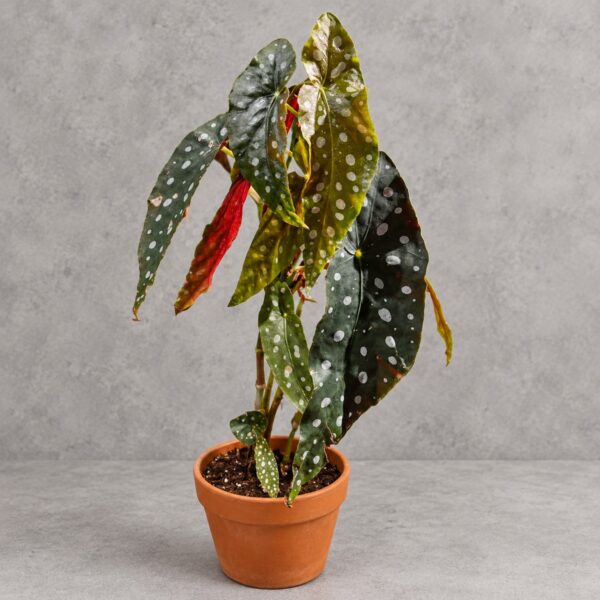
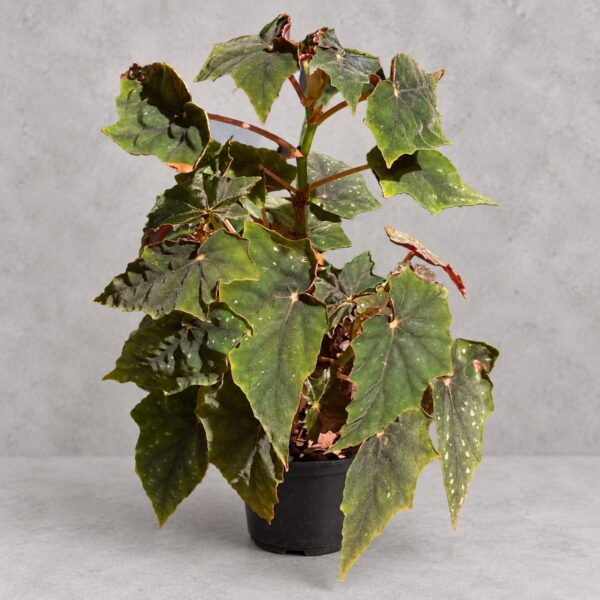
FREE PLANT ADVICE
Send us a photo before you change anything
WhatsApp a photo of the plant and your window light. Our Causeway Bay team will suggest care steps or plants that suit your space.
STORE · CAUSEWAY BAY
4/F, 39 Yiu Wa Street, Causeway Bay
Daily 12:30–8:00pm · ~3 min walk from Times Square
Map & directionsPlant Care