How to Care for Asplenium Nidus Var Plicatum in Hong Kong | Plantjai

Plantjai 植仔 · Care Encyclopedia
Asplenium Nidus Var Plicatum
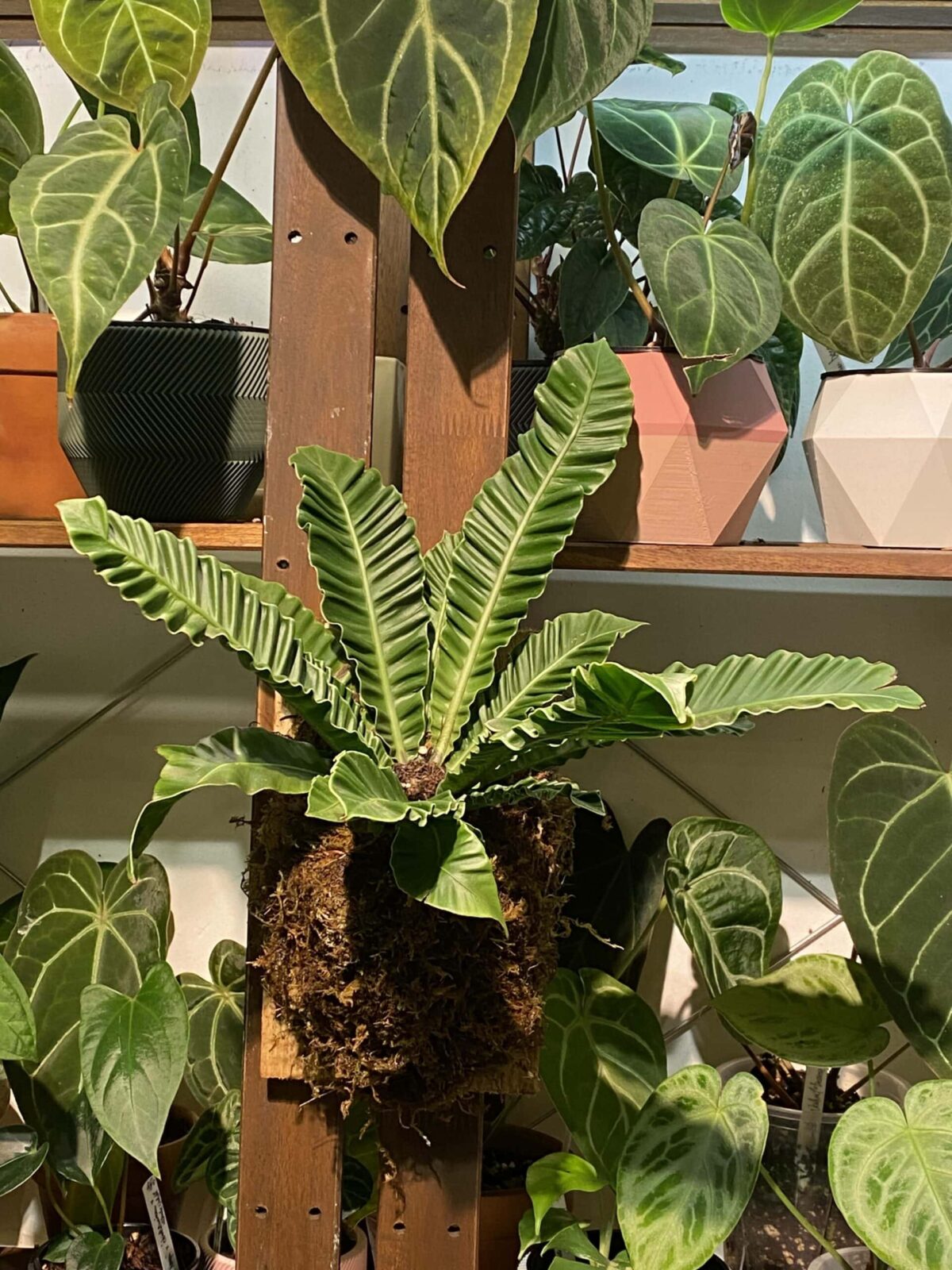
Asplenium nidus var. plicatum 皺葉雀巢蕨 / 眼鏡蛇鳥巢蕨
Hong Kong care guide — useful before you buy and after it arrives.
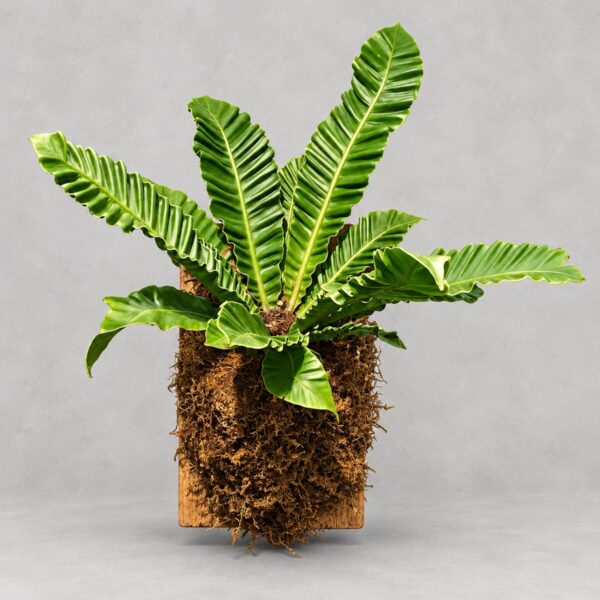
Shop this plantRuffled, wavy leaf edges that unfurl like a cobra rearing its head — an unforgettable, sculptural silhouette.
Origin & characteristics
Cobra Bird's Nest Fern is a crisped-leaf variety of the bird's nest fern, native to tropical Asia and Pacific island rainforests, and belongs to the perennial shade-loving herbs of the Aspleniaceae family. Its most distinctive feature is the pronounced, wavy ruffling along the leaf margins — when new leaves uncurl and rise, they genuinely resemble a cobra lifting its head, which is exactly where the "cobra fern" nickname comes from. Leaves are broad, glossy green, and radiate outward from a central point, forming the classic bird's nest shape with real ornamental impact.
Light
Cobra Bird's Nest Fern likes bright, diffused light and tolerates shade well. It suits an east- or north-facing windowsill, or any bright spot indoors. Avoid strong direct sun, which will scorch the leaves and turn them yellow-brown. Although shade-tolerant, prolonged placement in a dark corner will cause poor growth and faded colour. In summer it can go outdoors to a lightly shaded spot; in winter it can handle somewhat more gentle direct light.
Watering
Keep the potting mix moist but never waterlogged. Water roughly every 4–6 days; in summer heat, this may mean daily or every other day; in winter, once every 5–7 days is usually enough. Avoid pouring water directly into the central rosette — moisture pooling in the "nest" centre easily causes rot at the growing point. Water along the pot's edge instead. Regularly misting the foliage to boost ambient humidity supports healthy leaf growth.
Soil & pot
Peat moss or leaf mould works well, mixed with a little sphagnum moss and coarse gravel for extra drainage and airflow. Recommended recipe: peat moss, perlite, and bark in a 3:1:1 ratio. Choose a pot with drainage holes — plastic or ceramic both work. Repot once every 2–3 years in spring, removing dead roots and withered leaves and adding fresh leaf mould and sphagnum moss at that time.
Temperature & humidity
Ideal growing temperature is 22–27°C; keep above 16°C in winter, and never below 5°C. Humidity requirements are on the higher side — ideally above 60% — since low humidity easily causes dry, browning leaf tips. Regular misting is recommended, or place the pot on a shallow tray lined with pebbles and water to raise ambient humidity. Keep away from air conditioning or heater vents.
Common problems
| Issue | Likely cause | What to do |
|---|---|---|
| Brown, dry leaf tips | Humidity too low / air too dry | Increase misting frequency, use a humidifier or pebble tray |
| Rot at the "nest" centre | Water pooling in the rosette centre when watering | Always water along the pot's edge, avoid letting moisture collect centrally |
| Leaves deforming / losing their ruffle | Light too strong, air too dry, or overfertilising | Adjust light intensity and increase humidity |
| Leaves turning yellow | Overwatering or insufficient light | Check soil moisture, ensure enough diffused light |
How to explain to customers
"This Cobra Bird's Nest Fern is gorgeous — the leaf edges curl up in these lovely waves, and when new leaves emerge they genuinely look like a cobra rearing its head! Just remember not to water into the centre of the plant — always water along the edge of the pot, that's the safest way."
Fun facts
Bird's nest ferns are epiphytes in the wild, commonly growing on the trunks and branches of large trees. Fallen leaves and organic matter naturally collect in the "nest" centre, forming a natural nutrient pool — which is exactly why that central point is the plant's most vulnerable spot, and why you should always avoid watering directly into it.
Keywords
Asplenium nidus var. plicatum, cobra bird's nest fern, crisped-leaf bird's nest fern, ruffled fern, Aspleniaceae, wavy-leaf fern, epiphytic fern, bright diffused light, high humidity, foliage plant, Hong Kong plant shop, Plantjai
⚠️ Pet-friendly note: Cobra Bird's Nest Fern is non-toxic to cats and dogs, making it a pet-safe plant that can be placed anywhere in the home with confidence.
參考資料(想知來源可展開)
References
- Hoshizaki, B. J., & Moran, R. C. (2001). Fern Grower's Manual. Timber Press. ISBN 978-0-88192-495-4.
- Royal Horticultural Society. Asplenium nidus – Bird's Nest Fern. RHS Plants Database. https://www.rhs.org.uk/plants/1206/asplenium-nidus/details
- Missouri Botanical Garden. Asplenium nidus – Bird's Nest Fern. Plant Finder. http://www.missouribotanicalgarden.org/PlantFinder/PlantFinderDetails.aspx?taxonid=276438
- University of Florida IFAS Extension. Bird's Nest Fern (Asplenium nidus). https://gardeningsolutions.ifas.ufl.edu/plants/houseplants/birds-nest-fern.html
In-depth care guide
Introduction
Cobra Bird's Nest Fern, botanically Asplenium nidus var. plicatum, is a particularly distinctive member of the bird's nest fern family. Its most eye-catching trait is the pronounced, wavy ruffling along the leaf margins — as a whole leaf uncurls, it genuinely resembles a cobra lifting its head, which is exactly where the striking nickname comes from. Compared with the standard bird's nest fern (Asplenium nidus), Cobra Bird's Nest Fern has noticeably thicker, more textured leaves with a stronger sense of line and form, making a mature specimen feel like a living sculpture in the home.
This variety is native to the high-humidity tropical rainforests of Southeast Asia and Pacific islands, where it typically grows epiphytically on tree trunks or rock faces in the wild — a classic example of an epiphytic fern. Its growth habit is rosette-shaped, with new leaves uncurling from the central "nest" and, once fully expanded, reaching considerable length — mature leaves easily exceed 60 cm, and in ideal conditions can grow beyond a metre, depending on care and the plant's age.
Cobra Bird's Nest Fern has long been a popular foliage plant in horticultural circles, particularly among those who love a tropical rainforest aesthetic at home. Beyond its striking looks, it's also relatively easy to care for, giving even beginners a reasonably high chance of growing it successfully.
Light requirements
Cobra Bird's Nest Fern loves bright, diffused light — this is the golden rule for growing it well. In its native habitat it grows beneath the forest canopy, receiving soft light filtered through layers of leaves. At home, the best spot is a north- or east-facing windowsill, or a position shielded from direct sun by a sheer curtain.
If light is too strong — particularly direct midday sun in summer — leaves easily sunburn, showing as yellowed, browned edges and dry, scorched patches. Conversely, if light is too dim, new leaves grow thin and weak, colour turns dull and lacklustre, and overall growth slows considerably. A simple rule of thumb: if you could comfortably read a book at the plant's location without turning on a light, that brightness level suits Cobra Bird's Nest Fern well.
For artificial lighting, LED grow lights with a colour temperature of 4000K–6500K (full spectrum) work well, run for 10–12 hours daily with the fixture positioned roughly 30–50 cm from the foliage. Fluorescent tubes are also an economical option that can provide stable supplementary light.
Temperature requirements
As a tropical rainforest native, Cobra Bird's Nest Fern grows best between 20°C and 28°C. It's fairly sensitive to cold, tolerating a minimum of around 10°C, though prolonged exposure below 15°C will already stall growth and cause leaves to begin yellowing. In subtropical regions like Hong Kong, pay particular attention in winter — if temperatures drop below 15°C, move the plant to a warmer indoor spot.
Summer heat generally isn't a major issue as long as humidity and ventilation are adequate — the plant can handle temperatures up to 32°C. However, high heat combined with poor ventilation increases the risk of bacterial and fungal disease. Air-conditioned rooms are fine too, but avoid direct AC airflow on the plant and step up humidity management, since air conditioning draws moisture out of the air.
Humidity management
High humidity is one of the key factors in growing Cobra Bird's Nest Fern well. Ideal relative humidity sits between 60% and 80%. In dry conditions, leaf margins begin to brown and turn brittle, and newly unfurling leaves may become deformed or dry out.
A few practical ways to raise humidity:
- Humidifier — the most direct and effective method, particularly useful in winter when heating is running, or in continuously air-conditioned spaces. Position the humidifier near the plant to maintain a stable humidity level.
- Pebble tray — fill a large tray with pebbles and water, then set the pot on top of the pebbles (not directly in the water); evaporation naturally raises the surrounding humidity.
- Grouping plants together — clustering several humidity-loving plants creates a small microclimate that mutually raises the surrounding humidity.
- Regular misting — though misting only raises humidity briefly, doing it once or twice daily (morning and evening) does help. Make sure ventilation is good afterward, so the leaf surface doesn't stay wet for extended periods, which can invite disease.
Watering technique
Cobra Bird's Nest Fern prefers a consistently moist but never waterlogged growing environment. Water once the soil surface begins to dry out (roughly the top 1–2 cm), and always water thoroughly until it flows from the drainage holes, ensuring the entire root system gets a drink.
One particularly authentic watering technique is occasionally pouring a small amount of water directly into the central "nest" of the plant. In the wild, this structure naturally collects rainwater and fallen leaves, forming a natural nutrient pool. At home, occasionally adding a little water to the centre mimics this native environment — but be careful not to let water sit there long-term, or the centre can rot. A good rule of thumb is watering the centre about once a week, then letting it naturally evaporate and absorb.
On water quality, Cobra Bird's Nest Fern is fairly sensitive to the chlorine and fluoride in tap water, and prolonged use can cause browning leaf tips. Filtered water, rainwater, or tap water left to stand overnight (letting the chlorine dissipate) works best. Reduce watering frequency in winter to roughly half the summer rate, since the soil dries more slowly in cooler temperatures and root activity also decreases.
To judge whether watering is needed, insert a finger about 2–3 cm into the soil — if it feels dry, water; if still moist, wait another day or two. Remember, it's better to err slightly on the dry side than overly wet, since ferns are notoriously difficult to recover from root rot.
Soil recipe
Cobra Bird's Nest Fern needs a well-draining, airy, organic-matter-rich soil. Since it's naturally epiphytic or lithophytic in the wild, its roots need plenty of airflow, so ordinary garden soil is completely unsuitable — it's too dense and wet, and easily causes root rot.
Recommended soil mixes:
- Basic recipe: peat moss (or coco coir) 40% + perlite 30% + bark chips 20% + charcoal chips 10%
- Advanced recipe: coco coir 35% + fern root/sphagnum moss 25% + coarse perlite 20% + bark 15% + vermiculite 5%
- Simple recipe: commercial fern-specific soil 70% + perlite 30%
Peat moss or coco coir provides water retention and organic matter, while perlite and bark ensure good drainage and airflow. Charcoal chips help purify water and inhibit fungal growth, which is particularly beneficial for ferns. If mounting the plant on a board or bark for a naturalistic display, wrap the roots in sphagnum moss and secure with fishing line or nylon thread — this most closely mimics its natural growth habit.
In terms of pH, Cobra Bird's Nest Fern prefers slightly acidic to neutral soil, with a pH range of 5.5–7.0 being acceptable.
Feeding
Cobra Bird's Nest Fern isn't a heavy feeder, but moderate fertilising will make the leaves greener and lusher, and speed up growth. During the active growing season (spring through summer, roughly March to September), apply diluted liquid fertiliser every 2–3 weeks. A balanced formula (such as NPK 20-20-20) or one slightly higher in nitrogen works well, since nitrogen is especially important for leaf growth.
Dilute fertiliser to half the strength recommended on the packaging — so-called "half-strength feeding." Fern root systems are relatively fine, and concentrated fertiliser easily burns the roots. Liquid fertiliser can be applied with watering, or sprayed directly on the leaves (avoiding periods of strong light, to prevent leaf scorch).
In autumn and winter, growth slows, so reduce feeding frequency to once a month, or stop entirely. If new leaves appear pale and growth is slow, this may signal a nutrient deficiency; conversely, if leaves are overly dark but feel soft, this may indicate overfertilising.
For organic options, diluted seaweed extract or fish emulsion fertiliser both provide rich trace elements that benefit overall fern health. Slow-release pellet fertiliser can also be used, but control the quantity carefully — a small amount goes a long way.
Repotting guide
Cobra Bird's Nest Fern needs repotting roughly every 1–2 years, ideally in spring as new growth begins. If you see roots emerging from the drainage holes, or water draining through very quickly after watering (indicating the pot is root-bound), it's time to move up to a larger pot.
When choosing a pot, a wide, shallow container or a standard round pot both work, with breathable terracotta being the top choice — plastic pots are fine too, but require closer attention to watering frequency. The new pot should be 3–5 cm larger in diameter than the old one; don't jump too large at once, or excess soil volume can lead to waterlogging.
Repotting steps:
- Water thoroughly the day before repotting, so the soil is moist and easier to remove from the pot
- Gently remove the plant from its old pot, preserving as much of the soil around the roots as possible
- Inspect the roots and trim away any that are black or mushy
- Line the bottom of the new pot with a drainage layer (clay pebbles or gravel)
- Add a little fresh soil, centre the plant, then gradually fill in around it
- Gently firm the soil, then water to settle the roots
After repotting, keep the plant in a cool, well-ventilated spot for a week or two to acclimatise, avoiding strong direct light during this period.
Propagation methods
Cobra Bird's Nest Fern can be propagated in two main ways:
1. Division
This is the simplest and most direct method, best done alongside repotting. Once a mother plant reaches a certain size, offsets or multiple growing points may naturally form at the base. Carefully separate the plant with roots intact, ensuring each division has sufficient roots and leaves. Pot up divisions immediately, water thoroughly, and keep in a shaded spot to recover.
2. Spore propagation
Mature Cobra Bird's Nest Fern leaves develop spore clusters on their undersides, arranged in linear rows. To collect spores, cut a leaf bearing spores and place it on white paper, allowing spores to naturally fall. Sprinkle spores evenly over sterilised peat moss or fine vermiculite, without covering them, since spores need light to germinate. Keep the substrate moist and humidity high, and cultivate at around 21–24°C; within a few weeks, tiny green prothalli should appear. Spore propagation requires patience — growing from spore to a mature, leaf-bearing plant can take several months to a year.
Common problems and solutions
Yellowing, browning leaf tips
The most common cause is humidity too low or water too hard. Check whether your home's humidity is adequate, and consider a humidifier or pebble tray. Also try switching to filtered water or rainwater to avoid mineral buildup from tap water.
Black spots on leaves
Usually caused by fungal infection, most common in environments with poor ventilation and prolonged leaf moisture. Improving ventilation is the priority — avoid misting at night, letting leaves dry out fully during the day. In severe cases, apply a broad-spectrum fungicide.
New leaves unfurling incompletely or deformed
Mostly caused by insufficient humidity or calcium deficiency. Increase ambient humidity, ensure your fertiliser formula includes adequate calcium, or occasionally apply a calcium supplement.
Whole plant yellowing and wilting
This may be a warning sign of root rot. Check whether the pot is severely waterlogged or the soil too dense to drain. If root rot is confirmed, repot immediately, trim away all rotten roots, replant in fresh soil, and keep in a well-ventilated, shaded spot to recover.
Growth stalling
Possible causes include temperatures too low, insufficient light, or a root-bound pot. Check each condition in turn, repotting or adjusting placement as needed.
Toxicity information
Cobra Bird's Nest Fern is non-toxic to cats and dogs, making it a pet-friendly plant that can be placed anywhere in the home with confidence.
References
- Hoshizaki, B. J., & Moran, R. C. (2001). Fern Grower's Manual. Timber Press. ISBN 978-0-88192-495-4.
- Barrington, D. S. (1993). Ecological and Historical Factors in Fern Biogeography. Journal of Biogeography, 20(3), 275-279.
- Royal Horticultural Society. Asplenium nidus – Bird's Nest Fern. RHS Plants Database. https://www.rhs.org.uk/plants/1206/asplenium-nidus/details
- Missouri Botanical Garden. Asplenium nidus – Bird's Nest Fern. Plant Finder. http://www.missouribotanicalgarden.org/PlantFinder/PlantFinderDetails.aspx?taxonid=276438
- University of Florida IFAS Extension. Bird's Nest Fern (Asplenium nidus). https://gardeningsolutions.ifas.ufl.edu/plants/houseplants/birds-nest-fern.html
Plantjai shop · In stock online
Asplenium nidus var plicatum
Original price was: HK$428.00.HK$180.00Current price is: HK$180.00.
Hong Kong delivery · Causeway Bay pickup
For Hong Kong homes and offices. Stock and pricing follow the product page.
IN STORE NOW
Plants for this guide
Related plants in stock now — live prices, delivery or Causeway Bay pickup.
Asplenium nidus var plicatum
Original price was: HK$428.00.HK$180.00Current price is: HK$180.00.
In stock · store pickup
View plant
FREE PLANT ADVICE
Send us a photo before you change anything
WhatsApp a photo of the plant and your window light. Our Causeway Bay team will suggest care steps or plants that suit your space.
STORE · CAUSEWAY BAY
4/F, 39 Yiu Wa Street, Causeway Bay
Daily 12:30–8:00pm · ~3 min walk from Times Square
Map & directionsPlant Care